Category Archives: Uncategorized
Graduation, Retreat and Mission
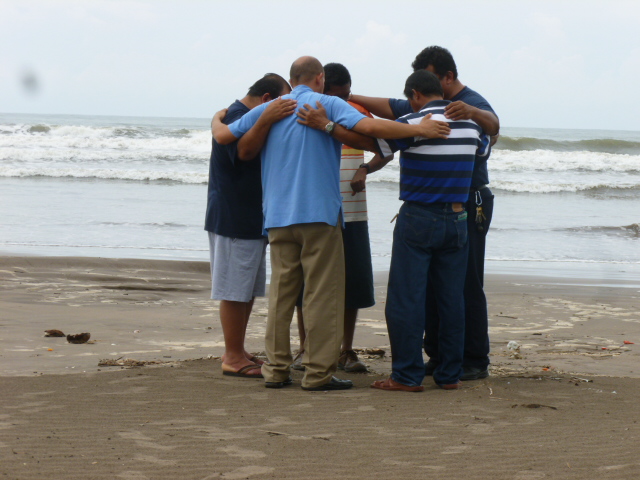
Congregational pastors praying on the beach before returning home from the Novillero, Nayarit retreat
Our most recent journey began in Aguascalientes with a meeting of the Mesa Conjunta (Roundtable), the Global Ministries partner in Mexico to which we are assigned. Rev. Felix Ortiz, Latin America Executive for Global Ministries, celebrated Lisania Sustaida’s completion
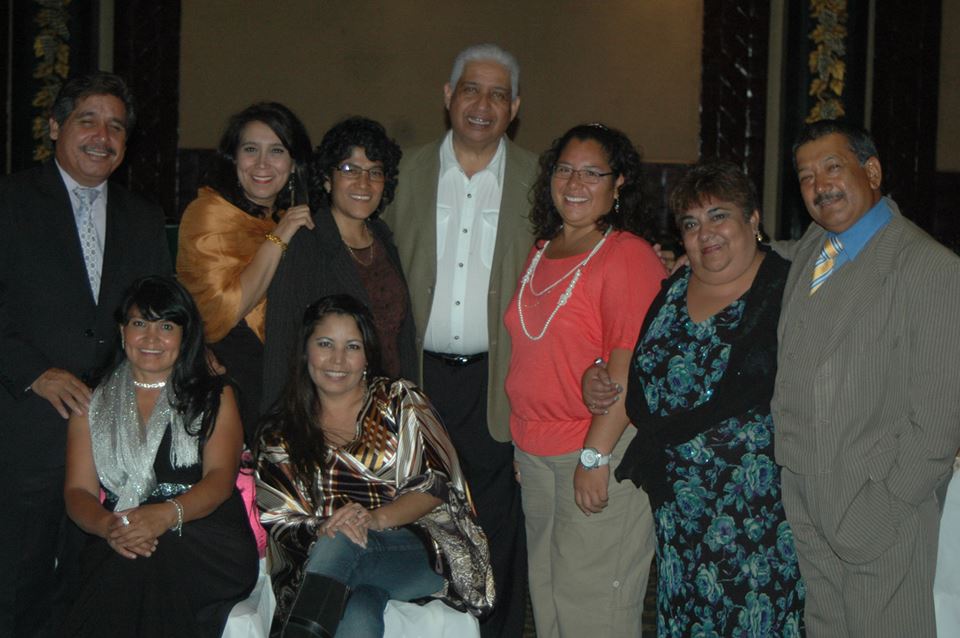
Rev. Felix Ortiz with Aguascalientes seminary (SEBA) graduates and friends
On the evening of the Roundtable meeting, the one seminary among Disciples and Congregational

A few of the graduates in the “Rev. Felix Ortiz Graduating Class”
On the next leg of the trip, we enjoyed our first stay on a beach in Mexico. The retreat for pastors of Congregational churches was held at a comfortable hotel in Novillero which boasts the longest beach in the country and fine, soft sand. During the two and a half days, Doug presented and led discussion on the theme of “Joy in Ministry”. Isa 55 was meditated on during devotional time and during sessions on the topics of joy in community, joy in cultivating spiritual disciplines, and joy in living by a vision. After a lapse of three years during which the pastors had not gathered, it was gratifying to see the enthusiasm in planning next year’s retreat at the same location.
Three of the pastors at the retreat are on the staff of the Congregational Christian Church of Mazatlan which we enjoyed visiting on our last stop. During his twenty three years as lead pastor, Daniel Celis has helped the Church grow from 90 to 365 members. Along with offering
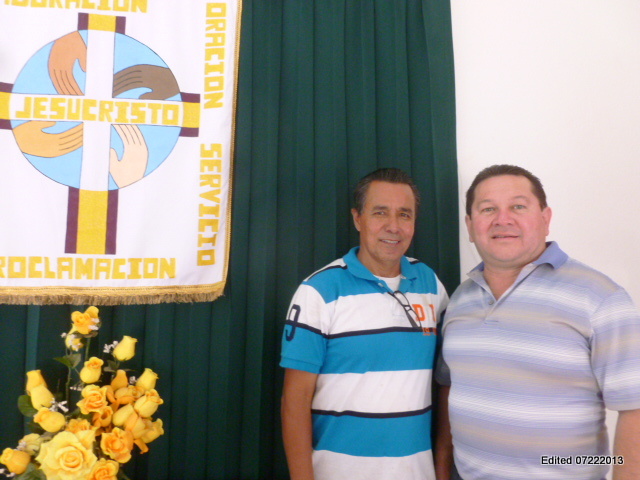
Rev. Daniel Celis (r.) with Pastor Jose of Villas del Sol, one of Mazatlan’s 3 “mission” churches
It was a great joy to meet the family of Pastor Victor C. who had shared at the retreat his
The Mazatlan Congregational Church, oldest Protestant church in the city, founded this school many years ago
On Sunday, August 25, we were delighted to finally participate in worship at the churches in Pozole and Apoderado, twin communities an hour and a half south of Mazatlan. Pastor Miguel Villa, Congregational representative for the Roundtable, had invited us months ago but the daunting distance of travel from San Luis Potosi made us postpone the visit. Accompanied by Miguel, wife Maribel, daughter Miriam and musician Margarita we enjoyed preaching in the two rural communities and returned Sunday evening to Mazatlan laden with the biggest mangoes and avocadoes we had ever seen.
Now back home in San Luis Potosi, this latest trip has deepened our feelings of gratitude for being called to serve in Mexico. We look forward to returning and continuing to share in ministry with brothers and sisters in each place visited. God has richly blessed us.
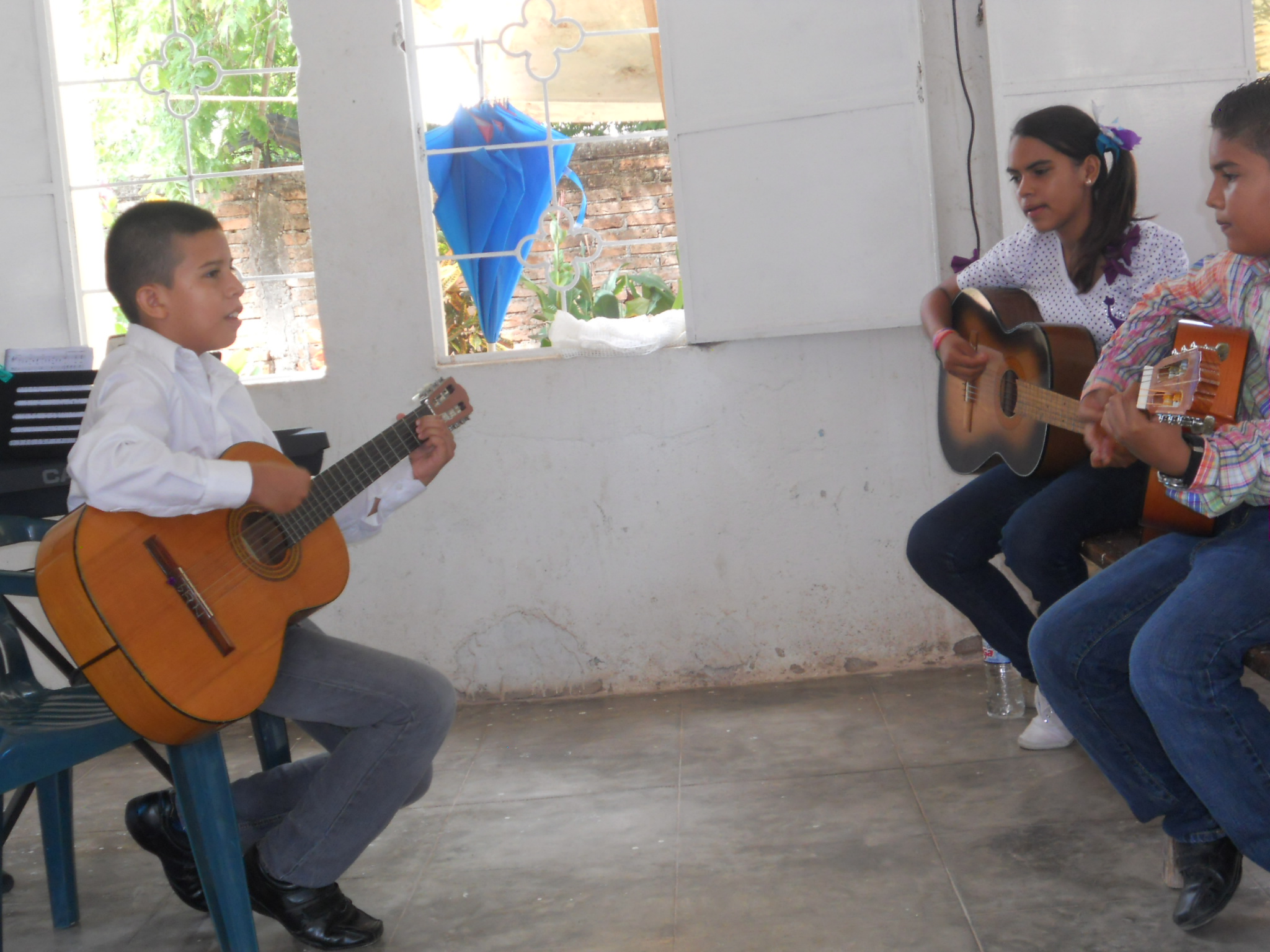
Click on a picture in the trip’s Gallery below for a larger view. Credits: Myrna Paz for Aguascalientes graduation photos, Miriam Villa for Pozole and Apoderado photos and David _ of Mazatlan Congregational Church for Sat. leaders’ meeting These Apoderado musicians have been playing for less than a year thanks to Margarita, church music teacher Pozole youth and children with Pastor Miguel Villa in back and Maribel on left
photos.
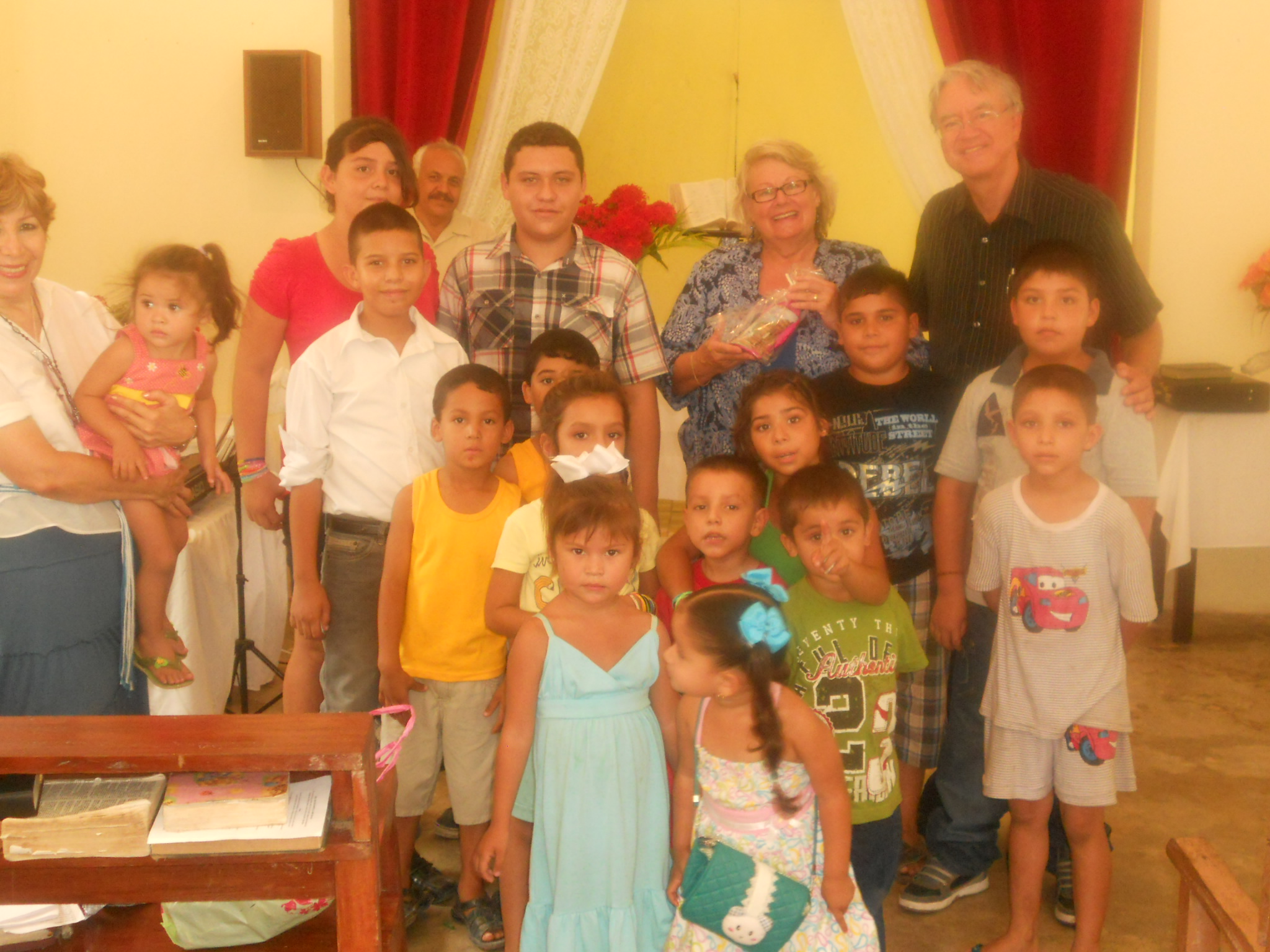

This mural on Villas del Sol’s sanctuary wall was painted by a church member
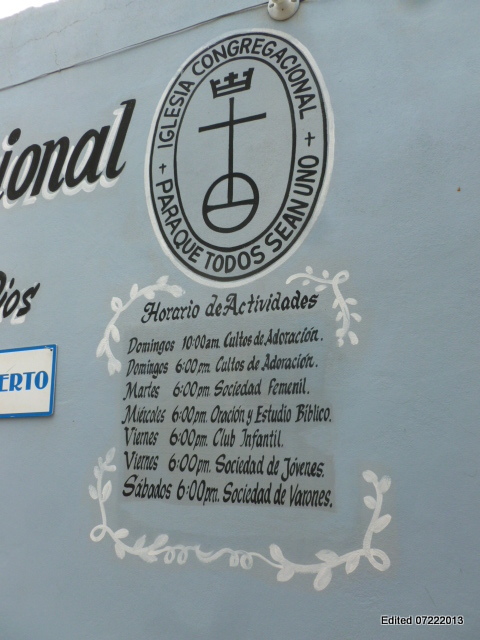
youth activities dominate the weekly schedule at Villa Union “mission” church

Pastor Victor C., Jessie, Elias and a tired Isais outside their new Villa Union home

The iguana at the retreat kept its distance from us

Meals began with song: see Facebook Douglas W Smith page for a video
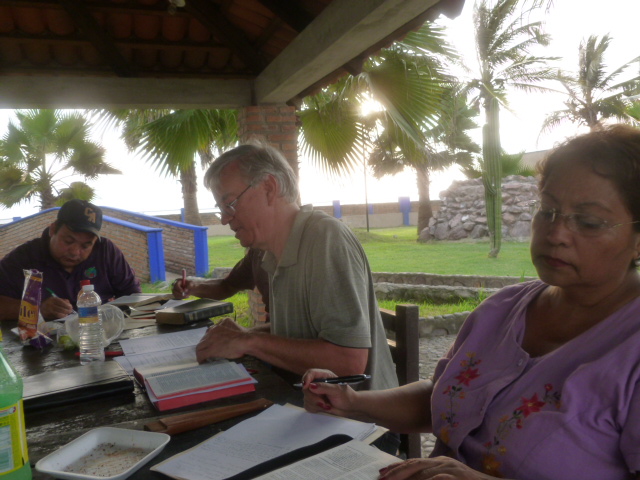
The fresh air setting next to the beach enhanced our retreat sessions
-
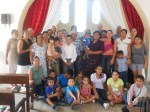
- Male Apoderado church members, like those of Pozole, are farmers and shrimp fishermen
Jerez, a Magical Town
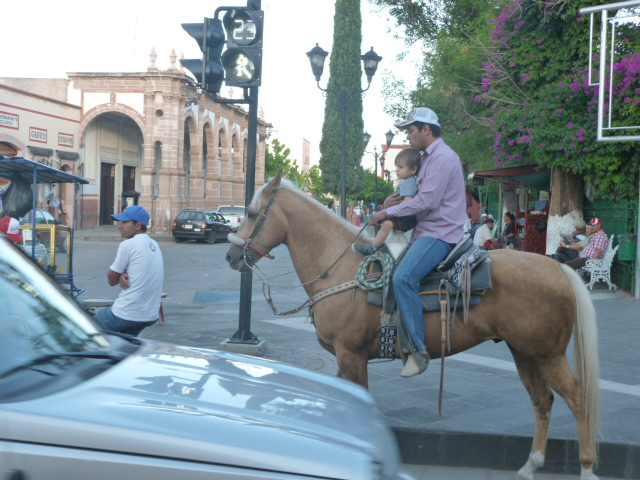
The original “Cowboy Culture” lives in Jerez as seen on the central plaza
We were charmed by our first visit to Jerez, Zacatecas back in December and the spell cast on us deepened with the three day stay last weekend. The annual Assembly of the Disciples of Christ Church (ICDC) brought us to town and rather than stay in a church member’s home this time, we decided to try out a “tourist experience” of the town and stay in the Hotel Le Jardin on the town plaza. For less than $20 a night and an excellent breakfast, it was a good choice, sweetened by the fact that the annual “Fiesta de Tostada” was being celebrated with the plaza as the center of activity.
Jerez is a delightful place to experience the encroachment of four wheelers and computer games on Mexico’s rural culture represented by the “vaquero”/cowboy and the richly varied musical traditions. We returned to our hotel at 1 on Saturday night and marveled at the bands playing on each corner, the packs of teenage girls and boys circulating, and the decorum that prevailed. Loud yes, but with a measure of grace and gracious manners that seem characteristic of traditional Mexican culture.
We decided that the photo gallery below was the best way to share the experience with you. As you browse the photos, you might be led to reflect on what the Mexican immigrant to the U.S. has had to give up with their move and how their immigration has contributed to the U.S. culture today. For a start, consider how all the words corral, rodeo, lasso, stirrup, lariat are all due to the presence of Mexican cowboys in Texas and other western states before they became part of the U.S. We hope Johnny Depp’s performance in the newly released Lone Ranger movie reveals that Tonto’s name (“stupid” in Spanish) was conceived by a writer who apparently knew very little Spanish.
“Bienvenidos”, welcome, to Jerez, one of the towns the federal government has named and funded as a “Pueblo Magico” or magical town. We’re looking forward to visiting more of the “pueblos magicos” of Mexico. To enlarge the photos click once on one of the images.
-

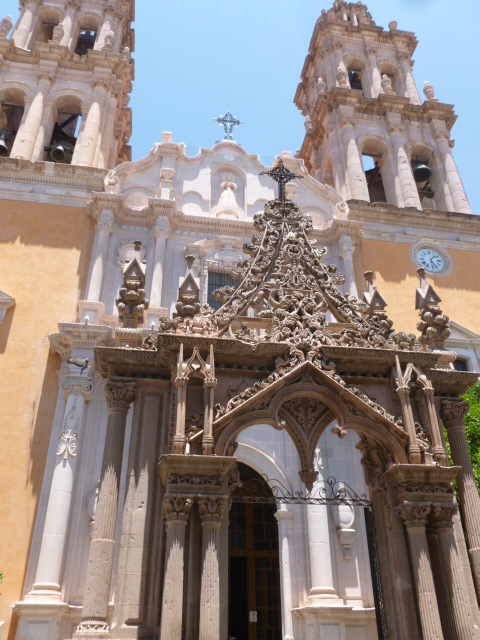
- Facade of the “Santuario” Cathedral. The clock’s time is correct!
-

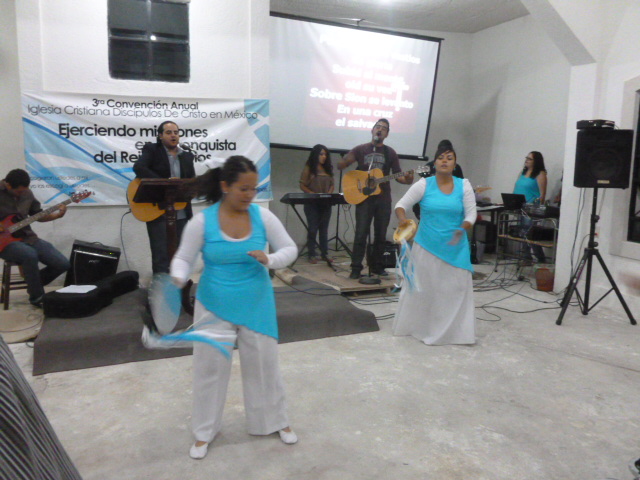
- Praise “Alabanza” section of opening worship for the Assembly featured dancers’ debut .
-

- Stirrups in an antique shop

-

- Hats for cowboys and mariachi band members among others

-

- Boys’ outfits – for first communion?

-

- Sidewalk outside the boyhood home of famed poet Ramon Lopez Velarde
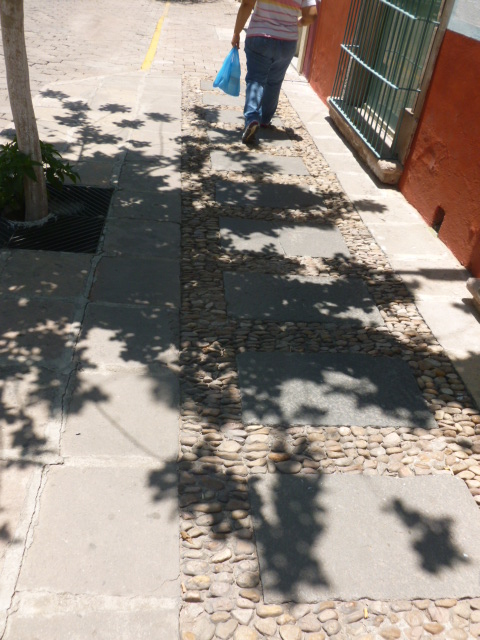
-

- The Lopez Velarde home’s kitchen pantry
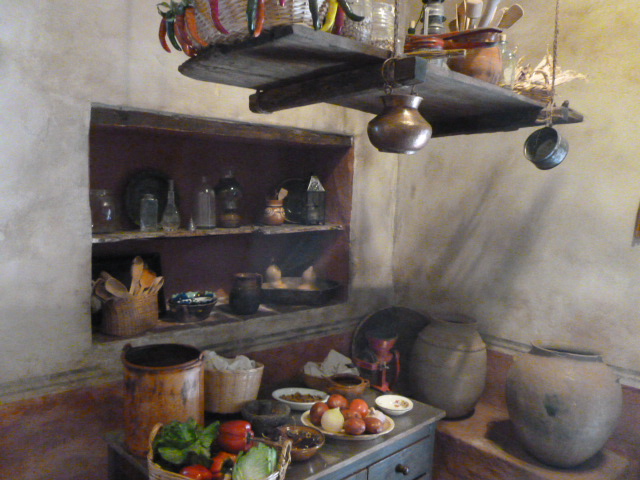
-

- Unofficial docent in the home is a Lopez Velarde family member who shared a poem with me
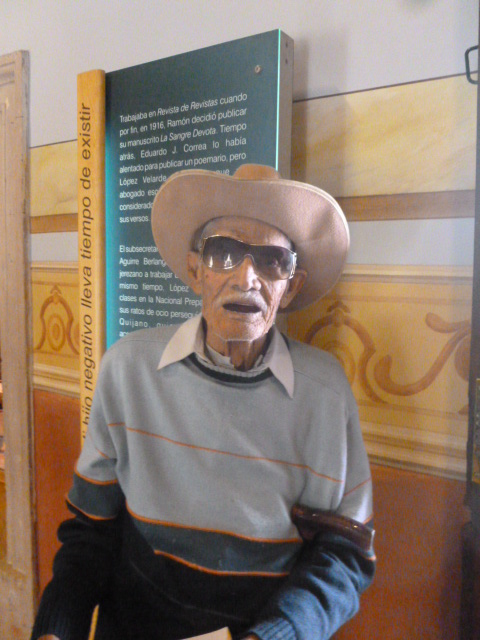
-
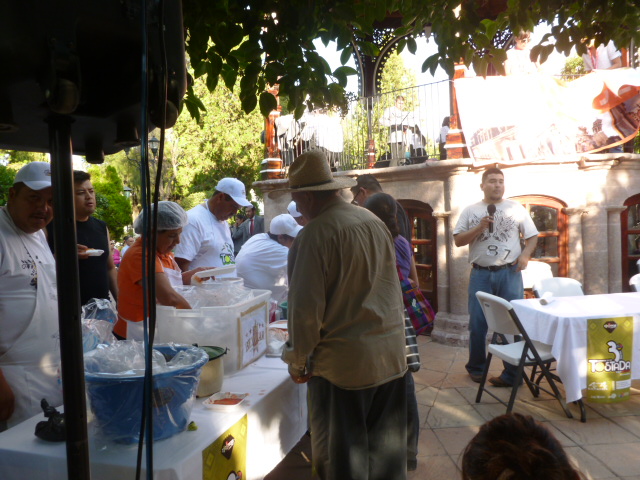
- Serving tostadas in the plaza to open the Fiesta de Tostada events
-

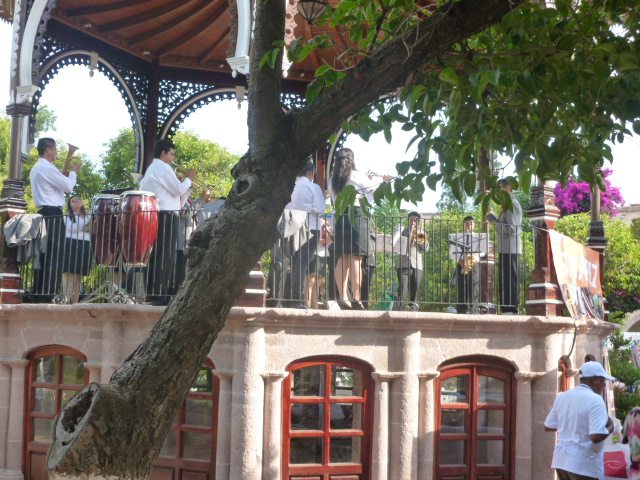
- The city band played for the Tostada Fiesta opening
-

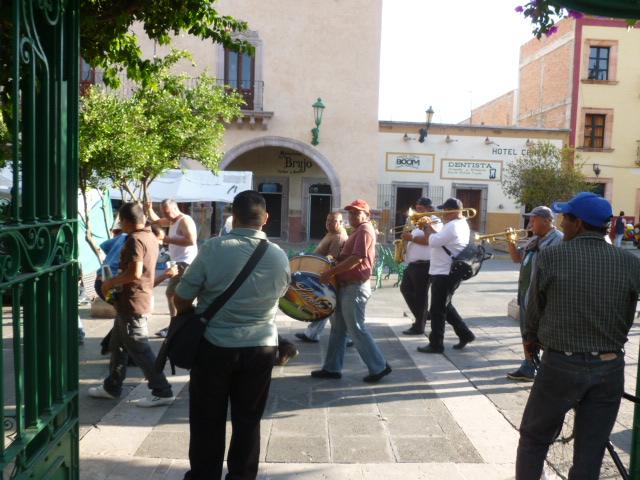
- Another band parades around the plaza
-

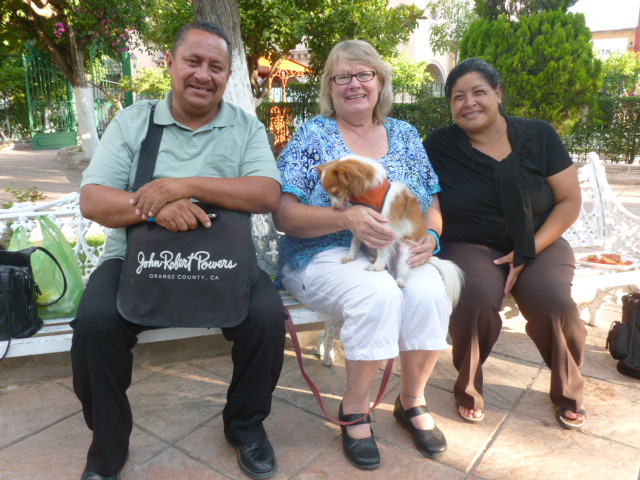
- Disciples from Tijuana attended the Assembly and met Kate and Minnie in the plaza
-
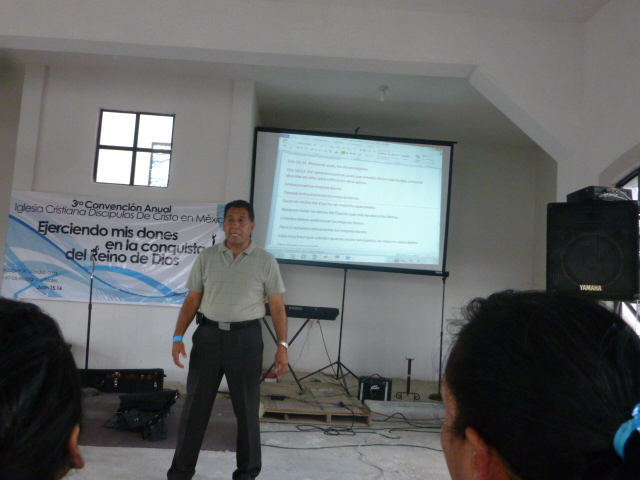
- Newly elected ICDC Disciples President Pastor Leobardo Flores gave a workshop on the gifts of the Holy Spirit
-
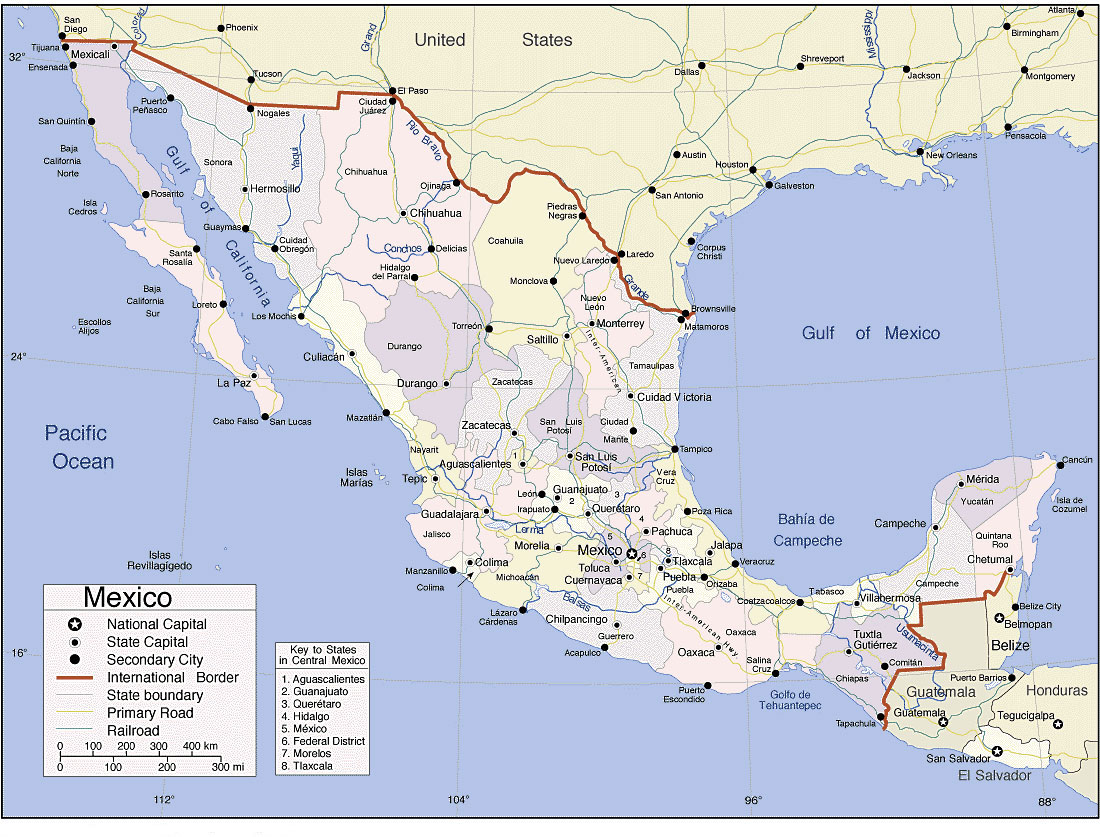
- Jerez is 40 km. southwest of Zacatecas, capital of the state of the same name
Doing What We Came To Do

Small group work during the Bible Exegesis class on “Women in the Bible”
AS a long-term volunteer with Global Ministries of the Disciples of Christ and UCC, my job description is way longer than you might imagine. “Kathleen Moyer, a member of Delhaven Christian Church (Disciples of Christ), La Puente, California,serves with the Joint Table for Mission Development formed by the Christian Congregational Churches of Mexico, the Christian Church (Disciples of Christ) of Mexico (ICDCM – Iglesia Cristiana Discípulos de Cristo de Mexico), and the Fraternity of Evangelical Christian Churches (Disciples of Christ) of Mexico (CICEDCM – Confraternidad de Iglesias Cristianas Evangélicas (Discípulos de Cristo) de Mexico. She will serve as a consultant for Mission Development, with emphasis on women’s development and theological education.”
This past month, I actually did what my job description says I will do! (You may not know it, but that in itself appears to be miraculous!) Every summer, the Mesa Conjunta (Roundtable….see above) sponsors a week-long event at the seminary where we live for the purpose of theological education. This year four classes were offered; I taught Biblical Exegesis and I took the opportunity to teach about women in the Bible. Nineteen students (ministers and lay leaders) attended my class for five days from 3pm – 7pm.

Pastor Agustin Martinez of Salem, OR participates in small group working on exegesis of the book of Ruth
My class focused on the women who are named in the genealogy of Jesus in Matthew 1:1-17: Tamar, Rahab, Ruth and the wife of Uriah (Bathsheba.) I wrote the lectures and my Spanish teacher,

Karla Ramirez, Kate’s teacher, helped with Spanish translation of her lectures
These 21st century detectives dug into the story and each group did an amazing job of presenting their own exegesis of Ruth! One group even presented their findings in a radio show tele novela format! Very imaginative and informative! We finished the week discussing Bathsheba and finally a discussion of women in the New Testament.
I am so thankful that I was able to teach this class, and am happy to say that the evaluations were very good! Hopefully, this will lead to more opportunities for me to emphasize theological education while here in Mexico! The other classes were in Homiletics (preaching), Theology of Family, and Theology of Worship (led by Global Ministries missionary Dr. Carmelo Alvarez). What a great way to spend a week in San Luis Potosi!
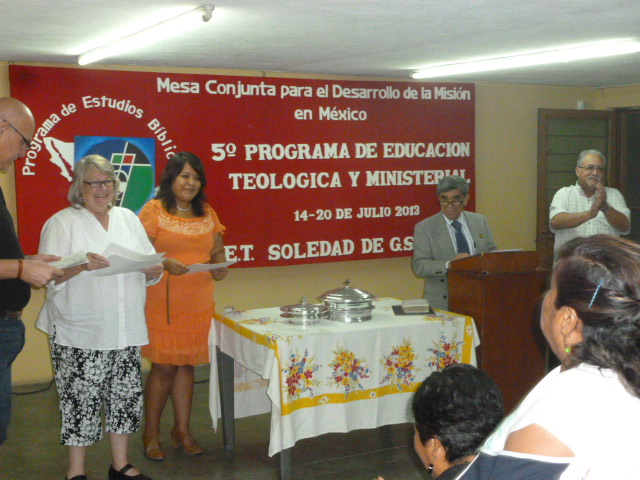
Awarding of certificates and a closing worship concluded the week of Summer Session classes.
No Papers Needed in The Field of Boaz

The voice from the U.S. side of the U.S-Mexico border wall declares: “We’ve almost completed our new immigration reform policy”. The cartoon is from Pulso, a daily newspaper in San Luis Potosi.
The need for immigration reform couldn’t be clearer on this side of the U.S.-Mexican border:
– A Disciples grandmother from San Luis Potosi spends a night in detention at the border with Texas because her U.S. permanent residency “green card” has apparently expired.
– A choir member at the same Disciples church – a mother with three children – hasn’t seen her husband in three years because he fears he won’t be able to return to his two jobs in Maryland.
– The young woman in Kate’s class last week is the only child left behind when her mother moved to North Carolina over ten years ago and has not returned.
On this side of the border, among Mexicans, the effect of the current U.S. immigration policy can be summed up in two words: “Family Separation”. In Kate’s Bible Exegesis class last week the lay leaders and pastors spent a day on the book of Ruth. This time it was impossible for the two of us to re-read this ancient story of human migration without thinking of Ruth’s plight had she been a Mexican trying to enter the United States with her mother in law.
“Where you go, I will go…..your people shall be my people”. Well yes Ruth but only if you have over one million dollars to establish a business or a skill which is in short supply in the U.S. Your family connection with Naomi won’t do it.
Read the words of Boaz and consider the contrast with current U.S. immigration policy:
“All that you have done for your mother-in-law since the death of your husband has been fully told me and how you left your father and mother and your native land and came to a people that you did not know before. May the Lord reward you for your deeds and may you have a full reward from the Lord, the God of Israel, under whose wings you have come for refuge.” (Ruth 2:11-12)
The law among the Hebrew people three thousand years ago called for harvesters to leave grain on the edges of fields for foreigners, orphans and widows to glean. Boaz instructed his harvesters to go one step further and allow Ruth to glean behind them in the middle of his barley and wheat fields.
It is distressing to note that the current debate over immigration policy reflects little compassion or knowledge of the changes in human migration patterns today. A major change is reflected by the fact that more Mexicans returned to Mexico last year than crossed into the U.S.
An excellent report on what was behind the trend of returning to Mexico, and on recent social and economic change in Mexico in general, appeared recently in the editorial pages of both the New York Times and the Los Angeles Times. We’ve highlighted in bold some of the most important points in the article below:
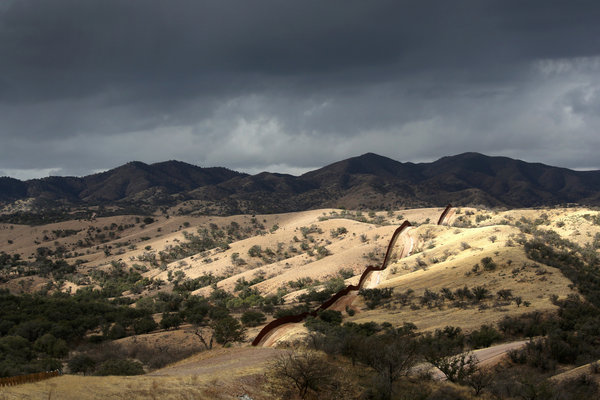
The U.S.-Mexico border fence stretches into the countryside on near Nogales, Ariz. (John Moore / Getty Images / March 8, 2013)
By Andrew Selee
April 2, 2013
The image of illegal immigration in the minds of most Americans is of poor Mexicans streaming across the Southwest border. This is not entirely wrong, but it is outdated. As Congress debates immigration reform, it is worth taking a look at what’s changed. Mexican illegal immigration flows have been dropping steadily and seem to be continuing a downward trend even as the U.S. economy recovers. There are reasons to believe this trend is becoming permanent.
For most of the 1990s and early 2000s, most unauthorized immigrants crossed the Southwest border, and most years 90% to 95% were Mexicans. Since as far back as 2007, however, the numbers in the Southwest — and, in particular, the number of Mexicans — have been declining rapidly. Illegal border crossings there are now down to levels not seen in 40 years, and in 2012, more pthan a quarter of unauthorized Southwest border crossers were what the government calls “Other Than Mexicans,” mostly Central Americans and a few immigrants from outside the hemisphere.
Three factors have slowed illegal immigration from Mexico. First, border security appears to have produced a deterrent effect. The budget of the Border Patrol has increased almost tenfold since 1993, and there are five times as many agents on the border, who now have access to an impressive array of technology. A recent report from the nonpartisan Washington-based Migration Policy Institute found that the U.S. government now spends more on immigration enforcement than all other federal law enforcement agencies combined — including the FBI, the Drug Enforcement Administration, the Bureau of Alcohol, Tobacco, Firearms and Explosives, the Secret Service and the U.S. Marshals Service. As a result, arrests of illegal border crossers last year were only a third of those recorded six years ago, back to levels last seen in 1972. The message appears to have reached communities in Mexico that it is expensive, difficult and dangerous to cross without papers.
Second, the Mexican economy has far outperformed expectations in recent years, creating incentives for people to stay in their home communities. Mexico has had 15 years of sustained economic growth, with a 3% average annual increase in GDP per capita. As a result, the average income of Mexicans has more than doubled in real terms since 1997 and is now similar to average income in Russia, Romania, Turkey, Malaysia and Brazil; twice what it is in China; and five times what it is in India. Although the wage gap between Mexicans and U.S. citizens is still high — a little over 4 to 1 — it is far better than the 7-to-1 wage gap of the 1990s.
Social programs have also improved, with one cash transfer program, Oportunidades, which is tied to keeping children in school and getting regular health checkups, now reaching more than a quarter of households. At the same time, Mexican migrants have played a vital role in stimulating the economy in the communities they left behind. Immigrants from the Mexican state of Zacatecas who now live in Southern California joined together to help build a university campus in the city of Jerez, one of the poorest in the state and a perennial source of migrants. They have started more than 20 new small businesses, supported by investment from Zacatecans living in and around Los Angeles, sometimes complemented by low-cost government loans. Today, thousands of young people in that state, who might otherwise have traveled north, are pursuing a college education or working in one of these businesses.
Finally, the demographic profile of Mexico is changing. The number of Mexicans ages 15 to 29 — those most likely to migrate — has stabilized over the last few years and will soon begin to drop. Heavy public and private investments in family planning programs in the 1970s and ’80s have reduced the birthrate to a level similar to that of the United States. If this demographic shift hasn’t contributed yet to the decline in migration from Mexico, it certainly will over the next decade.
What all this means is that, in the future, the largest illegal immigration flows are likely to come from parts of the world farther away than Mexico, including Central America and Asia. Because of distance, these flows will be smaller, but they will also require new and different enforcement measures, focused more on the workplace than on the border itself. And if Congress creates work-based visas for potential immigrants, as in the guest worker program now under discussion in the Senate, the numbers who are willing to risk an illegal crossing — from Mexico and elsewhere — are sure to drop even more.
There will always be some illegal immigration from Mexico to the U.S., as long as the wage gap between the two countries remains high. But in assessing U.S. policy reforms and in planning for the future, Americans need to revamp their image of who wants in, where they’re coming from and why. Illegal immigration isn’t what it used to be.
Andrew Selee is vice president for programs at the Woodrow Wilson Center and was the founding director of its Mexico Institute. His latest book is “Mexico and the United States: The Politics of Partnership.”
Recent Challenges

At age 12 Ozzie had no trouble learning to dance along the edge of the rooftop
There had been an unspoken pact between Doug and Ozzie that when he who gobbled nearly everything edible (and loved it) lost that powerful appetite he would be released from his duties as “faithful companion”. And so it was. He was having difficulty breathing and only hobbled even outdoors. The diagnosis of advanced lymphatic cancer ruled out any possibility of recovery and the veterinarian readily agreed to come to our house.
Ozzie had been a family member for ten and a half years. Most evenings in California he made

Ozzie always enjoyed taking Doug’s place in the bed
sure Doug had a walk as prescribed for improving his cholesterol. Winter evenings, he had snuggled and helped keep us all warm on the sofa. Over twelve years old when we moved to San Luis Potosi, he easily adjusted to his new home.
He spoke a universal language, greeting strangers and new friends in a manner that demanded caressing or an embrace. First meetings of visitors to our home were eased by his friendly advance. “How’s my friend Ozzie?” became a question we were delighted to hear.
With the help of twelve year old Gustavo, Doug and Kate dug a grave and buried Ozzie between the house and the flower garden Kate had just planted. We are grateful that he was able to make the move here and that we had his help in easing the transition for us. And for the gentle passing he made on our sofa, his favorite spot in the house!, enabled by the veterinarian Dr. Abraham we are grateful. His best friend, our Chihuahua mix Minnie, is as sad as we about losing our wonderful Australian Shepherd. Opal, the cat, remains stoic.
***************** *************************** *********************
After just six months of one on one Spanish classes, Kate will be teaching in the week long “Curso de Verano” – Summer Seminars – at the seminary compound next week. Her wonderful teacher Karla Ramirez in the Centro de Idiomas of the University of San Luis Potosi is translating her lectures on “Women in the Bible” for her to read and has volunteered to help interpret the class discussions. Kate will focus in her lectures on the women in the Gospel of Mathew’s geneology of Jesus and feels ready for the challenge.
-

- Freshly painted main seminary building and grounds with two floor dorm on left and our house at far end on right
-
- Lisania Martinez just graduated with M. Div. from Evangelical Seminary of Puerto Rico and will assist in teaching one of the classes this summer
-

- Last year’s Roundtable “Coordinator” thanking last year’s teaching corps in front of the 2012 event bannr
We’ll let you know how it all goes this year. At this time the “Curso de Verano” is the primary training event offered pastors and lay leaders of the Roundtable’s three participating denominations. The seminary compound C.E.T., the Centro de Estudios Theologicos, where we live, will be bustling with activity and we are looking forward to seeing old friends and making some new ones!
Some Friends of Ours
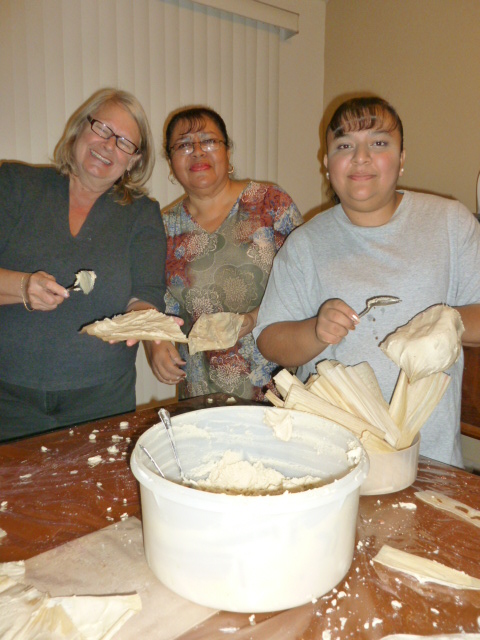
Kate’s tamale lesson with Lolis and her daughter Heidi at the “parsonage” of the Espino Sifuentes family
It wasn’t the border crossing – we hardly stopped! – that made our return to Mexico after the month long vacation difficult. There are differences in the daily routine here and in returning those differences were highlighted and had to be adjusted to once again. In short, Doug had to relearn how to do the dishes while Kate got back to studying Spanish. We also had some concern that our long absence might lead folks here to question whether we would ever return. But difficulties and concern were forgotten thanks to the welcome back received from friends. We were missed and what a good feeling that is.
So let us tell you about a special family we’ve come to know and love here. Our “consecration”
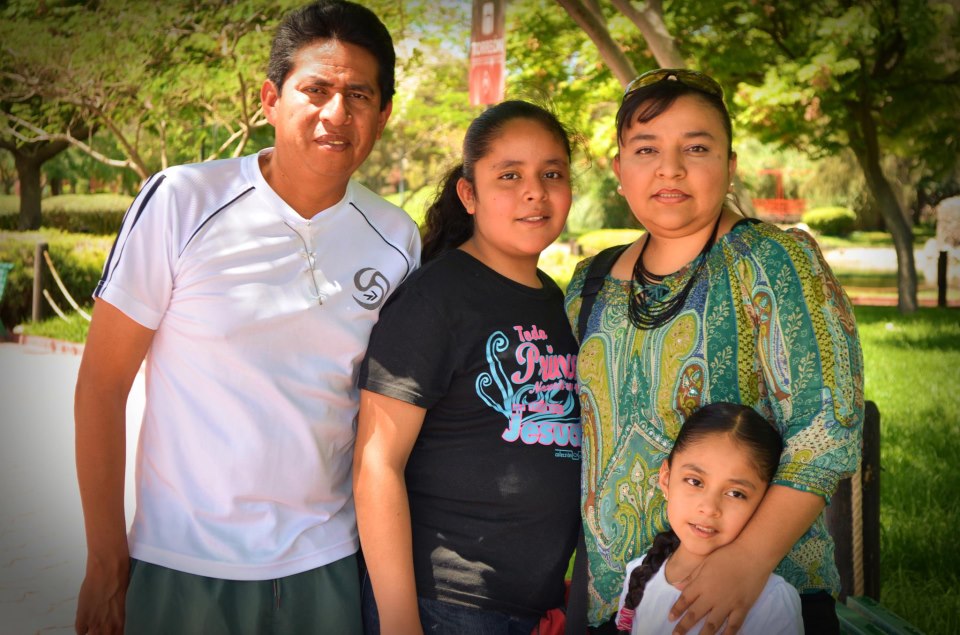
Rogelio, Debie, Heidi and Nadya
worship service six months ago was held in the Julien Carrillo Christian Church near the center of San Luis Potosi and that night we met the family of Pastor Rogelio Espino Flores for the first time. The fact that Rogelio and Heidi are blessed with two daughters as we are (ours ages 26 and 23 and theirs ages 7 and 12) created an instant bond. We’ve since enjoyed many fun times together.
While having fun we’ve also learned. Kate’s had a lesson in tamale making which led to the following exchange. After Heidi’s mother Lolis praised Kate’s husk wrapping, Kate responded, “You know you can go to hell for lying” (Doug translating). “No really, I mean it” Lolis responded and they all exploded in laughter. Heidi’s determination to perfect Kate’s Spanish is lightened by much laughter. They communicate in a lively way and always have fun.
More than ten years ago Rogelio was among the last graduates from the seminary where we live; he has served pastorates in Aguascalientes and San Luis Potosi, the two Disciples centers here. On Mother’s Day Sunday at Julien Carrillo Church all the mothers received a gift and Pastor Rogelio made special mention of Kate. Her gift was presented with the words that Rogelio and Heidi have both come to love her like a mother.
Although Heidi’s mother Lolis lives in Torreon eight hours away, her regular visits are cause for celebration. What an amazing person she is! Virtually on her own, Lolis has for 13 years devoted herself to ministry with children and older adults in two “colonias” of Torreon. Children in single mother homes with little to no extended family support come to her after school for food and fun in learning about the Bible and Christian faith, praying for and serving others. Their service is focused on the older adults; visits to the seniors’ home is accompanied by deliveries of groceries and/or medicine.
Lolis calls her ministry LLamados a Servir (“Called to Serve”) in one location and Casa de Oracion y Misericordia (“House of Prayer and Mercy”) in another. Her Facebook page, with photo albums of her ministry, is called Llamados a Servir and can be found at:
With Heidi’s help in some of the technical aspects, Lolis’ Facebook testimony is now a ministry of hopeful proclamation throughout Latin America.
The memories, the learning, the relationship with this family lift and strengthen us. We enjoy thinking about their visiting us in the States some day. And there are so many others we have learned from and enjoy being with here. It is good to be home.

July 3, 2013 Graduation from Primary School of Debora. Photo by Heidi Sifuentes Sanchez de Espino, photographer and graphic designer
“Strawberry Fields Forever” ??
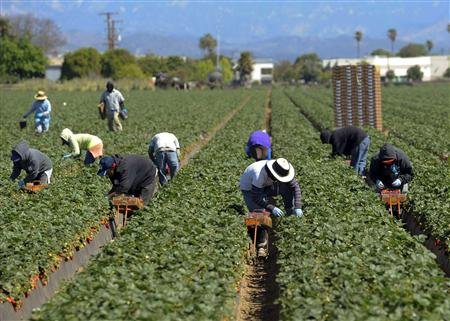
Strawberry field workers in Oxnard, CA – from the Reuters article cited below
In California, Kate and I would from time to time buy strawberries from a roadside stand. The stand was located within the limits of Los Angeles County where nearly ten million people reside. We never found a stand selling corn or tomatoes but there were several next to strawberry fields.
As we admired the baskets of strawberries we had just purchased, we could almost hear over our heads the melody of “Strawberry Fields Forever” and the question of how long would the growers of strawberries hold out. How long could the offers made by developers of new housing projects be resisted? Of course the real defenders of the strawberry fields in Los Angeles County, those who keep the fields flourishing and financially viable, are not the growers.
Those of us who buy the strawberries don’t ask the cashier if they are cultivated and picked by “legal” workers. We don’t ask if they earn the $8 minimum hourly wage in Los Angeles County. We breathe in the scent of fresh strawberries and are lifted by gratitude that the fields are still there. But we know that they wouldn’t be if the workers, the brown skinned men and women, earned a wage above the poverty level for a family.
It’s the same in the fields seen on the drive along California’s U.S. 1 up the coast. How can those fields be farmed on some of the country’s most valuable real estate? If their workers have been at it for more than five years, don’t they deserve to be considered “legal”? Do we really want to continue to punish them through our immigration system?
For more food for thought on this topic see the excellent Reuters article at:
http://news.yahoo.com/strawberry-fields-immigration-reform-holds-sweet-promise-022400949.html
and meditate on Jesus’ parable of the vineyard laborers at Mt 20: 1-16
Maravillas Welcomes You

The original pulpit Bible of the Maravillas Disciples congregation is now in the foundation of the new sanctuary
“No hay mal que por bien no venga” (There is nothing bad that something good cannot come out of it) is a widely quoted Mexican proverb which the Maravillas Disciples Church on the outskirts of San Luis Potosi, Mexico is now living out. Since the collapse of their sanctuary roof on December 29 and subsequent demolition of the building, the congregation has been blessed with the prayers, offerings and presence of fellow Disciples in the area and beyond.
Last month representatives of the two largest congregations in San Luis Potosi brought $2500 to the afternoon worship service at Maravillas. And Pastor Josue Martinez Cisneros, President of the C.I.C.E. Disciples churches assured the members more would be contributed. The Global Ministries Executive for Latin America, Rev. Felix Ortiz, arranged for contruction advisor Jim “Santiago” Piper to spend four weeks helping with the design and planning of the new sanctuary. Jim has now returned to Maravillas to assist with laying the foundation and putting up the new sanctuary’s walls.
These early signs of solidarity, fraternal love and support have enabled the congregation to make fast progress in the construction project. “I am so
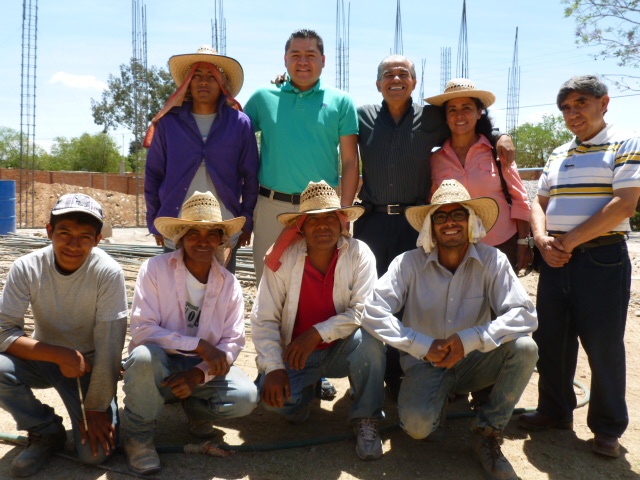
Building Chair Ramiro in turquoise shirt with Committee members and Saturday work crew
grateful for this unexpected, new opportunity to show our love for our Church and our God” Building Committee Chair Ramiro Ortiz Pardo states. And Pastor Rosendo Arvizu Avalos’ youngest child, 23 year old Alvaro, expects the project to result in deepening the congregation’s faith and commitment to serve.
On leaving for home in Caldwell, Idaho just before Easter Jim Piper was determined to return soon. In addition to his satisfaction in helping the congregation plan the new construction, he expressed gratitude for the good care and tasty meals provided daily by church members. “Their hospitality has been amazing” Jim declared on his return in mid April to San Luis Potosi and the Maravillas community. “I have the time and I love it here. How could I not come back?” he adds with a big smile as he chuckles.
The Maravillas congregation looks forward to welcoming other volunteers to participate in the new sanctuary project. The distance from Los Angeles to San Luis Potosi is nearly equal to the mileage from LA to Kansas City. And there are direct flights from Houston to San Luis Potosi. Contact Jasmine Sanchez – jsanchez@dom.disciples.org or 317-713-2561 – in the Global Ministries Latin America office to discuss how your congregation or Region/Conference might help bring about new wonders in Maravillas. (see the blog of February 13 “New Wonders in Maravillas” in the Archives section of Erasing Borders)
-
- Original Maravillas sanctuary cornerstone
-

- Original sanctuary featured a fine mural by pastor’s son Caleb who also leads the “Praise Band”
-

- Progress on new sanctuary building as of April 27
-

- Maravillas Young Married Group performed “Jesus is the Real Super Hero” April 28
-

- All ages enjoyed Ice Cream in Melon following April 28 Afternoon Worship
-

- The Sanctuary of Maravillas on the outskirts of San Luis Potosi January 2, 2013
-

- JIm “Santiago” Piper rode his way back to Maravillas from First Christian Church of Nampa, ID
Pilgrimage to Magdalena

A “fire” opal from Magdalena, State of Jalisco, Mexico
“Set up road markers for yourself,
make yourself signposts;
consider well the highway,
the road by which you went.” Jer 31:21
“Pilgrimage” is a theme of any trip through the Mexican state of Jalisco. The presence along the highways of clusters of people walking or lone trekkers headed to the San Juan de los Lagos shrine begs us to consider the aim or aims of our own journey. “What does the Lord require of us” we wrote after our first trip to visit Congregational churches in Jalisco state. It was a different kind of pilgrimage this trip. If, as the saying goes, you make your way by walking it, can you also make a pilgrimage by “following your bliss”? After this last trip, we think so.
Last week on our way through Jalisco to visit churches in Tepic and Acaponeta in the state of Nayarit, we passed by the town of Magdalena. No signs or billboards advertise that it is now the opal mining center of Mexico but Kate had stayed nearby twenty years ago. In telling about that past Mexico trip she has often mentioned the opal tailings brought back from a visit to Magdalena by others in her group and how she hoped to visit the town herself some day.
On our return home, we couldn’t pass up the opportunity so we pulled off the tollway for some touring of the Mexican opal capital and some “comida” dining at the appropriate time of 3:30 pm. At the first stop of Opalos Mexico, we learned that to the Romans, the opal was more highly prized than the diamond and that Marc Antony had connived to secure a magnificent opal for Cleopatra. We also learned that Lupita’s was the place to eat and that proved to be sure advice.
While Kate and our traveling companion Ana Yolanda Gutierrez looked for opals, Doug continued the conversation Kate had begun in English with a
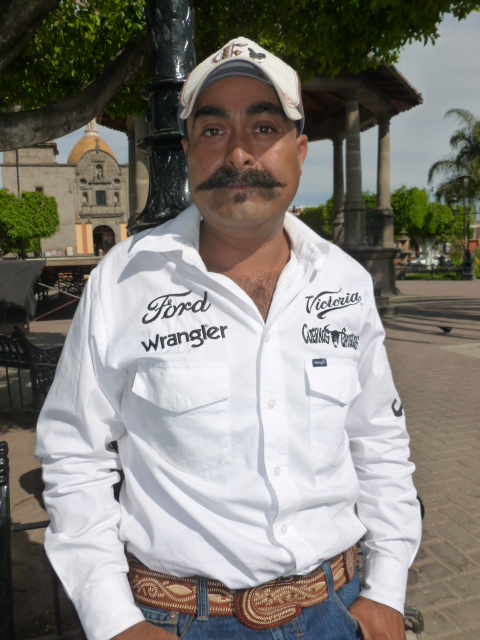
Humberto – from a village near Magdalena via Alaska
man in the town plaza. Humberto was unmistakably Mexican with a groomed Zapata mustache and a wide “charro” belt. He was vacationing in his home village near Magdalena after 8 years of working on a cruise liner in the waters of Alaska. Two years working in the kitchen in a Japanese restaurant in Los Angeles led the owner to recommend him to his brother for the job in Alaska.
Doug congratulated Humberto on the mustache and asked if he sported the same look in the States. “Why sure”, he replied, “I get a lot of compliments on the mustache in the north too.” When Doug next admired the belt he began to take it off and offered to give it to him. After remarking how much better it looked on someone with a mustache like his, it occurred to Doug that something beautiful about the culture he was living in had just been revealed to him.
There was more to ponder in the opal shop where the women had found the array of stones and the ambiance they were looking for. Three young men were working on the delicate task of freeing multi hued opals from the rock they are encased in. The volcanic conglomerate is also sold in small chunks some of whose bits of opal glint as they reflect the light. The shop workers told us the Aztec name “hummingbird stone” refers to the gem’s iridescent qualities. We were shown a variety of gems that had been shaped and polished including one of the “fire opal” type whose dazzling properties derived from “the waters of paradise” according to the Maya.
On leaving the shop, Doug was offered a sack of at least five pounds of conglomerate for 100 pesos (about $8). He couldn’t pass up the opportunity to discover the colors hidden within the rocks inside the sack. It would take some effort but that may be the learning, one of the gems, revealed in this latest pilgrimage. We all left pleased that Kate had finally been able to make the trip to Magdalena.
-

- The sack of opal encrusted conglomerate shown off by Yolanda, “Yolie”, and Kate
-

- Before Nayarit we had a night in Tlaquepaque with Yolie and the family of Pastor Heber Neftali Lopez Valdez of Guadalajara
-

- David and Karina Maldonado of the Tepic Congregational Church showed us the construction plans for a new church camp 45 minutes from the Ocean
-
- Pastor Danilo of Tepic is leading a mission church planting in a new neighborhood of the city
-

- Tepic’s new “colonia” of La Cantera
-

- Pastor Julio and wife Rosa in the Congregational Church of Acaponeta
-

- Family Doctor Dr. Gonzalez Chavez with Acaponeta youth leader Nestora who begins studies for a medical degree in the fall
-

- This amaryllis bloom, our first white ones, surprised us at home on our return
“For the Honor and Glory of God”

San Luis Potosi’s Central Christian Church stained glass glowing in the Easter morning sun
We almost made it on time for the 6 am worship service Easter morning at Central Christian Church in San Luis Potosi. Kate had made two large pans of coffee cake for the breakfast following so packing the car and getting the dogs on the roof, where they can roam free, complicated our getting away at the early hour. Over thirty five persons attended so Pastor Josue Martinez Cisneros, who had expected half that many, had to be pleased.
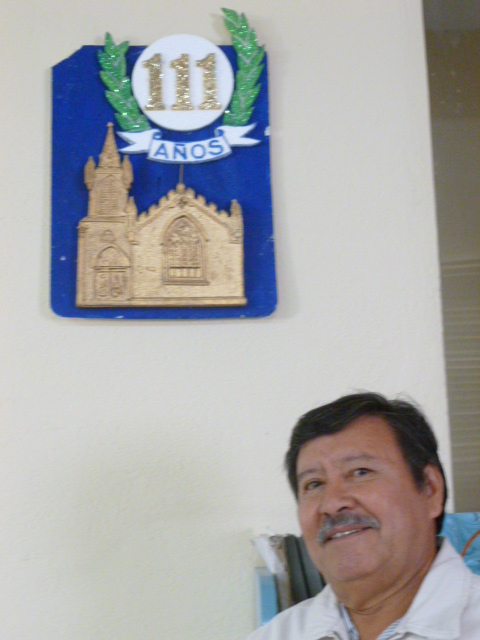
Central Christian’s Francisco Chapa makes these signs for church events and serves as lay pastor for a congregation two hours away
Before heading to the 11 am service at Iglesia Christiana Evangelica (Discipulos de Christo) de la Colonia Julien Carrillo, we had time to explore the beautiful Tangamanga Park for the first time. On our walk there was remarkably little evidence of the hordes of people who had enjoyed a picnic in the park woods the day before. An “enchanted castle”, a roller (or ice?) skating rink, open air amphitheater, and water park were among the attractions we discovered on the brief tour. It’s the second largest urban park in Mexico so there is much more to see, including the shell of the 1609 house of the hacienda that once occupied the grounds.
At Julien Carrillo we arrived in time to sit in a front pew with a hymnal – we really need to buy one – and were uplifted by the congregational singing and three familiar melodies sung by their fine choir. During the “testimonials” segment of the service two couples gave thanks for thirty plus years of marriage, Bere Gil Soto thanked God for two wonderful weeks far away from studies at Indianapolis’ Christian Theological Seminary, and a young mother concluded the testifying with a somber note. She expressed hope that her husband would return with the family to church and envisioned that when he did it would be “for the honor and glory of God”.
Once again, it was the “testimonials” of the congregation that stood out in the Easter worship. During this segment, we always feel moved and privileged as church members reveal challenges, setbacks and grief along with causes for celebration. Often in the background of these testimonies is the context of the speaker’s living the Christian faith as an evangelical in a very Catholic country. Kate and I continue to try to understand and appreciate more fully the impact on the faith journey of being in the minority.

The concluding testimonial at Julien Carrillo on Easter morning
Learning about the martyrs in the past history of the evangelical churches of Mexico, of families divided by faith and of the sacrifices made by many evangelicals in our day leads us to reconsider the place of risk in the faith journey. Taking the risk of the “leap of faith” as Kierkegaard called it was a central theme of our Lenten meditation this year.
The “leap of faith” by our Mexican friends here has us wondering what we give up as Christians if there is little risk in a life of faith. In the U.S. where Protestant “evangelical” Christianity is the norm on the religious and cultural landscape, where and how does risk feature in the lives of Christians? And in a life of faith free of risk how do we witness to the “honor and glory of God”?


 Erasing Borders