The Conquest and Christianity

Cortes and troops were dazzled as they entered the “capital of the Western world”, Tenochtitlan (now Mexico City) on November 8, 1519.
The Spanish conquest and colonisation of the New World soon led to a debate over enslavement of the Indian native population decades before the rest of Europe confronted the horror and injustice of the enslavement of Africans. This was due in large part to a few prophetic priests’ fierce criticism of their fellow countrymen’s treatment of Indians. The leading defender of the Indians, Father Bartholomew De las Casas, devoted himself for fifty years to enactment of labor reform in the Spanish colonies and to proclaiming the liberty and equality of the original inhabitants.
Sent in 1502 to manage the properties of his father in the Domincan Republic, De las Casas himself owned Indian slaves before he was converted to protect and defend the Indians by some powerful preaching and by his studies of the Bible. Consecrated as a priest by the Dominicans in 1510, he heard Father Antonio de Montosinos preach in the cathedral of Santo Domingo against all forms of oppression and exploitation. Anticipating the furious response to his sermon, Father de Montosinos chose the text, “I am the voice of one crying in the wilderness”. His congregation included the colony’s highest officials who demanded the priest retract his views in the following Sunday’s sermon.
Prior to the next Sunday’s sermon, the Prior of the Dominican community assured the officials that Father de Montosinos spoke for all the priests serving the colony. With this backing from his superior, the indomnitable de Montosinos based his sermon on Job 36:3 the following Sunday and added to his denunciations of injustices the proclamation that the sacraments would be denied any slave holder in the colony.
It seems important to note that the views of Father De las Casas on the treatment of the colonies’ natives were slow in evolving. Father de Montesinos mentored De las Casas with the warning, “the truth has ever had many enemies and falsehood many defenders”. Consecrated a priest at age 36, his first charge was managing a property and converting Indians in Cuba. Having witnessed gruesome attacks by Spaniards on “rebellious” Indians and the routine mistreatment of their laborers by the Spanish settlers, the turning point for the middle aged priest came on Pentecost 1514.
Searching for an appropriate text for the celebration of the birthday of the church, De Las Casas came upon the words of Eccl 34: “He that sacrificeth of a thing wrongfully gotten, his offering is ridiculous, and the gifts of unjust men are not accepted. The most High is not pleased with the offerings of the wicked; neither is He pacified for sin by the multitude of sacrifices….He that taketh away his neighbor’s living, slayeth him;

Father Bartholomew de las Casas was converted to the cause of the Indians in 1514 and labored tirelessly on their behalf until his death in 1566 at age 92.
The sermon’s effect was immediate on the preacher. De las Casas met with the Governor of Cuba to relinquish his properties and his rule over the Indians working there. He further began to make plans for his first of many trips to Spain to plea eloquently for equal rights for the Indians of the New World. The message in Spain on this first trip and all that followed included the conviction that those who ignored the rights of those created in God’s image would be condemned eternally in the court of God’s justice.
It took De las Casas a few years to extend his doctrine of justice and equality for the natives of the New World to the slaves bought on the coasts of Africa. When pressed on one of his first advocacy tours of Spain whether it would be acceptable to replace Indian laborers with African slaves working in Spain or direct from Africa, the defender of the Indians gave his approval to importing Africans as well as Spanish laborers. For nearly one hundred years Spain had bought African slaves from the Portuguese traders and they were a prominent feature of Spanish society especially in Las Casas’ hometown of Seville. De las Casas soon recanted from his support for African slave labor and extended his doctrine of equality and justice for those exploited by European rule to all the world’s colonized people.
Reading accounts of the conquest and colonization of the New World found in the Western Hemisphere one is struck by the consistent reference to conversion of the natives as the primary motive for the daring adventures. Cortes for example masterfully employed advance of the true faith in motivating his small band to enter yet another battle with the Indians. So how could their “championing of the Cross” have resulted in the near total decimation of the Indian population in the colonies of Spain?
Cortes himself explained to an Indian ally the behavior of some of his troops with the following words: “The Spaniards were troubled with a disease of the heart, for which gold was a specific remedy.” De las Casas’ biographer Francis McNutt points to the many temptations of the colonial setting as the background to the outrages of the colonizers: “Perverted as their conception of the true spirit of Christin propaganda may appear to us, it may not be doubted that many of these men were animated by honest missionary zeal and actually thought their singular methods would procure the conversion of the Indians. On the other hand, few of those who left Spain, animated by high motives, resisted the prevalent seductions of avarice and ambitions amid conditions so singularly favorable to their gratification.”
The great 19th century historian of the conquest William Prescott provided another explanation of the Spanish sins in their colonies: “Religion in that day was one of form and elaborate ceremony. In the punctilious attention to discipline, the spirit of Christianity was permitted to evaporate.” This sounds like something we need to be attentive to and avoid in our own day.
POST SCRIPT: Hatuey, an Indian chief in the first Spanish colony in the West, was urged to convert to Christianity before being burned at the stake so his soul would enter heaven. He asked if the white man would be there and when answered affirmatively, he responded, “Then I will not be a Christian, for I would not go again to a place where I must find men so cruel.”
For further reading on the era of Spanish conquest and the struggle to ameliorate the treatment of the native population:
Francis Augustus MacNutt, Bartholomew de las Casas; his life, apostolate and writings
Bartholomew de las Casas, A Brief Account of the Destruction of the Indies
Bernal Diaz del Castillo, The Memoirs of the Conquistador, a remarkable account of the conquest of Mexico by one of Cortes’ troops
William H. Prescott, History of the Conquest of Mexico
Grateful, Grateful
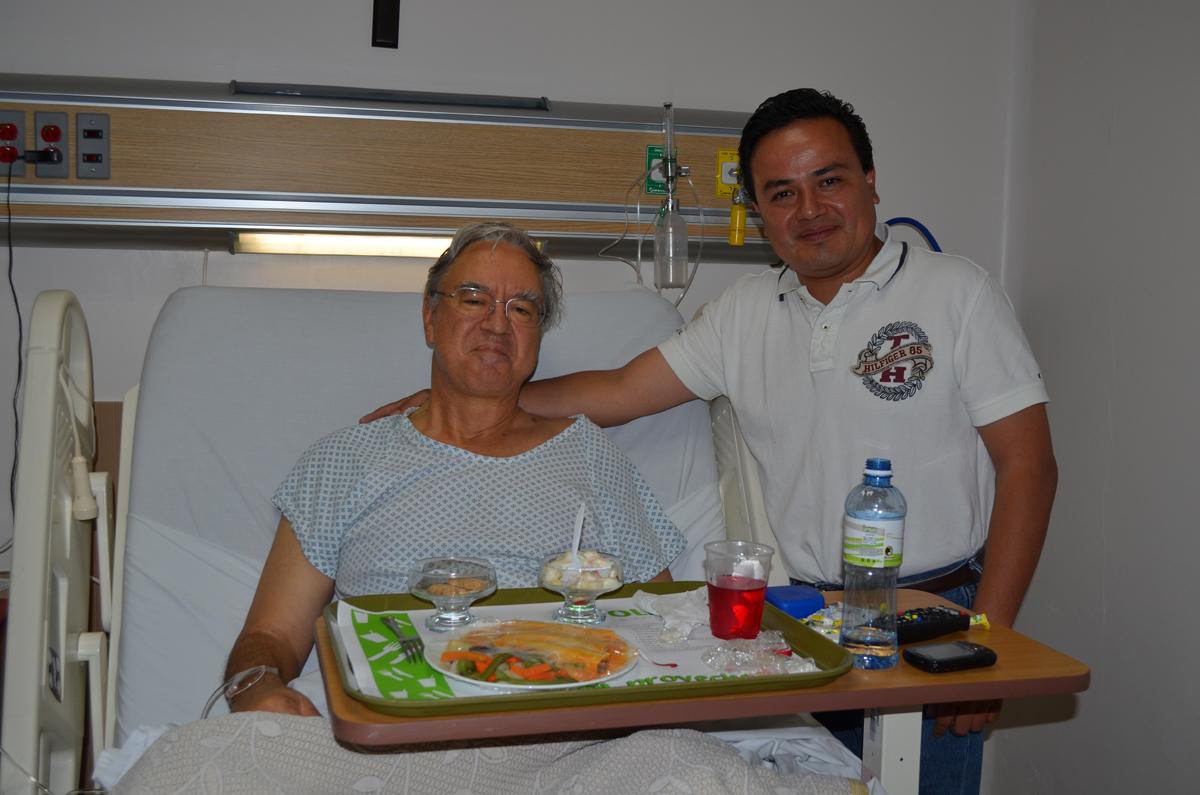
Doug with Dr. Humberto Gonzalez Mercado. San Luis Potosi’s med school where he trained is hailed as among the best in Mexico.
Like crocus buds pushing their way through the snow, faith that felt authentic and sure reappeared yesterday morning. Just the heads pointing to the sky but it was enough. The constant hip pain that was the new symptom of my month long illness would too pass away and I would soon be active and healthy again.
Lacking a definite diagnosis, faith didn’t come into play in the early days of my illness. Cancer had been mentioned but soon the evidence weighed against such a diagnosis. So in the absence of a focus on faith, while going over my favorite Psalms, my favorite prayers, and praying for myself and others, gratitude quickly emerged as the primary theme of my thoughts. Gratitude for the concern and prayers of family and friends in many places. Gratitude for the many hospital visits of friends in Mexico coming from as far as two hours away. Gratitude for the dedication to caring for others manifested by nurses and doctors in both Oli-Med Hospital San Luis Potosi and at the University of Kansas hospital in Kansas City where I was transferred October 8.
Gratitude for the quality of care I have received began with the initial visit of Dr. Humberto Gonzalez Mercado of San Luis Potosi Julien Carrillo Disciples Church. It was soon apparent that he was both competent and ready to commit to seeing me through this illness at no cost. He it was who on October 1 had me admitted to the private room in the SLP Hospital whose nurses and staff treated me like royalty. Dr. Mercado is the only doctor I have ever known who asked me to pray for another patient of his; I was grateful to be under the care of such a physician whose directness, sharing of his own life and optimism I could feel contributing mightily to my healing.
Thanks to the MRI and other expensive tests (covered by my U.S. care-only health insurance) in Kansas City we now know the extensive blood clot on my liver is the cause of the symptoms I had felt to a slight degree even five months ago. So my blood is being thinned under medication and once I adjust to the effect of coumedin on my body we will be flying back to SLP.
My room in the Kansas City hospital faced the sun rise and I was treated to a golden horizon most mornings before facing the needles of the new day. W.H. Auden’s definition of faith is “to choose to do what is difficult every day of our lives as though it were easy, that is faith”. Some times the difficult may just be getting out of bed. So I’m also very grateful for those sun rises in the hospital that made it so much easier to get out of the bed.
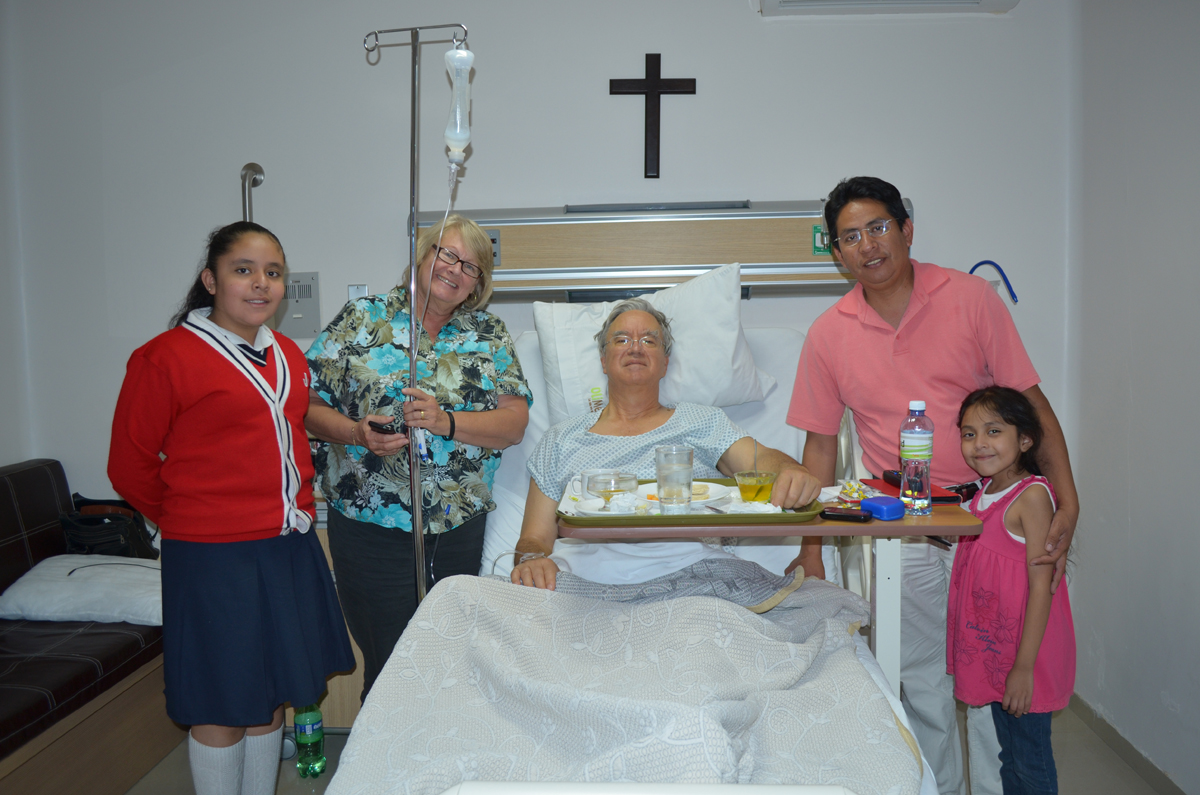
Dr. Mercado’s Pastor Rogelio Espino Flores with daughters and Kate. Total cost of my six night stay in Oli Med Hospital came to less than $4000.
Mil gracias to Heidi, Pastor Rogelio’s spouse, for the photos
What a Birthday!
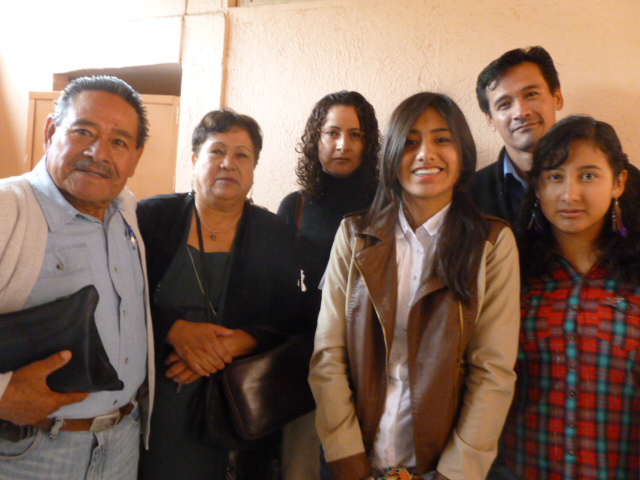
Jamie and Heidi join grandparents Natividad and Eva and mother and father for worship at Julien Carrillo
In both Disciples churches we attend in San Luis Potosi, there are a few bilingual English-Spanish speakers, most of whom have spent time in the U.S. At the Julien Carrrillo church, Natividad Tovar Torres spent over thirty years as a railroad employee, and a proud union member, after working in the fields of California. Nati and wife Eva Beltran Castro now live on a couple of acres of land in one of the housing developments that have mushroomed on the outskirts of the old town center.
When their pastor Rogelio Espino Lopez invited us to accompany him and his family to lunch in Nati and Eva’s home we gladly accepted. While Pastor Rogelio and Eva talked about the details for the upcoming worship service for his granddaughters’ quincenara birthday party at age 15, Nati proudly gave us a tour of his marigold fields, livestock and rooster (for cock fighting) pens. Drip irrigation keeps over an acre of marigolds flourishing before they are harvested for sale during the Day of the Dead fiesta on October 31. “Cempasuchiles”/marigolds have adorned graves before the conquest of Mexico by the Spaniards and are a principal feature of the altars created to honor and remember those departed from Catholic households across Mexico.
We hope the marigold crop is profitable this year because the quincenara (literally “the female at age 15”) last Saturday was a lavish event. A large tent was set up next to the house to accommodate over one hundred fifty guests. Family and church members and friends of Heidi and Jamie participated in the opening worship where numerous gifts were presented to accompany the cousins into adulthood. The significance of each gift was mentioned by Pastor Rogelio or the

Marisol of Julien Carrillo Church gives Heidi a Bible
The meal began with a delicious cup of “charro” beans (a broth of pinto beans, meat, onions and cilantro), followed by barbecue beef and lamb with rice, fresh tortillas, limes, onion and cilantro and heaps of green or red salsa. The cake was served while many were huddled in groups around the tables under the two tents or defying the soft rain that fell most of the afternoon.

The pillows (“cojines”) are presented by a family member and a church member
That both fathers did return for their daughters’ quincenaras can be seen as powerful testimony to the durability and importance of the ties of family in the Mexican culture. Transfers of earnings from the States to family members back in Mexico represent further evidence of the strength of those ties. After oil exports, those transfers are the leading source of foreign exchange for Mexico. During the long period of separation of father and mother and father and children, Church friends affirm and bless those family ties as the work of the Creator whose love is always with the family.
We close with an early nineteenth century commentary on the power of family ties within the Mexican cultures. Written by Fanny Calderon de la Barca (Scottish wife of the Spanish ambassador), we find it as true today as when she wrote the letters that make up her renowned 1843 book, Life in Mexico .
“I have seen no country where families are so knit together as in Mexico, where the affections are so concentrated, or where such devoted respect and obedience are shown by the married sons and daughters to their parents….I know many families of which the married branches continue to live in their father’s house, forming a sort of small colony, and living in the most perfect harmony. They cannot bear the idea of being separated and nothing but dire necessity ever forces them to leave their fatherland.”
Dire necessity and the work opportunities in the U.S. during the last one hundred years do not seem to have diminished the bonds of family in Mexico.

Pastor Rogelio speaks to the young women
Hearty thanks to Heidi Sifuentes Lopez (wife of Pastor Rogelio) for the photos and indispensable help with this post.
Border Walls
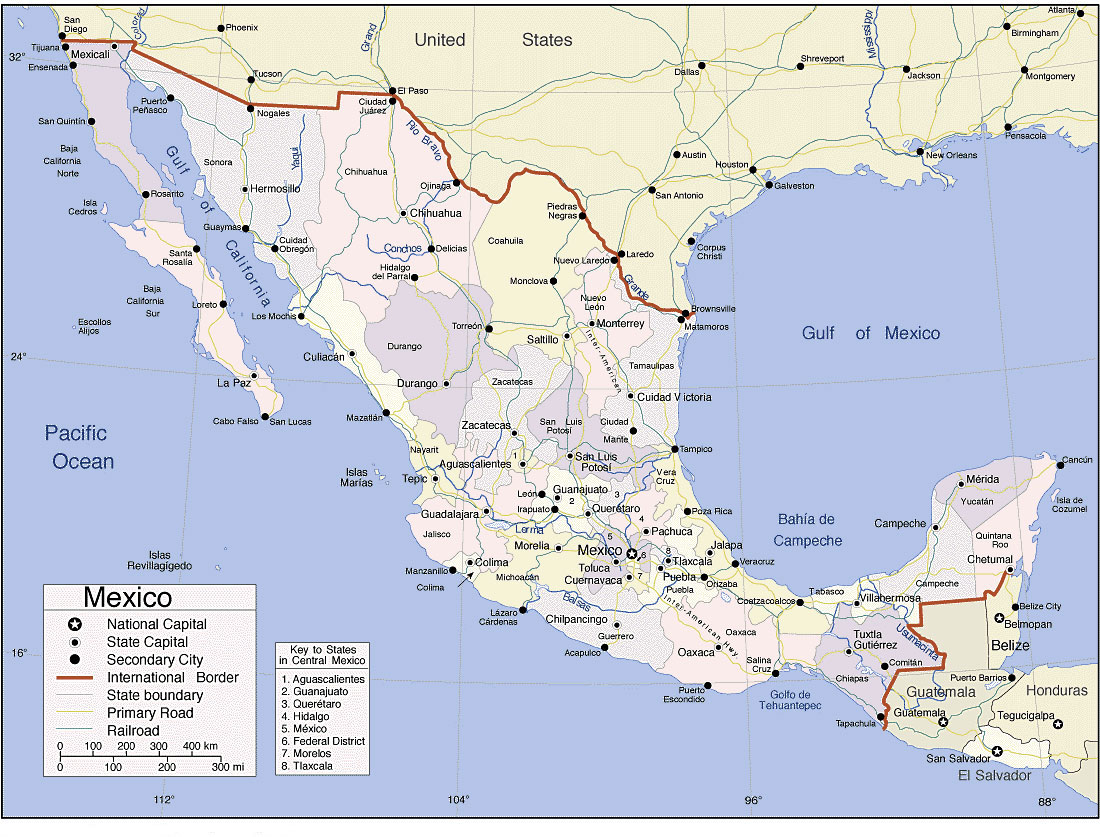
With immigration law reform such a hotly debated topic in the U.S. these days, we want to describe our path to legal residence on this side of the border. On May 2 this year we were granted “Temporary Resident” status in Mexico. In approving our application for residency for the period of two years, the Office of Immigration wrote us the following:
“As a country valuing hospitality……Mexico is pleased to send you the enclosed card (green!) in approval of your stay as a temporary resident thereby signaling permission…..for unrestricted movement within the national territory, access to education and health services and to the justice system.”
We had applied to the Immigration Office in San Luis Potosi shortly before the six month tourist visa we entered with had expired. While waiting for the application to be processed, we received a “Departure and Reentry Permit”, valid for a 60 day period, and then left for a month’s vacation in the States.
On our return to San Luis Potosi, we celebrated our new legal status and the green card, bearing a hideous photo, now in our billfolds. The whole process cost us about $400 U.S. each with no lawyer involved. As what our Disciples/UCC Global Ministries Office terms “Service Volunteers”, we did not apply for a work permit. The Office of Immigration did note on the application that we were in Mexico to serve Disciples of Christ and Congregational Churches of the Mexican Roundtable, “Mesa Conjunta”.
Throughout the process of establishing legal residence, we were of course mindful of the contrasting procedures for establishing residence in the neighboring countries of Mexico and the U.S. There any so many barriers now in place, almost entirely on the U.S. side of the border, which impede or prevent relationships between people of our two countries. The current application process makes even a short visit to the States a formidable challenge that is out of reach of most Mexican citizens.
While in Mazatlan recently, we enthusiastically talked with church leaders there about organizing cross border visits, particularly for youth, in the two countries. Youth from the U.S. have been hosted by the Congregational Church in Mazatlan but it’s not so simple for Mexican youth to return the visit. While a tourist card at the Mexican border costs a U.S. cit
izen around $22 U.S. now, a U.S. tourist visa for a Mexican will involve a processing fee of $160 plus around $40 for DHL delivery of the visa. A Mexican youth will have to be interviewed at the nearest U.S. Consulate and in the case of a Mazatlan youth that would be in Hermosillo, a $3000 Mexican pesos round trip. All this in addition to the cost of a Mexican passport of $955 Mexican pesos or around $73 U.S. make an almost insurmountable barrier for an exchange visit by Mexican youth.
But it isn’t only prohibitive costs and lengthy processing of applications for Mexican visitors;

Child scaling the U.S. -Mexico border wall at Brownsville, TX
We hope this blog contributes not only to “erasing borders” but also to breaking down some walls of separation between communities of faith in the two countries. Disciples and UCC churches in the U.S. have a history of more than one hundred years of service in Mexico. As more and more Spanish speaking communities of faith affiliate with our two denominations, our relationships with Congregational and Disciples church members in Mexico represent a great asset and resource for a more inclusive Church in the U.S.
An excellent article on the real reasons, internal security is not among them, for the U.S. government constructing a wall on the Mexican border can be found at https://nacla.org/article/why-build-border-wall
Graduation, Retreat and Mission
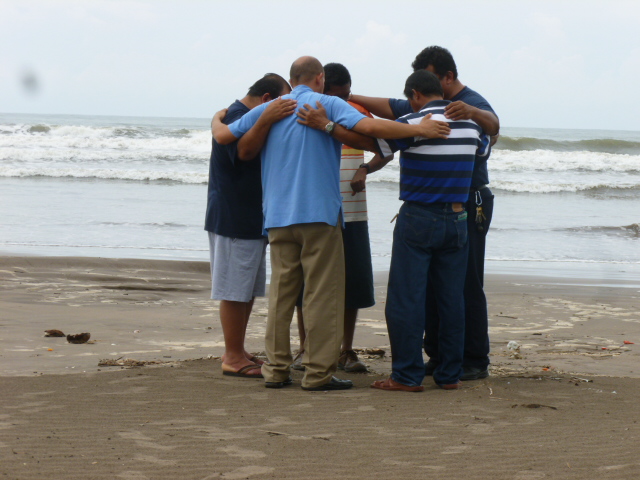
Congregational pastors praying on the beach before returning home from the Novillero, Nayarit retreat
Our most recent journey began in Aguascalientes with a meeting of the Mesa Conjunta (Roundtable), the Global Ministries partner in Mexico to which we are assigned. Rev. Felix Ortiz, Latin America Executive for Global Ministries, celebrated Lisania Sustaida’s completion
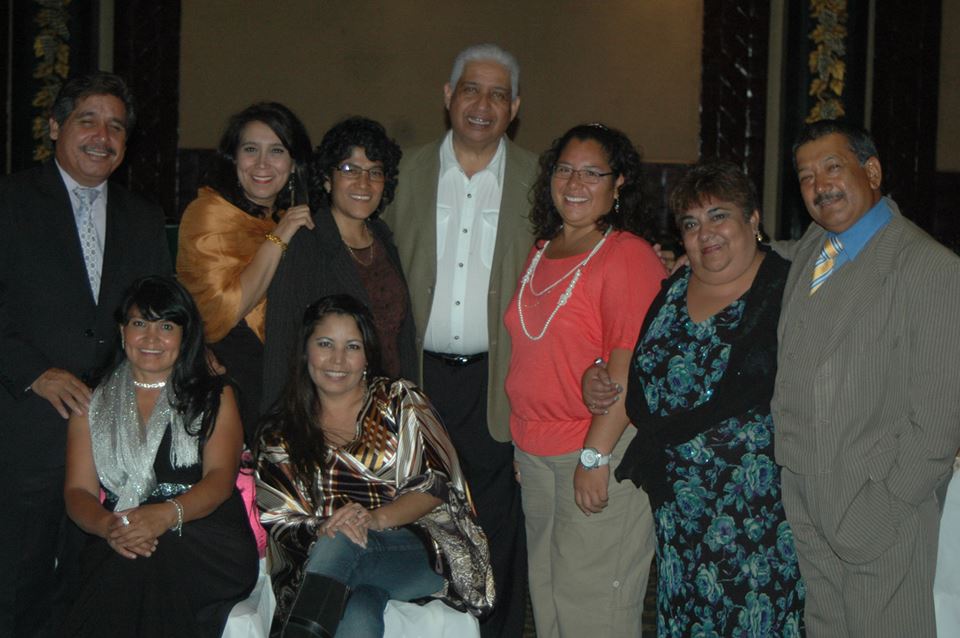
Rev. Felix Ortiz with Aguascalientes seminary (SEBA) graduates and friends
On the evening of the Roundtable meeting, the one seminary among Disciples and Congregational

A few of the graduates in the “Rev. Felix Ortiz Graduating Class”
On the next leg of the trip, we enjoyed our first stay on a beach in Mexico. The retreat for pastors of Congregational churches was held at a comfortable hotel in Novillero which boasts the longest beach in the country and fine, soft sand. During the two and a half days, Doug presented and led discussion on the theme of “Joy in Ministry”. Isa 55 was meditated on during devotional time and during sessions on the topics of joy in community, joy in cultivating spiritual disciplines, and joy in living by a vision. After a lapse of three years during which the pastors had not gathered, it was gratifying to see the enthusiasm in planning next year’s retreat at the same location.
Three of the pastors at the retreat are on the staff of the Congregational Christian Church of Mazatlan which we enjoyed visiting on our last stop. During his twenty three years as lead pastor, Daniel Celis has helped the Church grow from 90 to 365 members. Along with offering
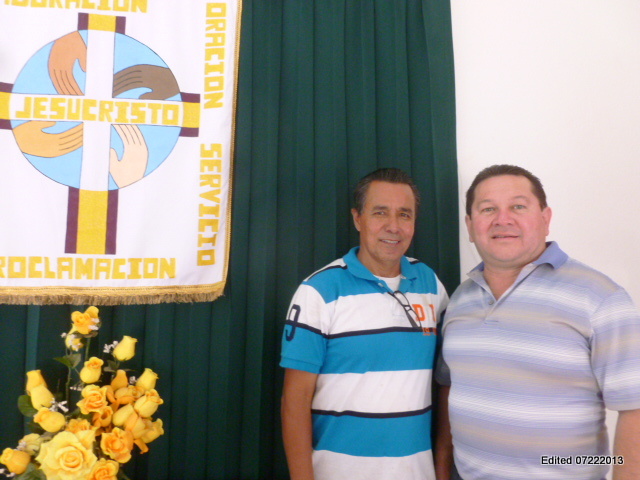
Rev. Daniel Celis (r.) with Pastor Jose of Villas del Sol, one of Mazatlan’s 3 “mission” churches
It was a great joy to meet the family of Pastor Victor C. who had shared at the retreat his

The Mazatlan Congregational Church, oldest Protestant church in the city, founded this school many years ago
On Sunday, August 25, we were delighted to finally participate in worship at the churches in Pozole and Apoderado, twin communities an hour and a half south of Mazatlan. Pastor Miguel Villa, Congregational representative for the Roundtable, had invited us months ago but the daunting distance of travel from San Luis Potosi made us postpone the visit. Accompanied by Miguel, wife Maribel, daughter Miriam and musician Margarita we enjoyed preaching in the two rural communities and returned Sunday evening to Mazatlan laden with the biggest mangoes and avocadoes we had ever seen.
Now back home in San Luis Potosi, this latest trip has deepened our feelings of gratitude for being called to serve in Mexico. We look forward to returning and continuing to share in ministry with brothers and sisters in each place visited. God has richly blessed us.
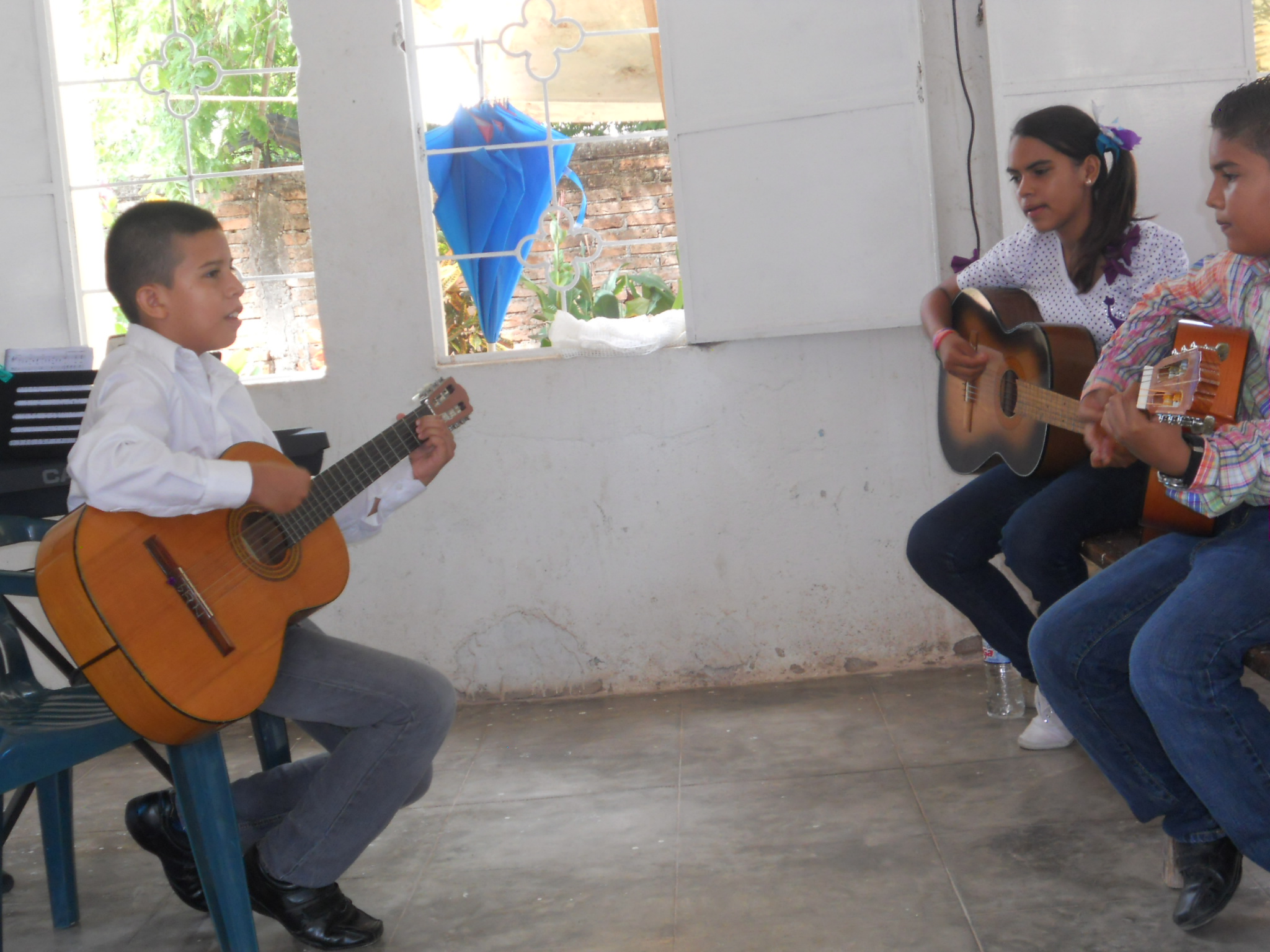
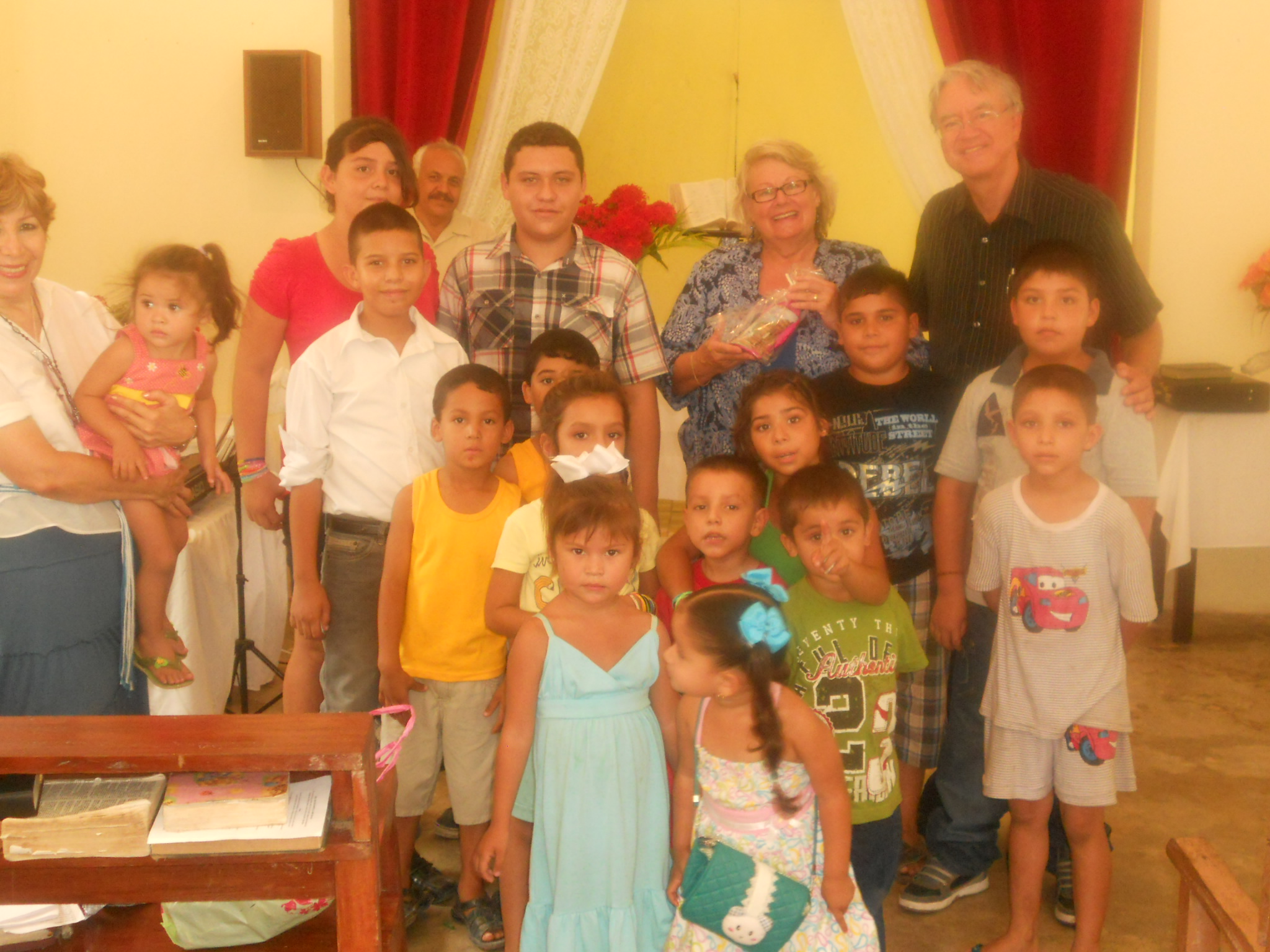
Click on a picture in the trip’s Gallery below for a larger view. Credits: Myrna Paz for Aguascalientes graduation photos, Miriam Villa for Pozole and Apoderado photos and David _ of Mazatlan Congregational Church for Sat. leaders’ meeting These Apoderado musicians have been playing for less than a year thanks to Margarita, church music teacher Pozole youth and children with Pastor Miguel Villa in back and Maribel on left
photos.

This mural on Villas del Sol’s sanctuary wall was painted by a church member
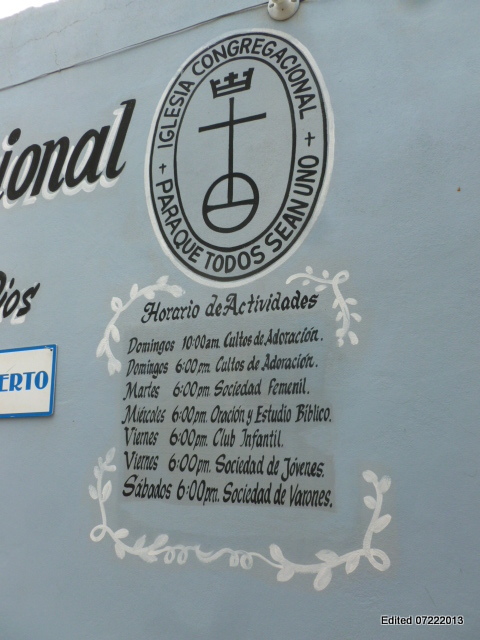
youth activities dominate the weekly schedule at Villa Union “mission” church

Pastor Victor C., Jessie, Elias and a tired Isais outside their new Villa Union home

The iguana at the retreat kept its distance from us

Meals began with song: see Facebook Douglas W Smith page for a video
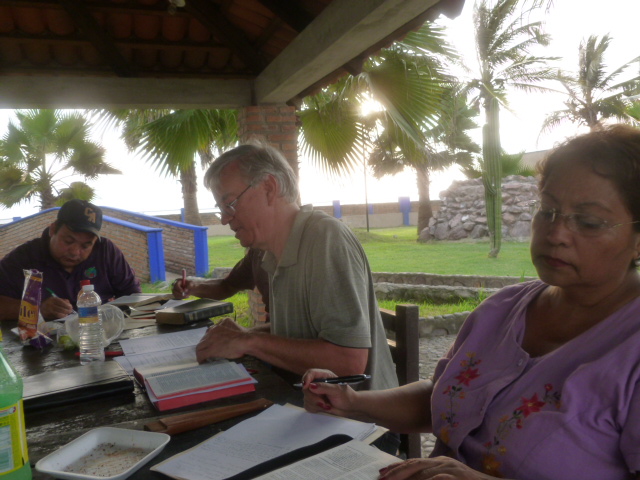
The fresh air setting next to the beach enhanced our retreat sessions
-
- Male Apoderado church members, like those of Pozole, are farmers and shrimp fishermen
Jerez, a Magical Town
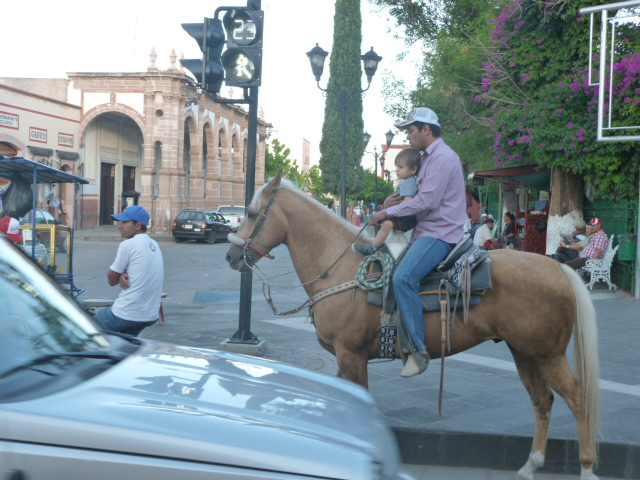
The original “Cowboy Culture” lives in Jerez as seen on the central plaza
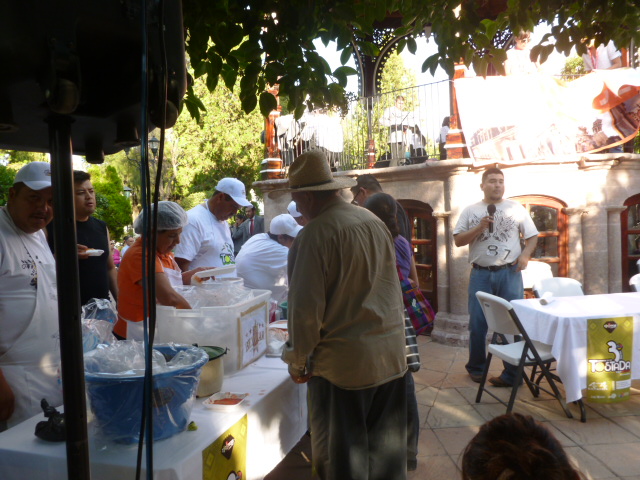
We were charmed by our first visit to Jerez, Zacatecas back in December and the spell cast on us deepened with the three day stay last weekend. The annual Assembly of the Disciples of Christ Church (ICDC) brought us to town and rather than stay in a church member’s home this time, we decided to try out a “tourist experience” of the town and stay in the Hotel Le Jardin on the town plaza. For less than $20 a night and an excellent breakfast, it was a good choice, sweetened by the fact that the annual “Fiesta de Tostada” was being celebrated with the plaza as the center of activity.
Jerez is a delightful place to experience the encroachment of four wheelers and computer games on Mexico’s rural culture represented by the “vaquero”/cowboy and the richly varied musical traditions. We returned to our hotel at 1 on Saturday night and marveled at the bands playing on each corner, the packs of teenage girls and boys circulating, and the decorum that prevailed. Loud yes, but with a measure of grace and gracious manners that seem characteristic of traditional Mexican culture.
We decided that the photo gallery below was the best way to share the experience with you. As you browse the photos, you might be led to reflect on what the Mexican immigrant to the U.S. has had to give up with their move and how their immigration has contributed to the U.S. culture today. For a start, consider how all the words corral, rodeo, lasso, stirrup, lariat are all due to the presence of Mexican cowboys in Texas and other western states before they became part of the U.S. We hope Johnny Depp’s performance in the newly released Lone Ranger movie reveals that Tonto’s name (“stupid” in Spanish) was conceived by a writer who apparently knew very little Spanish.
“Bienvenidos”, welcome, to Jerez, one of the towns the federal government has named and funded as a “Pueblo Magico” or magical town. We’re looking forward to visiting more of the “pueblos magicos” of Mexico. To enlarge the photos click once on one of the images.
-
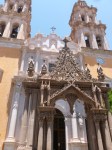
- Facade of the “Santuario” Cathedral. The clock’s time is correct!
-

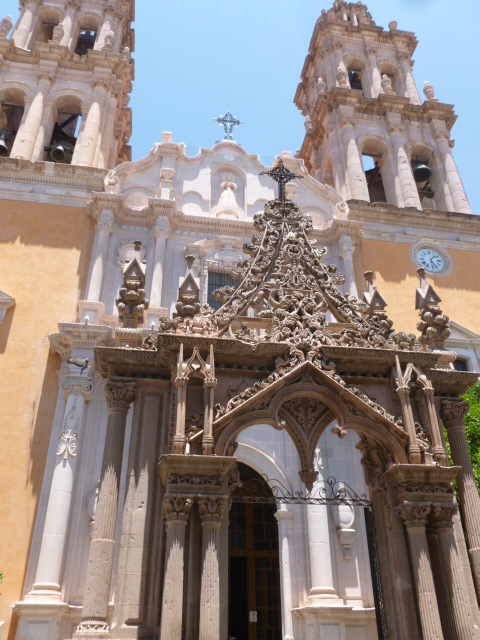
- Praise “Alabanza” section of opening worship for the Assembly featured dancers’ debut .
-

- Stirrups in an antique shop

-

- Hats for cowboys and mariachi band members among others

-

- Boys’ outfits – for first communion?

-

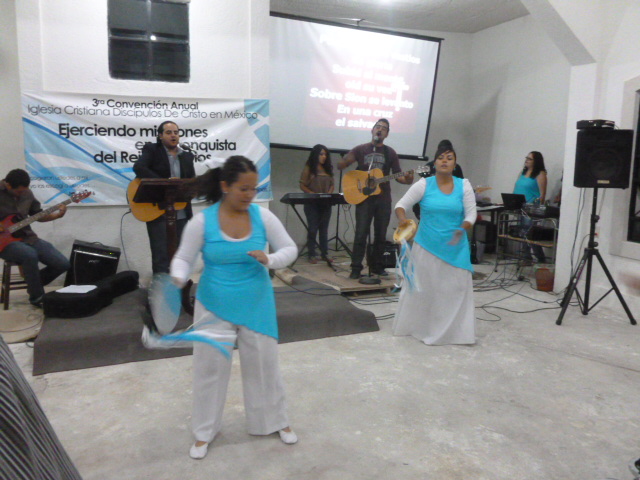
- Sidewalk outside the boyhood home of famed poet Ramon Lopez Velarde
-

- The Lopez Velarde home’s kitchen pantry
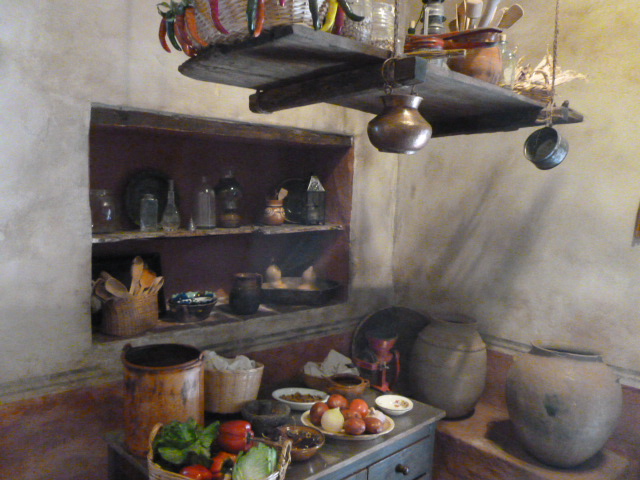
-
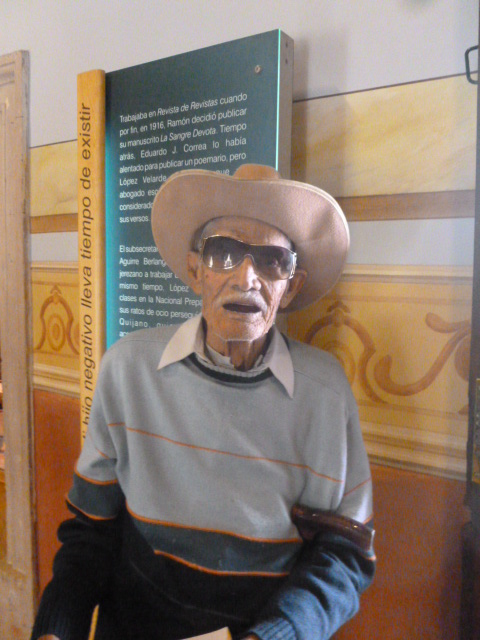
- Unofficial docent in the home is a Lopez Velarde family member who shared a poem with me
-
- Serving tostadas in the plaza to open the Fiesta de Tostada events
-
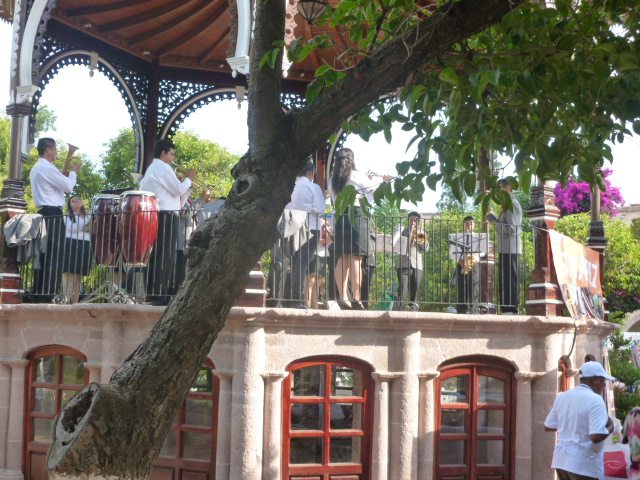
- The city band played for the Tostada Fiesta opening
-

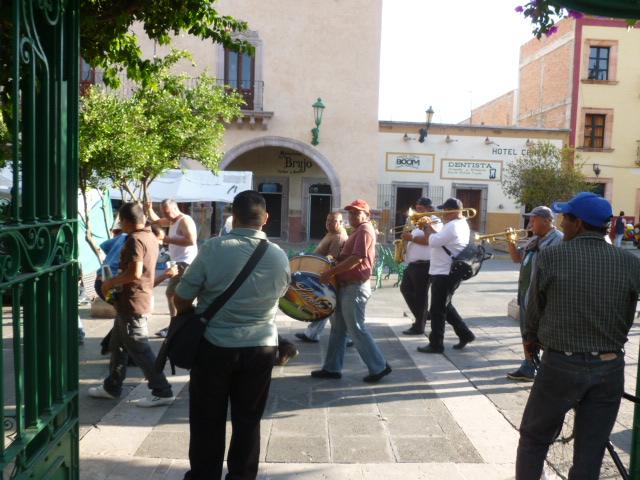
- Another band parades around the plaza
-

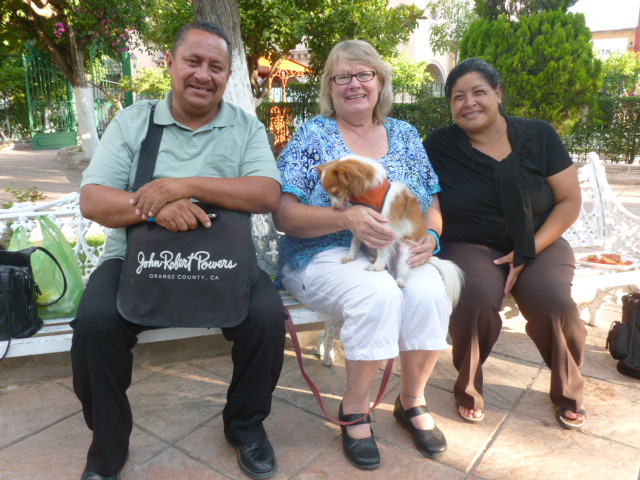
- Disciples from Tijuana attended the Assembly and met Kate and Minnie in the plaza
-
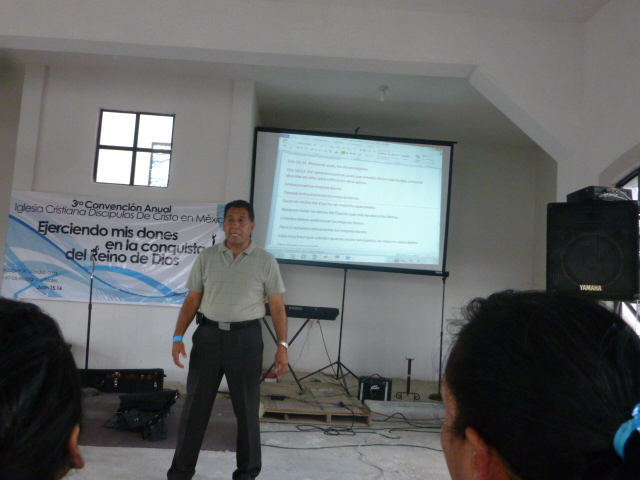
- Newly elected ICDC Disciples President Pastor Leobardo Flores gave a workshop on the gifts of the Holy Spirit
-
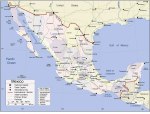
- Jerez is 40 km. southwest of Zacatecas, capital of the state of the same name
Doing What We Came To Do

Small group work during the Bible Exegesis class on “Women in the Bible”
AS a long-term volunteer with Global Ministries of the Disciples of Christ and UCC, my job description is way longer than you might imagine. “Kathleen Moyer, a member of Delhaven Christian Church (Disciples of Christ), La Puente, California,serves with the Joint Table for Mission Development formed by the Christian Congregational Churches of Mexico, the Christian Church (Disciples of Christ) of Mexico (ICDCM – Iglesia Cristiana Discípulos de Cristo de Mexico), and the Fraternity of Evangelical Christian Churches (Disciples of Christ) of Mexico (CICEDCM – Confraternidad de Iglesias Cristianas Evangélicas (Discípulos de Cristo) de Mexico. She will serve as a consultant for Mission Development, with emphasis on women’s development and theological education.”
This past month, I actually did what my job description says I will do! (You may not know it, but that in itself appears to be miraculous!) Every summer, the Mesa Conjunta (Roundtable….see above) sponsors a week-long event at the seminary where we live for the purpose of theological education. This year four classes were offered; I taught Biblical Exegesis and I took the opportunity to teach about women in the Bible. Nineteen students (ministers and lay leaders) attended my class for five days from 3pm – 7pm.

Pastor Agustin Martinez of Salem, OR participates in small group working on exegesis of the book of Ruth
My class focused on the women who are named in the genealogy of Jesus in Matthew 1:1-17: Tamar, Rahab, Ruth and the wife of Uriah (Bathsheba.) I wrote the lectures and my Spanish teacher,

Karla Ramirez, Kate’s teacher, helped with Spanish translation of her lectures
These 21st century detectives dug into the story and each group did an amazing job of presenting their own exegesis of Ruth! One group even presented their findings in a radio show tele novela format! Very imaginative and informative! We finished the week discussing Bathsheba and finally a discussion of women in the New Testament.
I am so thankful that I was able to teach this class, and am happy to say that the evaluations were very good! Hopefully, this will lead to more opportunities for me to emphasize theological education while here in Mexico! The other classes were in Homiletics (preaching), Theology of Family, and Theology of Worship (led by Global Ministries missionary Dr. Carmelo Alvarez). What a great way to spend a week in San Luis Potosi!
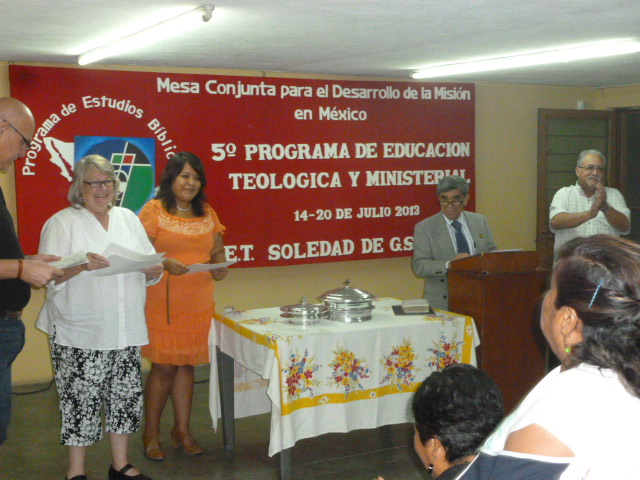
Awarding of certificates and a closing worship concluded the week of Summer Session classes.
No Papers Needed in The Field of Boaz

The voice from the U.S. side of the U.S-Mexico border wall declares: “We’ve almost completed our new immigration reform policy”. The cartoon is from Pulso, a daily newspaper in San Luis Potosi.
The need for immigration reform couldn’t be clearer on this side of the U.S.-Mexican border:
– A Disciples grandmother from San Luis Potosi spends a night in detention at the border with Texas because her U.S. permanent residency “green card” has apparently expired.
– A choir member at the same Disciples church – a mother with three children – hasn’t seen her husband in three years because he fears he won’t be able to return to his two jobs in Maryland.
– The young woman in Kate’s class last week is the only child left behind when her mother moved to North Carolina over ten years ago and has not returned.
On this side of the border, among Mexicans, the effect of the current U.S. immigration policy can be summed up in two words: “Family Separation”. In Kate’s Bible Exegesis class last week the lay leaders and pastors spent a day on the book of Ruth. This time it was impossible for the two of us to re-read this ancient story of human migration without thinking of Ruth’s plight had she been a Mexican trying to enter the United States with her mother in law.
“Where you go, I will go…..your people shall be my people”. Well yes Ruth but only if you have over one million dollars to establish a business or a skill which is in short supply in the U.S. Your family connection with Naomi won’t do it.
Read the words of Boaz and consider the contrast with current U.S. immigration policy:
“All that you have done for your mother-in-law since the death of your husband has been fully told me and how you left your father and mother and your native land and came to a people that you did not know before. May the Lord reward you for your deeds and may you have a full reward from the Lord, the God of Israel, under whose wings you have come for refuge.” (Ruth 2:11-12)
The law among the Hebrew people three thousand years ago called for harvesters to leave grain on the edges of fields for foreigners, orphans and widows to glean. Boaz instructed his harvesters to go one step further and allow Ruth to glean behind them in the middle of his barley and wheat fields.
It is distressing to note that the current debate over immigration policy reflects little compassion or knowledge of the changes in human migration patterns today. A major change is reflected by the fact that more Mexicans returned to Mexico last year than crossed into the U.S.
An excellent report on what was behind the trend of returning to Mexico, and on recent social and economic change in Mexico in general, appeared recently in the editorial pages of both the New York Times and the Los Angeles Times. We’ve highlighted in bold some of the most important points in the article below:
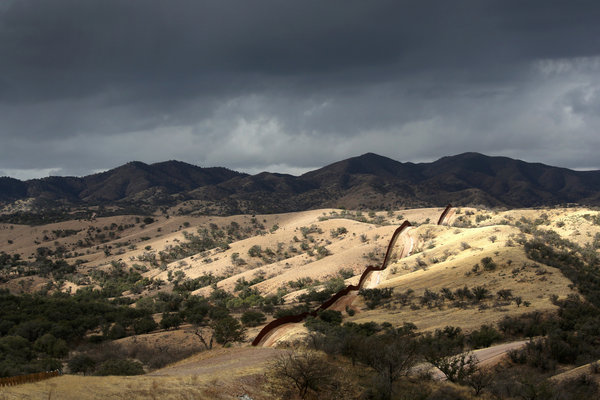
The U.S.-Mexico border fence stretches into the countryside on near Nogales, Ariz. (John Moore / Getty Images / March 8, 2013)
By Andrew Selee
April 2, 2013
The image of illegal immigration in the minds of most Americans is of poor Mexicans streaming across the Southwest border. This is not entirely wrong, but it is outdated. As Congress debates immigration reform, it is worth taking a look at what’s changed. Mexican illegal immigration flows have been dropping steadily and seem to be continuing a downward trend even as the U.S. economy recovers. There are reasons to believe this trend is becoming permanent.
For most of the 1990s and early 2000s, most unauthorized immigrants crossed the Southwest border, and most years 90% to 95% were Mexicans. Since as far back as 2007, however, the numbers in the Southwest — and, in particular, the number of Mexicans — have been declining rapidly. Illegal border crossings there are now down to levels not seen in 40 years, and in 2012, more pthan a quarter of unauthorized Southwest border crossers were what the government calls “Other Than Mexicans,” mostly Central Americans and a few immigrants from outside the hemisphere.
Three factors have slowed illegal immigration from Mexico. First, border security appears to have produced a deterrent effect. The budget of the Border Patrol has increased almost tenfold since 1993, and there are five times as many agents on the border, who now have access to an impressive array of technology. A recent report from the nonpartisan Washington-based Migration Policy Institute found that the U.S. government now spends more on immigration enforcement than all other federal law enforcement agencies combined — including the FBI, the Drug Enforcement Administration, the Bureau of Alcohol, Tobacco, Firearms and Explosives, the Secret Service and the U.S. Marshals Service. As a result, arrests of illegal border crossers last year were only a third of those recorded six years ago, back to levels last seen in 1972. The message appears to have reached communities in Mexico that it is expensive, difficult and dangerous to cross without papers.
Second, the Mexican economy has far outperformed expectations in recent years, creating incentives for people to stay in their home communities. Mexico has had 15 years of sustained economic growth, with a 3% average annual increase in GDP per capita. As a result, the average income of Mexicans has more than doubled in real terms since 1997 and is now similar to average income in Russia, Romania, Turkey, Malaysia and Brazil; twice what it is in China; and five times what it is in India. Although the wage gap between Mexicans and U.S. citizens is still high — a little over 4 to 1 — it is far better than the 7-to-1 wage gap of the 1990s.
Social programs have also improved, with one cash transfer program, Oportunidades, which is tied to keeping children in school and getting regular health checkups, now reaching more than a quarter of households. At the same time, Mexican migrants have played a vital role in stimulating the economy in the communities they left behind. Immigrants from the Mexican state of Zacatecas who now live in Southern California joined together to help build a university campus in the city of Jerez, one of the poorest in the state and a perennial source of migrants. They have started more than 20 new small businesses, supported by investment from Zacatecans living in and around Los Angeles, sometimes complemented by low-cost government loans. Today, thousands of young people in that state, who might otherwise have traveled north, are pursuing a college education or working in one of these businesses.
Finally, the demographic profile of Mexico is changing. The number of Mexicans ages 15 to 29 — those most likely to migrate — has stabilized over the last few years and will soon begin to drop. Heavy public and private investments in family planning programs in the 1970s and ’80s have reduced the birthrate to a level similar to that of the United States. If this demographic shift hasn’t contributed yet to the decline in migration from Mexico, it certainly will over the next decade.
What all this means is that, in the future, the largest illegal immigration flows are likely to come from parts of the world farther away than Mexico, including Central America and Asia. Because of distance, these flows will be smaller, but they will also require new and different enforcement measures, focused more on the workplace than on the border itself. And if Congress creates work-based visas for potential immigrants, as in the guest worker program now under discussion in the Senate, the numbers who are willing to risk an illegal crossing — from Mexico and elsewhere — are sure to drop even more.
There will always be some illegal immigration from Mexico to the U.S., as long as the wage gap between the two countries remains high. But in assessing U.S. policy reforms and in planning for the future, Americans need to revamp their image of who wants in, where they’re coming from and why. Illegal immigration isn’t what it used to be.
Andrew Selee is vice president for programs at the Woodrow Wilson Center and was the founding director of its Mexico Institute. His latest book is “Mexico and the United States: The Politics of Partnership.”
Recent Challenges

At age 12 Ozzie had no trouble learning to dance along the edge of the rooftop
There had been an unspoken pact between Doug and Ozzie that when he who gobbled nearly everything edible (and loved it) lost that powerful appetite he would be released from his duties as “faithful companion”. And so it was. He was having difficulty breathing and only hobbled even outdoors. The diagnosis of advanced lymphatic cancer ruled out any possibility of recovery and the veterinarian readily agreed to come to our house.
Ozzie had been a family member for ten and a half years. Most evenings in California he made

Ozzie always enjoyed taking Doug’s place in the bed
sure Doug had a walk as prescribed for improving his cholesterol. Winter evenings, he had snuggled and helped keep us all warm on the sofa. Over twelve years old when we moved to San Luis Potosi, he easily adjusted to his new home.
He spoke a universal language, greeting strangers and new friends in a manner that demanded caressing or an embrace. First meetings of visitors to our home were eased by his friendly advance. “How’s my friend Ozzie?” became a question we were delighted to hear.
With the help of twelve year old Gustavo, Doug and Kate dug a grave and buried Ozzie between the house and the flower garden Kate had just planted. We are grateful that he was able to make the move here and that we had his help in easing the transition for us. And for the gentle passing he made on our sofa, his favorite spot in the house!, enabled by the veterinarian Dr. Abraham we are grateful. His best friend, our Chihuahua mix Minnie, is as sad as we about losing our wonderful Australian Shepherd. Opal, the cat, remains stoic.
***************** *************************** *********************
After just six months of one on one Spanish classes, Kate will be teaching in the week long “Curso de Verano” – Summer Seminars – at the seminary compound next week. Her wonderful teacher Karla Ramirez in the Centro de Idiomas of the University of San Luis Potosi is translating her lectures on “Women in the Bible” for her to read and has volunteered to help interpret the class discussions. Kate will focus in her lectures on the women in the Gospel of Mathew’s geneology of Jesus and feels ready for the challenge.
-

- Freshly painted main seminary building and grounds with two floor dorm on left and our house at far end on right
-
- Lisania Martinez just graduated with M. Div. from Evangelical Seminary of Puerto Rico and will assist in teaching one of the classes this summer
-

- Last year’s Roundtable “Coordinator” thanking last year’s teaching corps in front of the 2012 event bannr
We’ll let you know how it all goes this year. At this time the “Curso de Verano” is the primary training event offered pastors and lay leaders of the Roundtable’s three participating denominations. The seminary compound C.E.T., the Centro de Estudios Theologicos, where we live, will be bustling with activity and we are looking forward to seeing old friends and making some new ones!
Some Friends of Ours
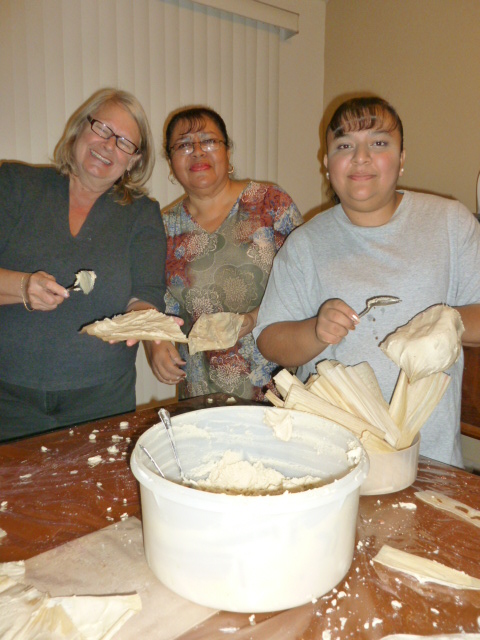
Kate’s tamale lesson with Lolis and her daughter Heidi at the “parsonage” of the Espino Sifuentes family
It wasn’t the border crossing – we hardly stopped! – that made our return to Mexico after the month long vacation difficult. There are differences in the daily routine here and in returning those differences were highlighted and had to be adjusted to once again. In short, Doug had to relearn how to do the dishes while Kate got back to studying Spanish. We also had some concern that our long absence might lead folks here to question whether we would ever return. But difficulties and concern were forgotten thanks to the welcome back received from friends. We were missed and what a good feeling that is.
So let us tell you about a special family we’ve come to know and love here. Our “consecration”
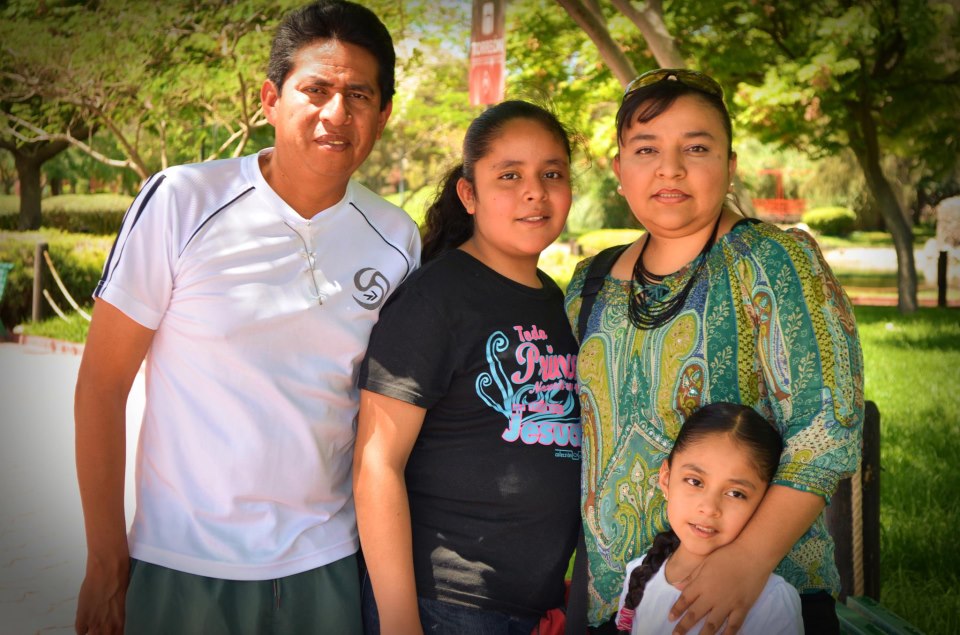
Rogelio, Debie, Heidi and Nadya
worship service six months ago was held in the Julien Carrillo Christian Church near the center of San Luis Potosi and that night we met the family of Pastor Rogelio Espino Flores for the first time. The fact that Rogelio and Heidi are blessed with two daughters as we are (ours ages 26 and 23 and theirs ages 7 and 12) created an instant bond. We’ve since enjoyed many fun times together.
While having fun we’ve also learned. Kate’s had a lesson in tamale making which led to the following exchange. After Heidi’s mother Lolis praised Kate’s husk wrapping, Kate responded, “You know you can go to hell for lying” (Doug translating). “No really, I mean it” Lolis responded and they all exploded in laughter. Heidi’s determination to perfect Kate’s Spanish is lightened by much laughter. They communicate in a lively way and always have fun.
More than ten years ago Rogelio was among the last graduates from the seminary where we live; he has served pastorates in Aguascalientes and San Luis Potosi, the two Disciples centers here. On Mother’s Day Sunday at Julien Carrillo Church all the mothers received a gift and Pastor Rogelio made special mention of Kate. Her gift was presented with the words that Rogelio and Heidi have both come to love her like a mother.
Although Heidi’s mother Lolis lives in Torreon eight hours away, her regular visits are cause for celebration. What an amazing person she is! Virtually on her own, Lolis has for 13 years devoted herself to ministry with children and older adults in two “colonias” of Torreon. Children in single mother homes with little to no extended family support come to her after school for food and fun in learning about the Bible and Christian faith, praying for and serving others. Their service is focused on the older adults; visits to the seniors’ home is accompanied by deliveries of groceries and/or medicine.
Lolis calls her ministry LLamados a Servir (“Called to Serve”) in one location and Casa de Oracion y Misericordia (“House of Prayer and Mercy”) in another. Her Facebook page, with photo albums of her ministry, is called Llamados a Servir and can be found at:
With Heidi’s help in some of the technical aspects, Lolis’ Facebook testimony is now a ministry of hopeful proclamation throughout Latin America.
The memories, the learning, the relationship with this family lift and strengthen us. We enjoy thinking about their visiting us in the States some day. And there are so many others we have learned from and enjoy being with here. It is good to be home.

July 3, 2013 Graduation from Primary School of Debora. Photo by Heidi Sifuentes Sanchez de Espino, photographer and graphic designer


 Erasing Borders