Category Archives: Transition to Renewable Energy Sources
Renewable Energy Advances Slowed by Current Data Center Planning

Fossil fuel corporations are now allied with high tech firms bent on building massive data centers worldwide. Following their model of constructing colossal centers to match talk of the multiple uses and tasks to which the data centers can be applied, the fledgling industry looks to fossil fuels to help double the energy supplied where they operate. One research institute estimates that 37% of new gas plant production over the last two years has been built to meet data center energy needs. The role of fossil fuels in the hyperscale of data center construction plans has led the U.S. to surpass China in gas plant expansion.
Data center construction and Artificial Intelligence has been marketed in the U.S. by an array of media sources and hucksters led by Open AI’s Sam Altman. In his testimony before a U.S. Congressional committee, Altman claimed A.I. techology will be able to address issues from climate change to curing cancer. Rapid development of the technology in the 2020’s has brought dizzying consequences in Silicon Valley and related hubs.
Visions of A.I. potential created by “prophets” like Altman grant it a quasi-religious status among A.I. technologues. A refugee from that community, the former Silicon Valley engineer Karen Hao now specializes in AI as a journalist based in Hong Kong. She explains, “There are people at OpenAI, and there are people in the broader AI industry, that believe that they are ultimately building something akin to an AI God, and that when they achieve this kind of AI God, it is going to be cataclysmically transformative for civilization”. Devoted to the pursuit of reaching AGI (AI on the level of human intelligence) these companies have found “ perfect cover for consolidating an extraordinary amount of unprecedented economic and political power, unprecedented land, energy, water and data resources and are undermining many pillars of democracy,” Hao observes. Hao now serves as a trustworthy authority reporting on the dangers of the AI development model pursued by Open AI, Microsoft, Google, Alphabet and Amazon.
In a nod to public concern for carbon emissions from the burning of fossil fuels, Silicon Valley’s Alphabet and other firms argue that the artificial intelligence promised by the centers can make oil and gas extraction cheaper and more efficient. In another gesture to apppease, these firms emphasize the potential to increase energy supplies that will prevent black outs and lower electricity costs eventually. Even leftwing governments in Latin America have succumbed to the AI industry’s investment capital and compelling pitch of civilizational advance. Brazil, Chile and Uruguay elected the most progressive governments in South America which entered into AI data center agreements after taking power.
In spite of local opposition and an enviable record of producing 98% of its energy needs with renewable sources, a Uruguay partnership with Google will soon complete construction of the largest data center in the country. When fully operational the center will consume energy that could power 200,000 Uruguayan homes. The procedures to test and approve the project are considered incomplete and the studies of some areas sub-standard (from a May, 2026 Pulitzer Center for Journalism article).
The “bigger is better” bias behind the current data center planning is countered by Karen Hao’s wisdom based on her years of investigative reporting. She notes that today’s dominant AI systems are shaped by a particular model of innovation—one driven by scale, capital concentration, and resource intensity. An alternative approach is applying AI to focus on “specific, automated solutions to societal problems”. In short, Hao proposes investing more in task-specific AI systems.She cites the example of Google DeepMind’s AlphaFold which developed a system to predict protein folding that won the Nobel Prize in chemistry in 2024.
As Renewable Energy Powers the Chinese Economy’s Growth the U.S. Lags Far Behind
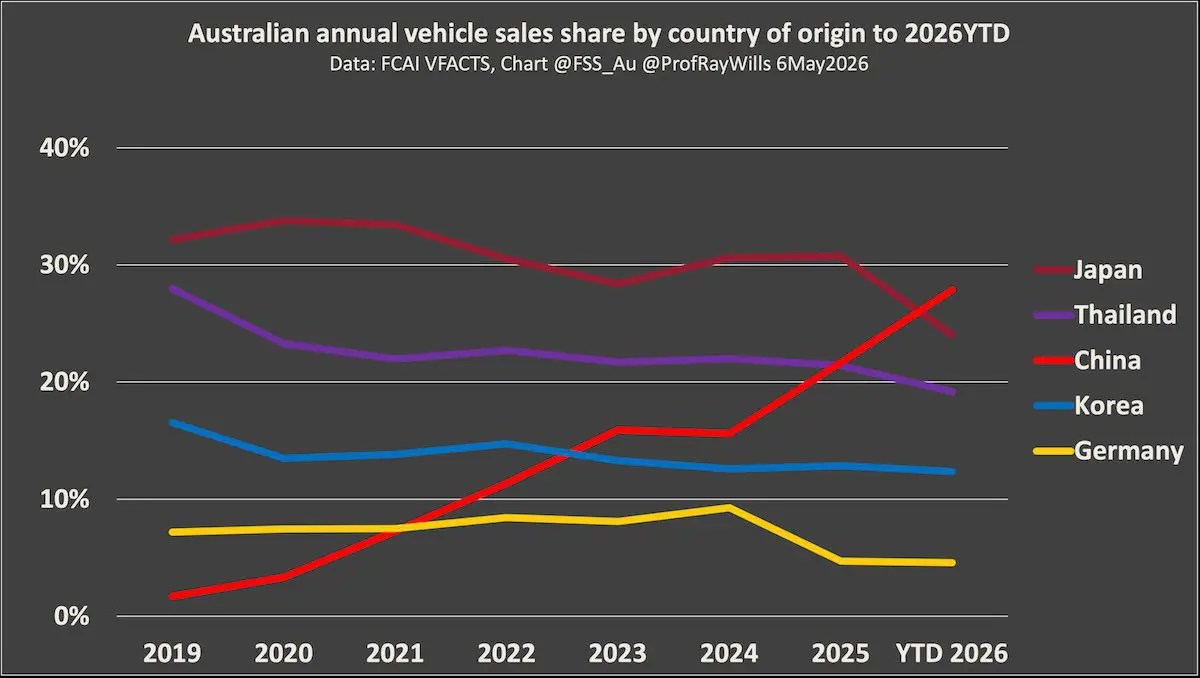
The U.S. has forfeited the competition and left the playing field in the arena of renewable energy production. China has leaped so far ahead of what is now the world’s second largest economy that backing the underdog seems foolhardy today. China’s lead in all categories of renewables production and use now seems insurmountable.
China prduces more solar panels and accompanying hardware than the world can consume. 80 percent of solar panel manufacturing is now in China. The solar industry there supplies twice as much power to the electricity grid as the U.S. industry. There was a blip upward in U.S. solar production thanks to tax credits and funding of solar power created by the Biden administration’s Inflation Reduction Act of 2022. New solar projects begun the year after the ’22 Act doubled the import of solar modules by the U.S. Most of the imports came from Chinese firms manufacturing panels in China or outside the country. The 22,000 jobs and $12 billion in investments in new or expanded solar manufacturing have been reduced with Trump’s election to a second term in 2024
China’s transition to renewables is especially apparent in their EV automobile production. According to U.S. Energy Administration figures for 2025, China made 71 percent of electric vehicles worldwide and Chinese are driving 63% of EV’s sold last year. Rapid advances in EV technology account for the country’s dominance in the crucial area of battery efficiency and power. Several car companies there now offer batteries that can be charged up to 1000kwH up from the maximum in 2020 of 250 kwH. The maximum charge now can be reached in five minutes and enable a range of 400kms. of driving. Chinese capture of their domestic EV market has been emulated by other Asian countries. Vietnamese EV’s went from 0 percent of the nation’s market for electric driving to 41% in five years and Singapore from 3% in 2020 to 63% in 2025. The overwhelming leader in internal combustion vehicles for decades saw EV sales go from 2% of the U.S. market in 2020 to 10 % in 2025. The comparatively weak growth of the U.S. EV industry dates from the first Trump administration. One of first actions of that term was naming the President of the largest U.S. based oil and gas company to the post of U.S. Secretary of State in 2017.
As more nations sign on to actions supporting the Fossil Fuel Non Proliferation Treaty and join international conferences on transitioning away from fossil fuels, U.S. investments in fossil fuel extraction and consumption continue to rise. It leads a dwindling minority of nations resisting the finding of the International Court of Justice that fossil fuels are the primary cause of the climate crisis. Lamentably the opposition party in the U.S. has to date avoided making development of renewable energy sources a leading electoral campaign issue.
Dismantling the Empire of Oil
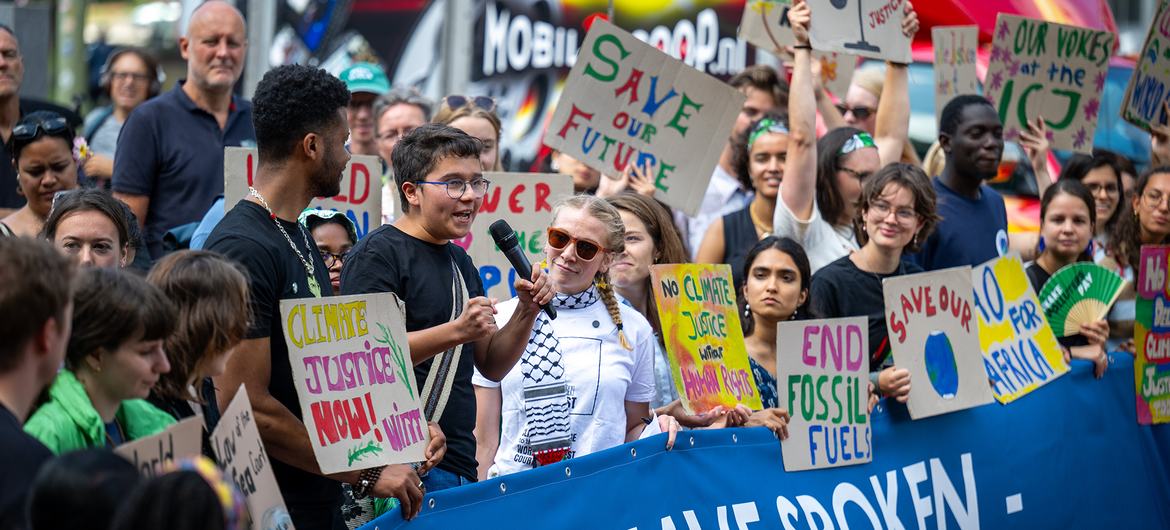
An old man walks miles to the grave of his wife daily. His village in Fiji has been forced to relocate and leave the ancestors’ remains behind. They are now expected to be safely above the rising waters on their island. What kind of flowers does the old man leave on the grave? The question still occurs to the lead attorney on the court case charging fossil fuel advocates with endangering our life on Earth.
The old man’s story impelled Julian Aguon, the attorney from Guam, to spend five years preparing the case against all who profit from continued extraction and distribution of the source of 80-85% of carbon emissions. The Pacific island nation of Vanuatu stepped forward to present the case to the International Court of Justice. The Court’s findings issued in July of last year were summarized by the International Center for Environmental Law, “the Court recognized fossil fuels as the root cause of the crisis, that certain sectors, like oil and gas, play an outsized role in generating planet-warming emissions, and that States must regulate and hold those corporate polluters to account”. In a document supporting the case the World Health Organization (WHO) stated, “[O]nly a rapid and equitable phase-out of fossil fuels can protect the health of both people and the planet from the climate crisis.”
Vanuatu provides compelling evidence of the climate catastrophe largely due to fossil fuel combustion. Half its Gross Domestic Product was destroyed in a cyclone and its islands continue to be rocked by one extreme weather event after another. Vanuatu was joined by the youth of all Pacific Island nations in charging those UN members which are “proactively expanding their fossil fuel production and consumption, paying lip service to their climate commitments” and ignoring the “due diligence that was and is required from them.”
Vanuatu along with Ireland will serve as co-host of next spring’s second International Conference on Transitioning Away From Fossil Fuels. In spite of the challenges in getting to the Vanuatu site of the Conference, the July 2025 Court “advisory opinion” will likely lead many more nations to attend than the 57 participating in the first Conference in Colombia. The Conference will serve as another venue to organize support for the Fossil Fuel Non-Proliferation Treaty initiated by the indigenous peoples of Pacific Island nations. In a growing split from the U.S. response, European signators of the Treaty now include Germany and the U.K.

Progressive Christian faith communities in the U.S. and world-wide have strongly supported these initiatives to suppport nations’ freedom from fossil fuel reliance and grow the renewable energy infrastructure. The World Council of Churches (WCC) staff member for Climate Justice declared, ““Churches [and people of good will] are called to rise with prophetic urgency, speak with a voice of moral clarity, and embody a new Exodus – an exodus from the captivity of greed, a departure from an extractive economy, and a journey toward the freedom of a restored creation.” The WCC represents 356 church bodies in 120 countries. They joined leaders of Earth’s indigenous faith communities in submitting to the first Conference their agreement that “the transition away from fossil fuels is not a matter of ideology. It is a matter of survival, of justice, of fidelity to the very ground of our being.”
Julian Aguon may never learn what kind of flowers the old man leaves every day on that grave in Fiji. The impact on Julian of the man’s daily trek is, however, shared through the attorney’s work on behalf of the transition away from fossil fuels in Fiji and around the world.
What Nations Are Leading the Transition to Renewable Energy Sources?
940 million people in the world are without electricity today. 3 billion people live in countries where electricity is sporadic. Most of those countries are net importers of fossil fuels, a fact which largely accounts for the heavy debt load they carry in the government’s budget. This decade the declining costs of installing renewable energy projects means there is a way toward energy self reliance and independence. In 2024 the International Renewable Energy Agency estimated the cost of electricity from solar power is less than half the cost of the cheapest fossil fuel.
In India today it costs less to install a solar farm to supply elecricity for the same number of people as the annual cost of coal for a coal-fired plant. The challenge for poor nations of the Global South is financing the hardware, the installation and infrastructure of energy projects. But with declining costs and increased profit margins, hundreds of companies are now financing and implementing renewable projects. Uruguay today supplies a third of its electric power with wind farms financed through public-private partnerships which guarantee companies a fixed amount for twenty years from bill payments. With the equator line bisecting the continent, imports across Africa of Chinese made solar panels are booming.
Outside South Africa, the continent’s solar power leader, panel purchases have tripled in the last two years. Twenty African countries set new records for panel imports in the 12 months to June 2025. Algeria’s imports rose 33 compared to the previous 12 months. Zambia rose eightfold, Botswana sevenfold, Sudan sixfold, and Liberia, DRC, Benin, Angola and Ethiopia all more than tripled. Several of these countries boast fossil fuel reserves, oil especially.
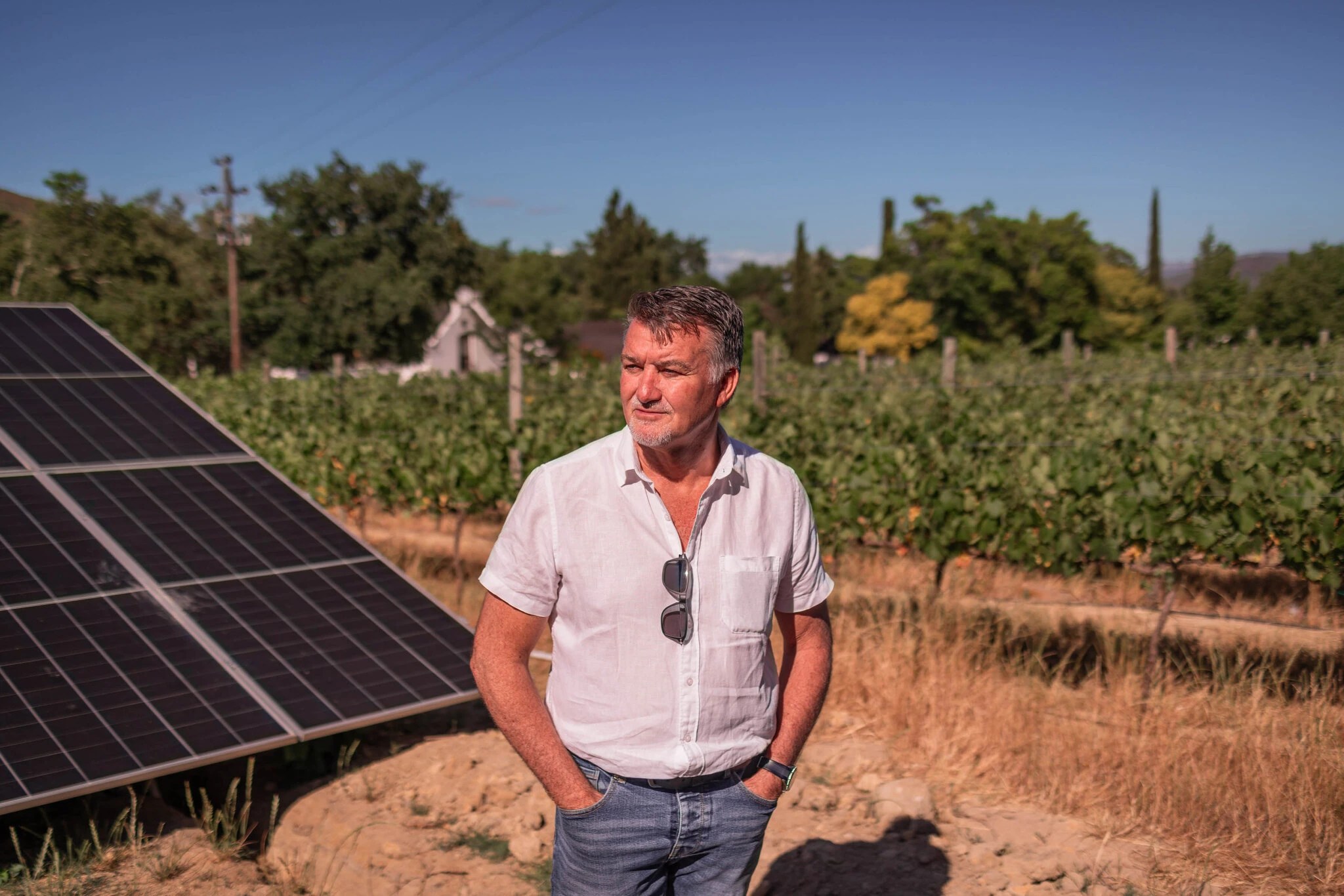
Some companies have learned how to make substantial profits by installing “mini-grid” solar projects in African towns and smaller cities. By avoiding the large scale utility projects the smaller capital investment enables surer attractive profits. A different corporate approach was highlighted by a New York Times article last December titled “Cheap Solar is Transforming Lives and Economies Across Africa”. The article featured a South African company that had installed solar power on a Stellenbosch vineyard as a first step in other solar ventures. The company president remarked, “China has driven the prices of solar panels so low it’s really rock bottom at the moment”.
The fluctuations in fossil fuel costs is contributing to the drive to renewable energy sources. A British international energy analyst recently noted, “Fossil shocks are boosting the solar surge”. Now is the time for the transition to renewable-generated energy. “ Any right-minded government is asking how to reduce exposure, increase autonomy and diversify energy sources” a public policy expert has declared.

Fifty seven governments met last week at the first ever Conference on Transitioning Away From Fossil Fuels. Colombia and The Netherlands served as Co-Chairs with Colombia hosting at the coastal city of Santa Marta, Colombia. Commenting on the absence of Russia, India, China and the U.S. at the historic gathering, Colombia’s Minister of the Environment declared, “We’re not going to have boycotters or climate deniers at the table.” Her statement reflects the frustration of poor nations in the Global South with the slow progress made in the UN-sponsored COP Summits in response to the climate crisis. Former head of Amnesty International and Greenpeace International, South African Kumi Naidoo celebrated the ways the Conference went about creating the road map to the future powered by renewables. “Finally, finally, finally, we have a focus on 86 percent of what drives the climate crisis, which is fossil fuels,” Naidoo said.
The second Conference for Transitioning Away from Fossil Fuels was announced last week and will take place in early 2027 in the island nation of Vanuatu, one of sixteen island nations participating in last week’s Conference. Ireland and Vanuatu will co-host the Conference. The list of nations at the first Conference follows:
Angola, Antigua and Barbuda, Australia, Austria, Bangladesh, Belgium, Brazil, Cameroon, Canada, Chile, Costa Rica, Denmark, Dominican Republic, European Union, Finland, France, Germany, Ghana, Guatemala, Iceland, Ireland, Italy, Jamaica, Kenya, Kiribati, Luxembourg, Malawi, Maldives, Marshall Islands, Mexico, Micronesia, Mongolia, Nepal, New Zealand, Nigeria, Norway, Pakistan, Palau, Panama, Portugal, Saint Kitts y Nevis, Saint Lucia, Senegal, Singapore, Slovenia, Solomon Islands, Spain, Sri Lanka, Sweden, Switzerland, Türkiye, Tuvalu, Uganda, United Kingdom of Great Britain and Northern Ireland, United Republic of Tanzania, Uruguay, Vanuatu, Vatican – Santa Sede.


