Category Archives: Exports of Solar Panels from China
What Nations Are Leading the Transition to Renewable Energy Sources?
940 million people in the world are without electricity today. 3 billion people live in countries where electricity is sporadic. Most of those countries are net importers of fossil fuels, a fact which largely accounts for the heavy debt load they carry in the government’s budget. This decade the declining costs of installing renewable energy projects means there is a way toward energy self reliance and independence. In 2024 the International Renewable Energy Agency estimated the cost of electricity from solar power is less than half the cost of the cheapest fossil fuel.
In India today it costs less to install a solar farm to supply elecricity for the same number of people as the annual cost of coal for a coal-fired plant. The challenge for poor nations of the Global South is financing the hardware, the installation and infrastructure of energy projects. But with declining costs and increased profit margins, hundreds of companies are now financing and implementing renewable projects. Uruguay today supplies a third of its electric power with wind farms financed through public-private partnerships which guarantee companies a fixed amount for twenty years from bill payments. With the equator line bisecting the continent, imports across Africa of Chinese made solar panels are booming.
Outside South Africa, the continent’s solar power leader, panel purchases have tripled in the last two years. Twenty African countries set new records for panel imports in the 12 months to June 2025. Algeria’s imports rose 33 compared to the previous 12 months. Zambia rose eightfold, Botswana sevenfold, Sudan sixfold, and Liberia, DRC, Benin, Angola and Ethiopia all more than tripled. Several of these countries boast fossil fuel reserves, oil especially.
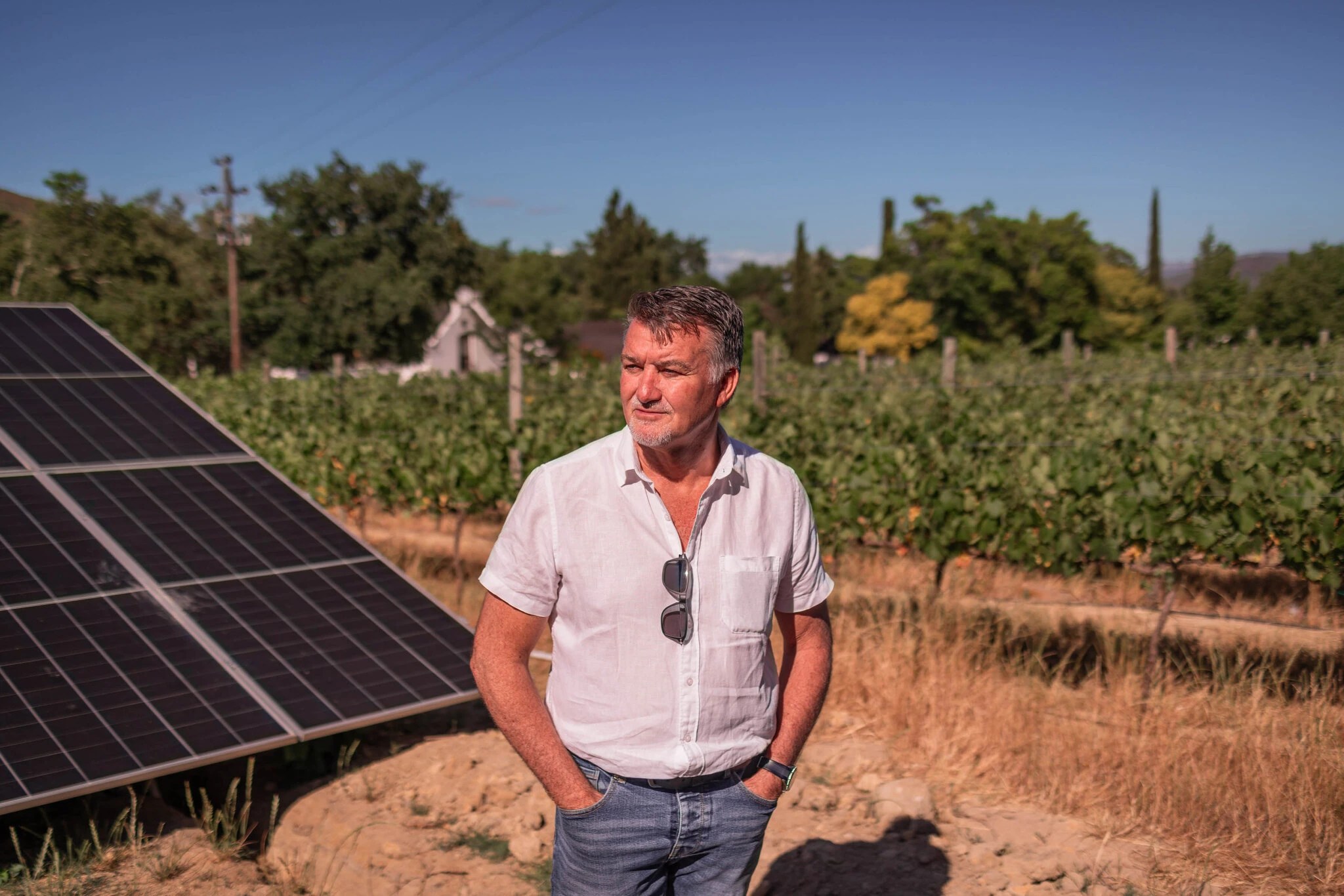
Some companies have learned how to make substantial profits by installing “mini-grid” solar projects in African towns and smaller cities. By avoiding the large scale utility projects the smaller capital investment enables surer attractive profits. A different corporate approach was highlighted by a New York Times article last December titled “Cheap Solar is Transforming Lives and Economies Across Africa”. The article featured a South African company that had installed solar power on a Stellenbosch vineyard as a first step in other solar ventures. The company president remarked, “China has driven the prices of solar panels so low it’s really rock bottom at the moment”.
The fluctuations in fossil fuel costs is contributing to the drive to renewable energy sources. A British international energy analyst recently noted, “Fossil shocks are boosting the solar surge”. Now is the time for the transition to renewable-generated energy. “ Any right-minded government is asking how to reduce exposure, increase autonomy and diversify energy sources” a public policy expert has declared.
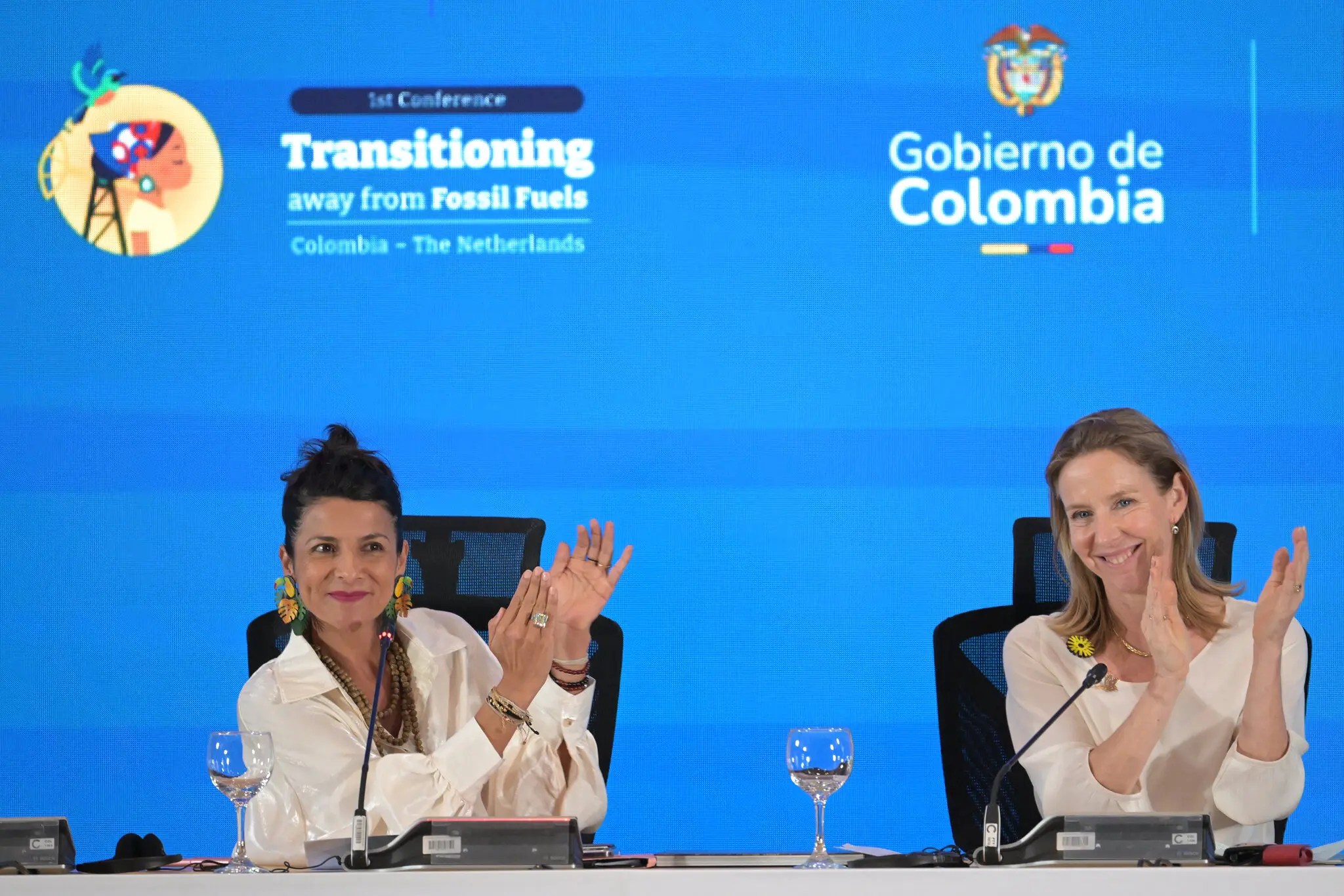
Fifty seven governments met last week at the first ever Conference on Transitioning Away From Fossil Fuels. Colombia and The Netherlands served as Co-Chairs with Colombia hosting at the coastal city of Santa Marta, Colombia. Commenting on the absence of Russia, India, China and the U.S. at the historic gathering, Colombia’s Minister of the Environment declared, “We’re not going to have boycotters or climate deniers at the table.” Her statement reflects the frustration of poor nations in the Global South with the slow progress made in the UN-sponsored COP Summits in response to the climate crisis. Former head of Amnesty International and Greenpeace International, South African Kumi Naidoo celebrated the ways the Conference went about creating the road map to the future powered by renewables. “Finally, finally, finally, we have a focus on 86 percent of what drives the climate crisis, which is fossil fuels,” Naidoo said.
The second Conference for Transitioning Away from Fossil Fuels was announced last week and will take place in early 2027 in the island nation of Vanuatu, one of sixteen island nations participating in last week’s Conference. Ireland and Vanuatu will co-host the Conference. The list of nations at the first Conference follows:
Angola, Antigua and Barbuda, Australia, Austria, Bangladesh, Belgium, Brazil, Cameroon, Canada, Chile, Costa Rica, Denmark, Dominican Republic, European Union, Finland, France, Germany, Ghana, Guatemala, Iceland, Ireland, Italy, Jamaica, Kenya, Kiribati, Luxembourg, Malawi, Maldives, Marshall Islands, Mexico, Micronesia, Mongolia, Nepal, New Zealand, Nigeria, Norway, Pakistan, Palau, Panama, Portugal, Saint Kitts y Nevis, Saint Lucia, Senegal, Singapore, Slovenia, Solomon Islands, Spain, Sri Lanka, Sweden, Switzerland, Türkiye, Tuvalu, Uganda, United Kingdom of Great Britain and Northern Ireland, United Republic of Tanzania, Uruguay, Vanuatu, Vatican – Santa Sede.


