As Renewable Energy Powers the Chinese Economy’s Growth the U.S. Lags Far Behind
The U.S. has forfeited the competition and left the playing field in the arena of renewable energy production. China has leaped so far ahead of what is now the world’s second largest economy that backing the underdog seems foolhardy today. China’s lead in all categories of renewables production and use now seems insurmountable.
China prduces more solar panels and accompanying hardware than the world can consume. 80 percent of solar panel manufacturing is now in China. The solar industry there supplies twice as much power to the electricity grid as the U.S. industry. There was a blip upward in U.S. solar production thanks to tax credits and funding of solar power created by the Biden administration’s Inflation Reduction Act of 2022. New solar projects begun the year after the ’22 Act doubled the import of solar modules by the U.S. Most of the imports came from Chinese firms manufacturing panels in China or outside the country. The 22,000 jobs and $12 billion in investments in new or expanded solar manufacturing have been reduced with Trump’s election to a second term in 2024
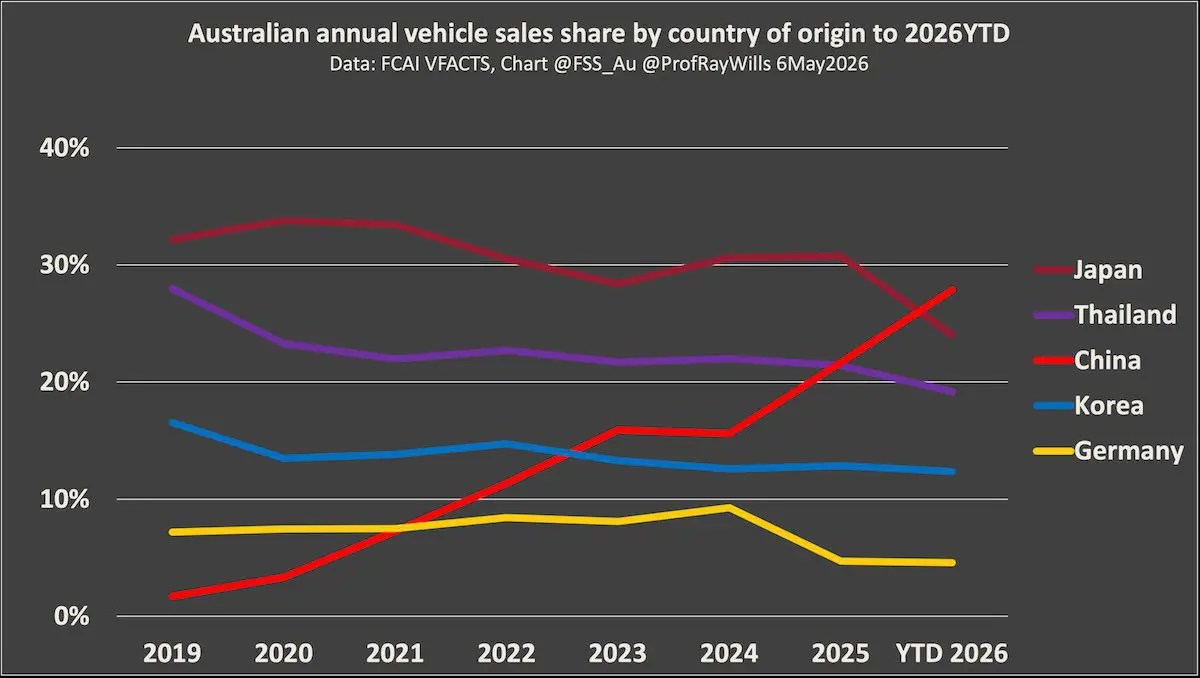
China’s transition to renewables is especially apparent in their EV automobile production. According to U.S. Energy Administration figures for 2025, China made 71 percent of electric vehicles worldwide and Chinese are driving 63% of EV’s sold last year. Rapid advances in EV technology account for the country’s dominance in the crucial area of battery efficiency and power. Several car companies there now offer batteries that can be charged up to 1000kwH up from the maximum in 2020 of 250 kwH. The maximum charge now can be reached in five minutes and enable a range of 400kms. of driving. Chinese capture of their domestic EV market has been emulated by other Asian countries. Vietnamese EV’s went from 0 percent of the nation’s market for electric driving to 41% in five years and Singapore from 3% in 2020 to 63% in 2025. The overwhelming leader in internal combustion vehicles for decades saw EV sales go from 2% of the U.S. market in 2020 to 10 % in 2025. The comparatively weak growth of the U.S. EV industry dates from the first Trump administration. One of first actions of that term was naming the President of the largest U.S. based oil and gas company to the post of U.S. Secretary of State in 2017.
As more nations sign on to actions supporting the Fossil Fuel Non Proliferation Treaty and join international conferences on transitioning away from fossil fuels, U.S. investments in fossil fuel extraction and consumption continue to rise. It leads a dwindling minority of nations resisting the finding of the International Court of Justice that fossil fuels are the primary cause of the climate crisis. Lamentably the opposition party in the U.S. has to date avoided making development of renewable energy sources a leading electoral campaign issue.

Posted on June 27, 2026, in Transition to Renewable Energy Sources and tagged China and U.S. renewable energy use and production, China leads the world in EV production and use, Chinese contribution to reversing climate change, U.S. administration now backs fossil fuel industry. Bookmark the permalink. Leave a comment.


Leave a comment
Comments 0