Blog Archives

A.J. Muste the Protestant Saint
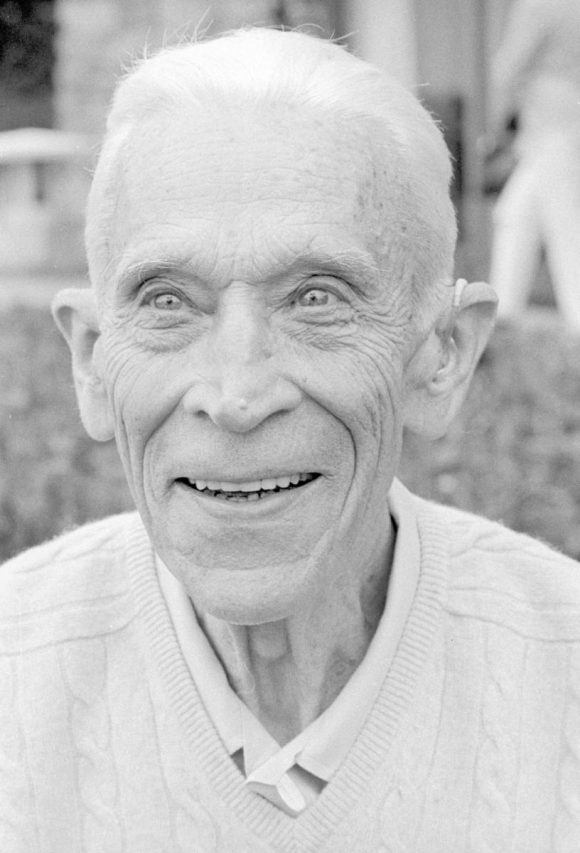
He introduced Martin Luther King Jr. to the theory and practice of non violent civil disobedience.
In 1947 he organized the “Journey of Reconciliation” during which blacks and whites sat together on Greyhound buses traveling through the South. That “Journey” served as the model for the civil rights movement’s “Freedom Rides” in 1961.
He was lead organizer of the first mass protest against the Vietnam War. The march from Central Park to the United Nations on Tax Day, April 15, 1967 was at the time the largest demonstration in U.S. history.
He served as spokesperson for the mostly immigrant workers during the historic Lawrence, MS textile mill strike of 1919.
Following the gains made by the Lawrence workers, he served as the first head of the Amalgamated Textile Workers Union until 1921. In the position, he supported organizing nearly weekly strikes at mills across the U.S.
He trained union organizers as education director of the Brookwood Labor College from 1921 to 1933.
When he died in 1967, obituaries referred to him as the “American Gandhi”.
If you haven’t named who “he” is you are not alone. Few people in churches, or outside them, in the U.S. know about the contributions of Abraham Johannes Muste to the labor and peacemaking movements in the U.S. Yet Muste would be a candidate for sainthood if there were saints in Protestant Christianity. He served the Church as a clergy member in four different U.S. Protestant denominations but his call eventually led him to leadership in the labor and peace movements of his adopted country. Until his death in 1967, Muste remained a radical practitioner of the theology of the “Social Gospel”.
In the first congregation he served, he opposed U.S. entry into the First World War and, against the wishes of many in the congregation, resigned. From the crucible of the WW I era to the end of his life, he helped organize mass actions of civil disobedience in resistance to U.S. warfare and militarism. Muste was the first to declare, “There is no way to peace; peace is the way”. Another Muste saying, often attributed to others, he coined as an early protestor of the Vietnam War. During a White House vigil in a rain storm, someone asked him if he really thought he was going to change U.S. policy that way, he responded, “I’m not out here to change U.S. policies. I’m here to make sure they don’t change me.”
Like no other American Christian of the 20th Century AJ Muste lived out his faith in the nation’s public sphere. In his work and writing, he adhered to the values of the Sermon on the Mount and chapter 25 of the Gospel of Matthew. His radical pacifism grew out of his devotion to living by the roots of the Christian faith. Muste believed that as Christians we are all called to be “Saints for This Age”. While he based this conviction on the lives of the first Christians as reported in The New Testament, his passion for social change was also fired by the horrors of 20th Century militarism and by the example of radical leftists in the labor movement.
In the 1962 essay titled “Saints for This Age”, Muste wrote “It was on the Left – and here the ‘Communists of the period cannot be excluded – that one found people who were truly ‘religious’ in the sense that they were completely committed, they were betting their lives on the cause they embraced. Often they gave up ordinary comforts, security, life itself, with a burning devotion which few Christians display toward the Christ whom they profess as Lord and incarnation of God.” In the next paragraph, he contrasts the “liberal” Christians who professed the “Social Gospel” with these non-Christian radical leftists.
“The Left had the vision, the dream, of a classless and warless world, as the hackneyed phrase goes…..Here was the fellowship drawn together and drawn forward by the Judeo-Christian prophetic vision of a ‘new earth in which righteousness dwelleth’. The now generally despised Christian liberals had had this vision. The liberal Christians were never, in my opinion, wrong in cherishing the vision. Their mistake, and in a sense, their crime, was not to see that it was revolutionary in character and demanded revolutionary living and action of those who claimed to be its votaries.”
Christian faith, and the first Christians who modeled faith for AJ Muste, was profoundly counter-cultural. “I spoke of the early Christians as having ‘broken loose’. They understood that for all its size, seeming stability and power, the ‘world’, the ‘age’ in which they lived was ephemeral, weak, doomed…..They had therefore turned their backs on it, did not give it their ultimate allegiance, were not intimidated by what it could do to them, and did not seek satisfaction and security within its structure, under its standards. They were loose – not tied to ‘business as usual’.” Muste himself was not “tied to ‘business as usual’” and will serve Christianity and humanity as a “saint” for this and for ages to come.


