Blog Archives
“Make American White Again”
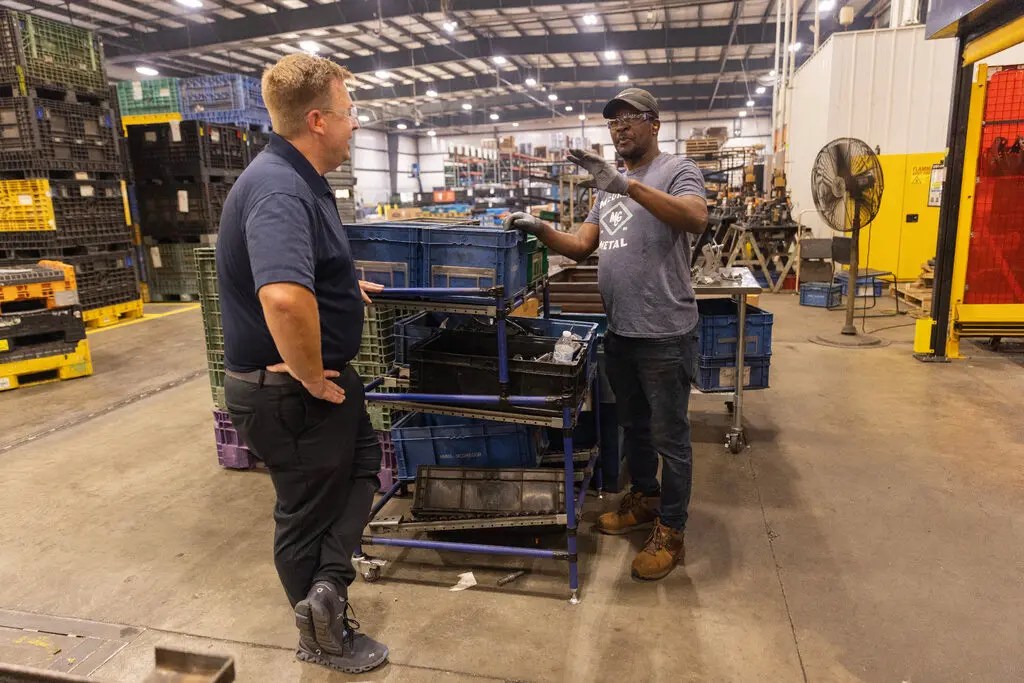
The U.S. economy has long relied on immigrant labor in its growth. The United States is a nation of immigrants. The 19th century transition from an economy devoted to agriculture to a modern industrial system funded by agricultural produce depended on the import of immigrants, with Germans and the Irish leading the way. Along with their essential labor for the new manufacturing sector and the expansion of farming, their arrival and that of immigrants after them brought deep political division reflecting the conflicts in work places and neighborhoods. Charismatic personalities have for two hundred plus years made political careers out of those divisions. Using the tools of distortion, lies, religious differences and buffonery, nation-wide political movements have been created and the nation’s ethnic divisions deepened.
The U.S. Civil War resulted from decades of simmering conflict over the proper role for the African immigrant brought to these shores as slave labor. Sacred texts dated as two millenia and more in origin were interpreted as assigning back breaking labor in fields and estates to the African sold as a slave. Low to no wages producing lucrative crops, cotton especially, for the world made the southern U.S. the supplier of much of the capital for the new nation’s financiers of south and north.
Angry debate over the causes and meaning of the Civil War continues today. Our most hallowed symbol of the United States as a welcoming refuge, the Statue of Liberty, was subjected to controversy and opposition in its creation one hundred fifty years ago. The Frenchman who created the original design saw the Statue as a celebration of the abolition of slavery with broken shackles to be draped from Liberty’s left hand. But to avoid the protests of former slaveholders and their supporters, who portray slavery as an idyllic era, the shackles now are partially hidden by her gown’s layers of folds and are barely visible from the ground level promenade.

America’s long history of anti-black racism and professed white superiority makes the nation’s response to the rise in the world’s immigrant population especially challenging, emotionally and politically. In the comprehensive study of world immigration by the U.S. Pew Research Center, it was found that one out of five immigrants in the world live in the U.S. While we now have far more immigrants and children of immigrants inside our borders, the majority of our more recent arrivals are persons of color, not the white adults and children from Europe and Scandanavia of the 19th century. As late as 1920, most of the newly arrived came from Italy and Germany, with Canada a distant third. Much of the shift to the immigration of persons of color has occurred since passage of the 1965 immigration reform. In 2022 the nation’s largest immigrant populations hailed from Mexico and India.
The 1965 Immigration and Nationality Act supported the shift in the origin of immigrants. Eliminating quota provisions favoring immigration from Europe, it gave preference to skilled workers and immigrants from anywhere with family members already settled in the U.S. The Act thus contributed to the rise in immigrants of color primarily from the earth’s southern hemisphere and a considerable increase in the numbers of immigrants in the country.
In the fifty years after passage of the 1965 law there were a total of 72 million immigrants and their children who came to the “land of freedom”. They accounted for 55% of the growth in U.S. population and Pew researchers project they will make up 88% of the growth from 2015 to 2065 when the nation will number 441 million persons and no ethnic group will constitute a majority of the population. Whereas non-Hispanic whites totaled 84% of the U.S. population in 1965, Pew studies project they will number 46 % in 2065. Continuing immigration from Latin America will make Hispanics 25% of the population and by 2065 14% of the nation will be Asian in origin.
Given voting trends in recent elections showing Hispanics favoring Democrats, the Republican party leadership has been particularly concerned by the dizzying increase in their numbers. Their current response is to support with near unanimity a candidate for U.S. President who has made the country wide settlement of immigrants of color the focus of his campaigns. His primary policy proposal, virtually his only concrete pledge, is to return two million recent immigrants to their countries of origin. The Republican candidate has repeatedly characterized Democrats’ relatively lenient response to the shift in immigration from the southern hemisphere as admitting “criminals and rapists” into our communities. In this month’s debate between the Democratic and Republican candidates for President, regardless of the question at hand Trump returned again and again to foreign nations sending their most dangerous citizens across our borders.
Trump’s history of racist rhetoric and commentary reveals the underlying message of the campaign slogan “Make America Great Again” for his 2016 and 2024 campaigns for President. A Wikipedia article on the phrase reports the candidate still denies the influence of Ronald Reagan’s successful 1980 campaign use of “Let’s Make America Great Again” as a slogan. Trump does outdo Reagan in disclosing the covert intent of its use as “Let’s Make America White Again”.
His outrageous claim that Haitians, migrants from one of the “shithole countries”, are eating the pets of residents of Springfield in the crucial State of Ohio may, however, have back fired. Not only did the city’s top administrator deny the report which Trump culled from an extreme racist’s social media posting, the town’s populace has been patronizing the Haitian restaurants as never before and emphasizing their new businesses and Haitian labor as vital to the growth of the local economy.
While the heavily Republican area may still vote for Trump in this year’s election, the recent affimation of the Haitian immigrants by many Springfield residents illustrates the central question raised by the candidates. Will the U.S. citizenry finally signal their embrace of the nation’s image as a haven of welcome for people of any and all ethnicities? Or will it step up its effort to hold back the migration patterns of our modern era in a futile effort to return the U.S. to a time when its white population were a majority. Representing the nation’s ideals as embedded in its history of immigration moving the economy, the culture, the community life forward, the opposition Democratic Party candidate is a woman of mixed Asian and African ancestry. If Harris’ Democratic Party is able to safeguard a victory in the upcoming election, the outcome will mark the nation’s progress to becoming a true “multi-racial democracy”.


 Erasing Borders