Blog Archives
U.S. Expansion of “Christian Nationalism” as a “Theology of Empire”

Among all the nation states now dominated by a form of religious nationalism – be it India, Afghanistan or Myanmar or others – there is only one nation in the world today beholden to a “theology of empire” and it is the U.S. The nation shaped originally by a theology of “exceptionalism” of a chosen people has today become the most far reaching, dominant military power in the history of the world. With over 800 bases in 85 countries, the U.S. capacity to influence and intervene in the politics of other governments is unprecedented. The fact that U.S. armed forces have conducted or led 211 deployments since 1945 (How to Hide an Empire, Daniel Immerwaher, 1945) reveals the nation’s aim of enforcing its worldwide economic and political dominance.
What began as leadership of the opposition to the expansion of “godless communism” has evolved since WW II as “endless war” in defense of the nation’s “national interest”. Contrary to those expecting a “peace dividend” after the break up of the Soviet Union’s republics, the 1990’s brought further growth of the U.S. armed forces and presence around the world. The Arabian peoples and the Muslim religion replaced Communism as the primary, most insidious threat to our way of life.
Following the 9/11 attacks, while the Bush and Obama administrations resisted subscribing to a “good” versus “evil” depiction of the U.S. and its allies’ actions, the ferocious conflicts and costs incurred did signal extremist views as justifying the empire’s invasions. Characterizing Arabs and the Muslim religion as congenitally hostile to the “infidels” dominated popular media and even academic discourse. The leading scholar cited and interviewed most often in the early 2000’s, Princeton’s Bernard Lewis, had long made elucidating his theory of the “conflict of civilizations” the basis for his scholarship.
The “theology of empire” of U.S. evangelical Christians touts Christianity as the only pathway to individual salvation and social coherence. In their eyes, every military campaign aimed at a Muslim society representing a religion with over one billion adherents worldwide is a precursor to the final Armagedden. Such a view helps justify a military budget of nearly 900 billion dollars, and brings hubris based on our status as the lone “superpower” in the world and the leading defender of free and democratic nations. Considering the nearly one trillion dollars spent on U.S. Middle East military intervention and the hundreds of thousands lives lost in those wars, the theology proclaimed by U.S. evangelical Christianity seems worthy of Pascal’s observation generations ago. “Men never do evil so cheerfully as when they do it from religious conviction” the philosopher wrote.
With billions of dollars to broadcast, fund evangelism tours and support like-minded church bodies, the U.S. “theology of empire” has been imprinted on the minds and communications of evangelical Christians outside the U.S.. Ten years ago I was distressed during several tours of Protestant churches in Mexico by the anti-Muslim comments of some of the laypeople. More disheartening, however, is how conservative evangelicals have sided with foreign companies extracting Latin America’s natural resources when opposed by the local citizens most affected.
Evangelical pastors and laypeople have been encouraged to scorn protestors of foreign seizure of natural resources as socialist-leaning trouble makers. The evangelical Protestant President of Guatemala Gen. Rios-Montt was the notorious adherent in the early 80’s of the U.S. evangelicals’ theology. Trained by U.S. advisers and espousing a virulent anti-communism, in a short lived rule the Gen. led a campaign that took the lives of thousands of indigenous Guatemalan villagers. During his two years as President, Rios-Montt delivered what were called weekly “Sunday sermons” deploring cheating, stealing, lying and promoting individual values. This emphasis, joined by an “otherworld” emphasis on the social plane, is characteristic of many evangelical groups throughout Latin America and holds special appeal in association with law and order politics even when accompanied by state violence.
Despite evangelical Protestant sharing of virulent opposition to abortion and gay rights with the Catholic hierarchy, there is often hostility to the Catholics where there has been significant Protestant growth. Chiapas now claims more Protestants than any other State in Mexico and has been the scene of some violent Catholic-Protestant conflict. During a February Mexico visit, I learned of the massacre of 45 Catholics in the village of Acteal, Chiapas. Pacifist supporters of Zapatista organizing in their village and others, they were attacked in the village’s Catholic Church. Residents of San Cristobal de las Casas 20 miles away described the paramilitary force responsible as having been largely recruited among the Protestant converts.
The prophets of the Hebrew Bible largely ignore the policies of succeeding empires of their times directing their messages rather to the settlers of the nations of Israel and Judea. Jesus also devotes himself to the reform and uplift of the “House of Israel”. The fundamental theme of his preaching and ministry is the treatment of the poor by the leaders of the nation he knows best. His spite and condemnation reaches a peak when observing those who exploit the downtrodden with a guise of piety.
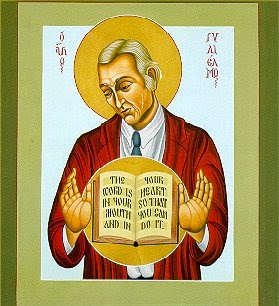
Rev. Dr. King greatly expanded our vision of human rights to citizens of our nation when he declared that a nation that spends more on its military than on the well being of its people is a nation approaching spiritual death. Through the the 1960’s and later, the U.S. lawyer-theologian William Stringfellow called his nation to repentance. He wrote of repentance in a 1984 essay, “Repentance is not about forswearing wickedness as such; repentance concerns the confession of vanity.” Without such a confession, he wrote, “For America – for any nation at any time ……. the very presumption of the righteousness of the American cause as a nation is blasphemy.”


 Erasing Borders