Category Archives: Uruguay
José “El Pepe” Mujica Describes the “Unsustainable” Global Economic Order
When Jose “El Pepe” Mujica became President of Uruguay, the country was already well on its way to freeing itself from fossil fuels. During his five year term, he led in gaining consensus from all of Uruguay’s political parties for relying on renewable sources. As a result of continued growth in hydro, wind and solar power the country began exporting its excess power to neighboring Argentina and Brazil. Payments for its power exports enabled increases in funds for programs benefiting workers and the poor.
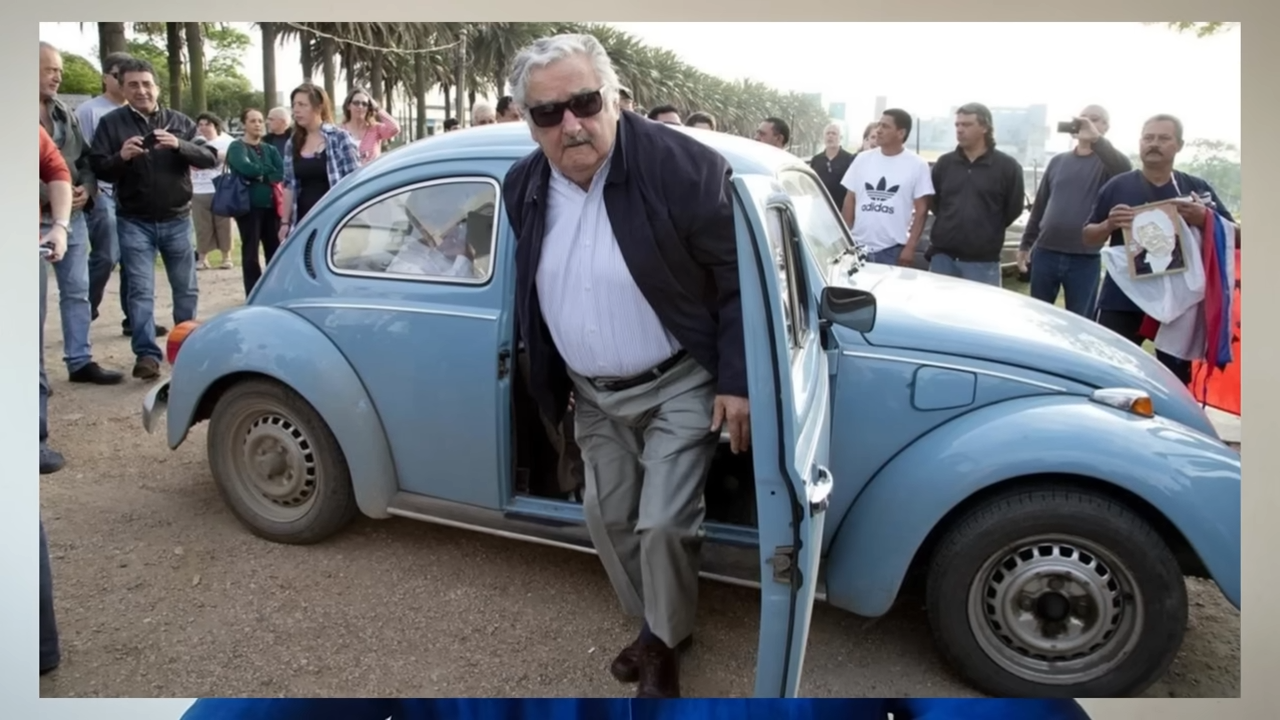
Following the 2014 election, Mujica soon gained an international reputation as the “poorest President in the world”. He remained housed in the three room farmhouse owned by his wife Lucia, also a veteran of the Tupamaros guerrilla movement. He rode public transit and drove a vintage VW beetle. Ninety percent of his presidential salary the couple gave away to small businesses and non profits benefiting the poor.
“El Pepe“ objected to being described as “poor”. In correcting this miscaracterization he usually cited the Stoic philosophers, “As the old thinkers Epicurus and Seneca defined it, and as the Aymara people, indigenous to South America do: it is not the one who has little who is poor. The one who is truly poor is the one who needs infinitely more, the one who is never satisfied.”
Our current international system which compels us to think we need more to be fulfilled and live happily is simply unsustainable. At the 2012 UN Conference for Sustainable Development, Mujica declared, “The real problem is not climate change”. He explained, “Humanity is in grave danger because of the system we have created.”
His diagnosis of the problem conveys the solution: “The danger is rooted in what we have come to seek to make us happy.” It seems Mujica’s fifteen years in the military dictatorship’s jails, seven of which he was denied any books, may have taught him the primacy of living simply. “My message is very simple: Economic growth and progress must add to human happiness, not take away from it.”
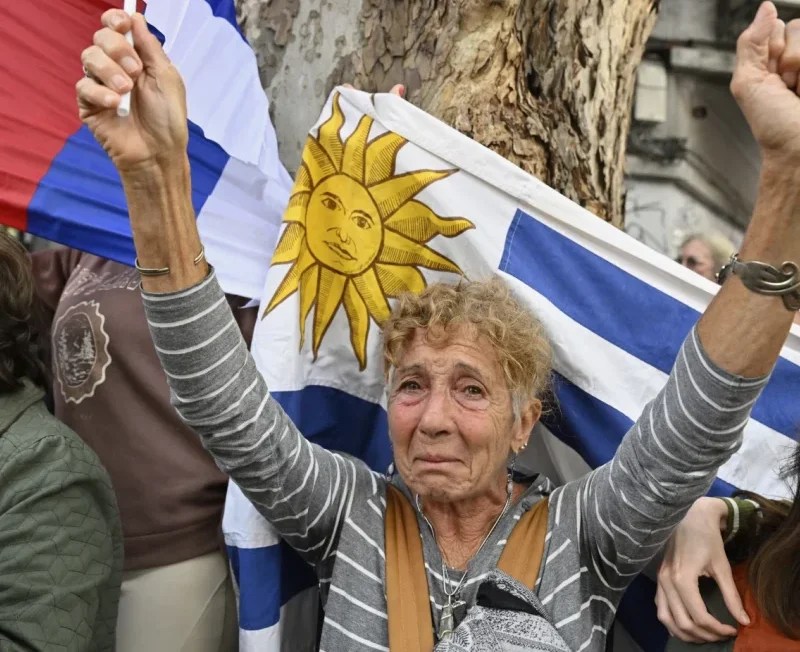
Our current system is not only not sustainable he reminded leaders at the Rio Conference: “Does the world have enough resources for the entire human race, seven to eight billion of us, to live like the Western societies that keep making more and buying more than they need?” What is the effect on relationships with other people he then asked, “Can we really talk about the solidarity of humankind and kindness to each other, even togetherness, when we are constantly competing to outdo each other?”
He then concluded his talk with these words: “These are the building blocks of our happiness as humans: having satisfying relationships with others; raising children; making friends; spreading love in the world.” One is again led to ponder how his years of solitary confinement contributed to “El Pepe’s” bold, simple wisdom.
Uruguay from Dictatorship to Democracy
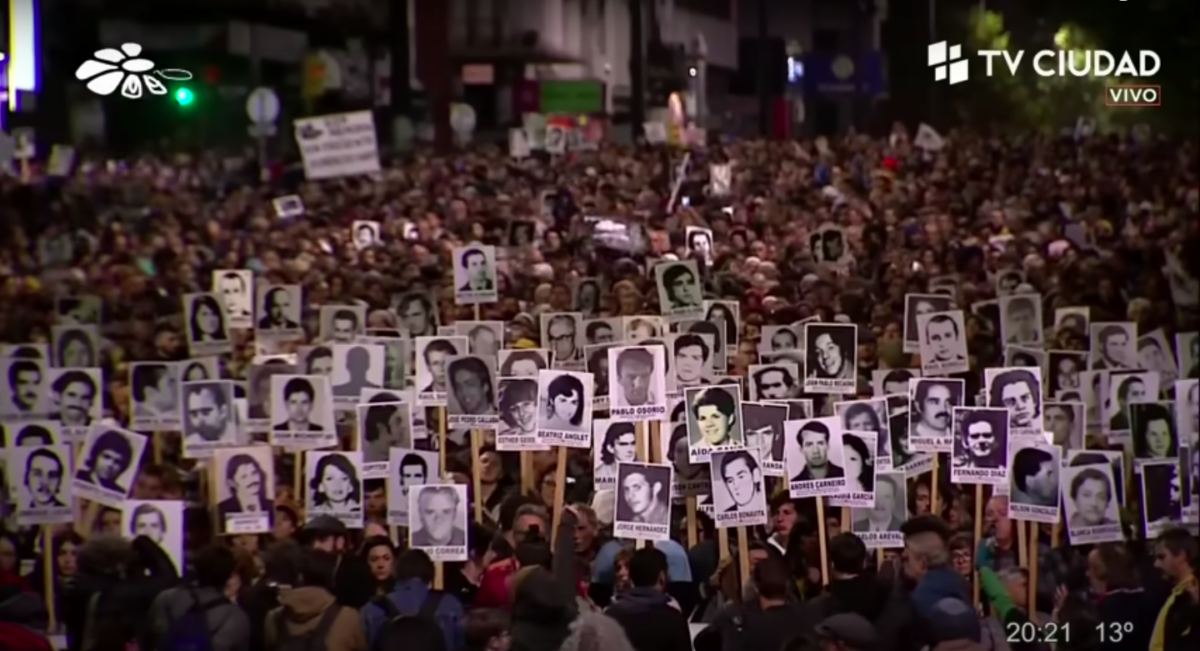
On May 20 for the past 28 years thousands have marched in 77 places across Uruguary and abroad in remembrance of those disappeared and detained by the military dictatorship from 1973 to 1985. Marchers call silently for “State terrorism never again”.
In Uruguay, shortly before the November 1971 Presidential election was held, the Broad Front, a coalition of leftist political parties was formed. Authoritarian regimes in Brazil and Argentina along with the United States feared another democratically elected socialist victory like Allende’s in Chile the previous year. The Uruguayan election was held against a background of an economy and a government in shambles and a growing Tupamaro guerrilla threat. U.S. National Security files indicate that the “superpower” feared the rise of the Broad Front coalition more than the Tupamaros.
Despite the election of a conservative President and defeat of the coalition, amidst multiple reports of harassment of its candidates, the U.S. increased its “security training” of the Uruguayan police and army. Failure of measures to improve worsening economic conditions and increased activity of the Tupamaros led to take over by the military in 1973. Brutal repression of dissent and advocacy of leftist policies were met by incarceration and torture on the advice of U.S. security advisors. During the military rule from 1973 to 1985, even mention of the word “politics” or “Tupamaros” could lead to imprisonment. For several years, Uruguay led the world in percapita jailing of political prisoners.
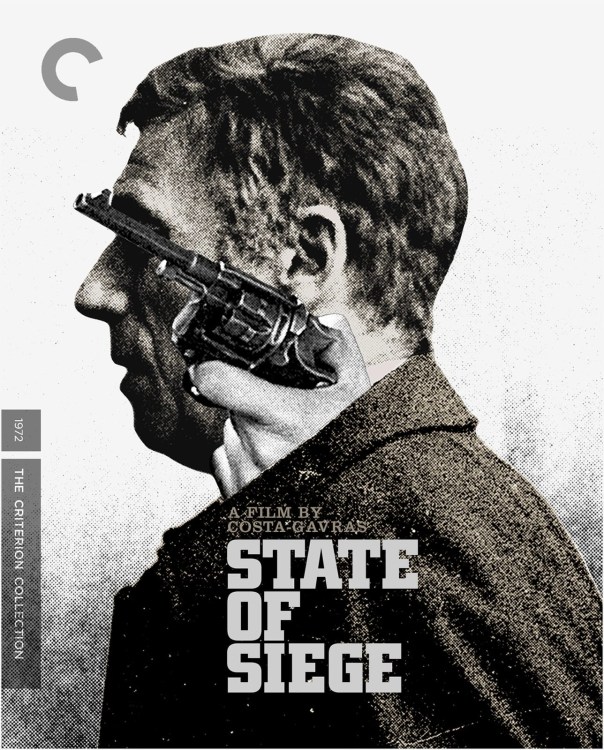
The 1972 film “State of Siege” by the makers of “Z” was inspired by the Uruguayan military’s violent repression of the Tupamaros guerrilla movement.
By 1984 the country formerly known as “the Switzerland of Latin America” had declined further and elections were held. Bolstered by rising prices for its exports, moderate to conservative governments held on to power until the historic election of the Broad Front Presidential candidate in 2004. With the Government implementing a plethora of economic and social policy reforms Uruguay became a showcase for democratic progressive rule in Latin America and indeed the Western Hemisphere.
When Tabare Vazquez of the Broad Front came to power in 2005, the rate of poverty measured 40 percent but by 2020 had dropped to under 9 percent. As the country with the lowest economic inequality in South America, Uruguay created a National Health Service for all its citizens. Pro labor legislation was approved, financial regulation, tax and pension reform enacted. Major increases in the minimum wage and social welfare payments contributed significantly in lowering economic inequality and poverty in the country.

The second Broad Front President, Jose “Pepe” Mujica, was known internationally as the “poorest President” in the world. As a Tupamaro combatant he was tortured and jailed for thirteen years under the most severe conditions. While President he drove an old VW Beetle, lived in a modest farmhouse and gave away 90 percent of his salary to organizations serving the poor and marginalized. Under his leadership (2015-20) the Congress made abortion legal and approved gay marriage. In a move to counter drug cartels’ control of the illicit drug trade, Uruguay became the first nation in the world to legalize marijuana production and consumption. The first Latin American nation to grant women the right to vote in 1927, the Broad Front led by Mujica’s party restored Uruguay’s standing as one of the most progressive democracies in the Western Hemisphere.
In retirement, he and his wife, also a former Tupamaro combatant, grew chrysanthemums at their farm and continued to drive the Beetle. At “Pepe” Mujica’s funeral procession last year, 100,000 Uruguayans honored his courageous commitment to the poor and the advance of his country.
In the next blog, erasing-borders will delve into his philosophy of the good life and his vision for the country’s future. We will consider how he contributed to Uruguay becoming a world leader in renewable energy production.
***************************
For more on the era of military rule and U.S. involvement in creating the security apparatus see:
Hidden Terrors by A.J. Langguth
Starring Yves Montand as a U.S. security agent kidnapped by the Tupamaros, “State of Siege” received a 7.7 rating from critics and movie goers. It can be seen on Prime Video.
What a Progressive Democracy Looks Like: the Case of Uruguay
Omar, our taxi driver from the Montevideo airport was a lifelong resident of the capital. We didn’t learn the origin of his Arabic name but we asked about the name “Azul” tattooed on his arm. It served him as a perpetual reminder of the infant daughter he had lost years ago. Omar did not hesitate telling us more about his family of four and the large extended family as he guided us around the capital on six occasions.

On the trip to our hotel he called attention to the sprawling Roosevelt Park across from the Rambla (“malecon” in Mexico) paths and avenue bordering the inland sea. Over 350 kms. wide at Montevideo the estuary of the Rio de la Plata (named after the silver the Spaniards never found upriver) appears to be the Atlantic Ocean that washes Uruguay’s long shoreline beginning an hour’s drive away.
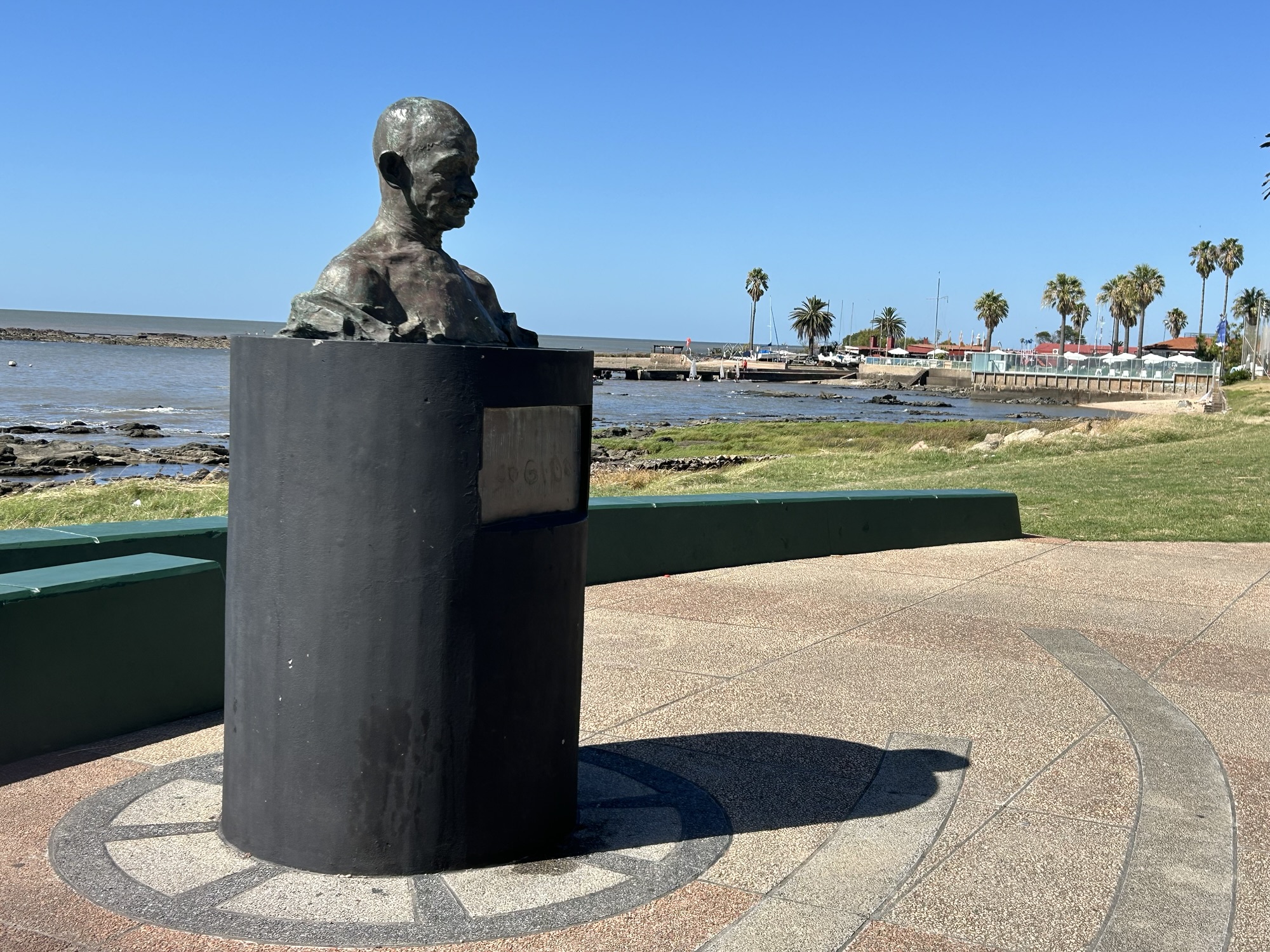
Along the rambla, the architecture of the older apartment buildings and homes of the wealthy brought to mind the diverse European cultures represented by the 19th century immigrants to the country. Italian and German styles predominate though one or two residences appear to commemorate the heritage of wealthy Swiss citizens. Our destination was a short walk from the “Gandhi Rambla” and the bust of the pioneer of non violent struggle.
Before arrival at the hotel, on Omar’s advice, we stopped at a gas station adjoining a currency exchange. There we had to deal with Uruguay’s policy of requiring dollars in cash in the exchange for pesos. So our multiple cards in hand would not be accepted and we would have to be content with leaving most of the dollars we could dig up in the country. Fortunately most of the restaurants and even small businesses would accept our credit cards and our meal servers usually told us that with use of a card no tax would be charged visitors to Uruguay.
After a good dinner and comfortable rest, we were met with the most disagreeable surprise of the journey. The Italian cruise company, MSC Cruises, denied us embarking for the voyage up the Uruguayan and Brazilian coast to Rio. Boarding passes in hand we encountered the Italian non-Spanish speaking agent who explained that without having received the Brazilian visa we had applied for we could not enter the territorial waters of that country. The visa requiredment is one of several measures of “reciprociaty” implented by Brazil last year in response to Trump’s imposition of a 50 % tariff on the import of goods from that country.
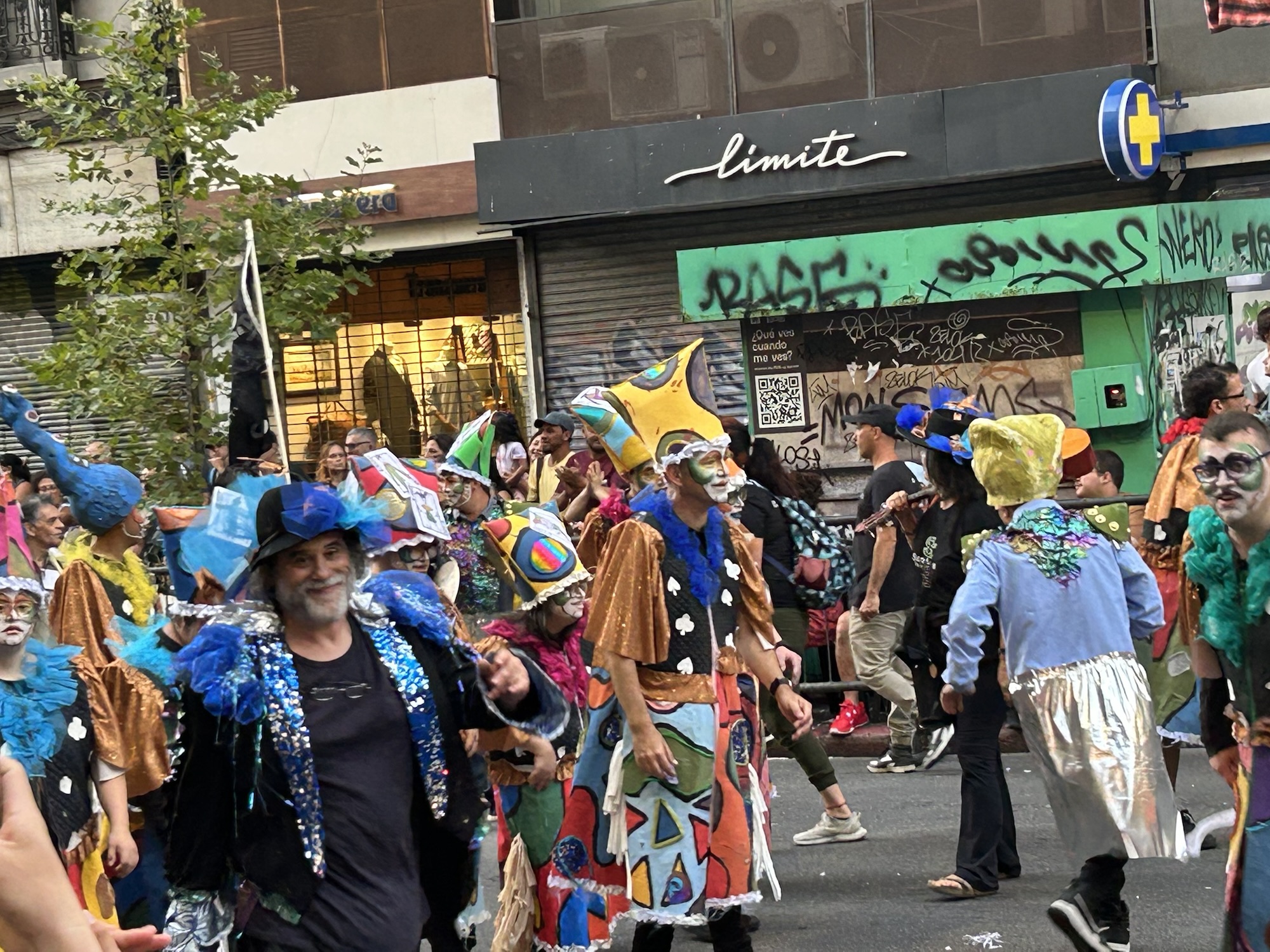
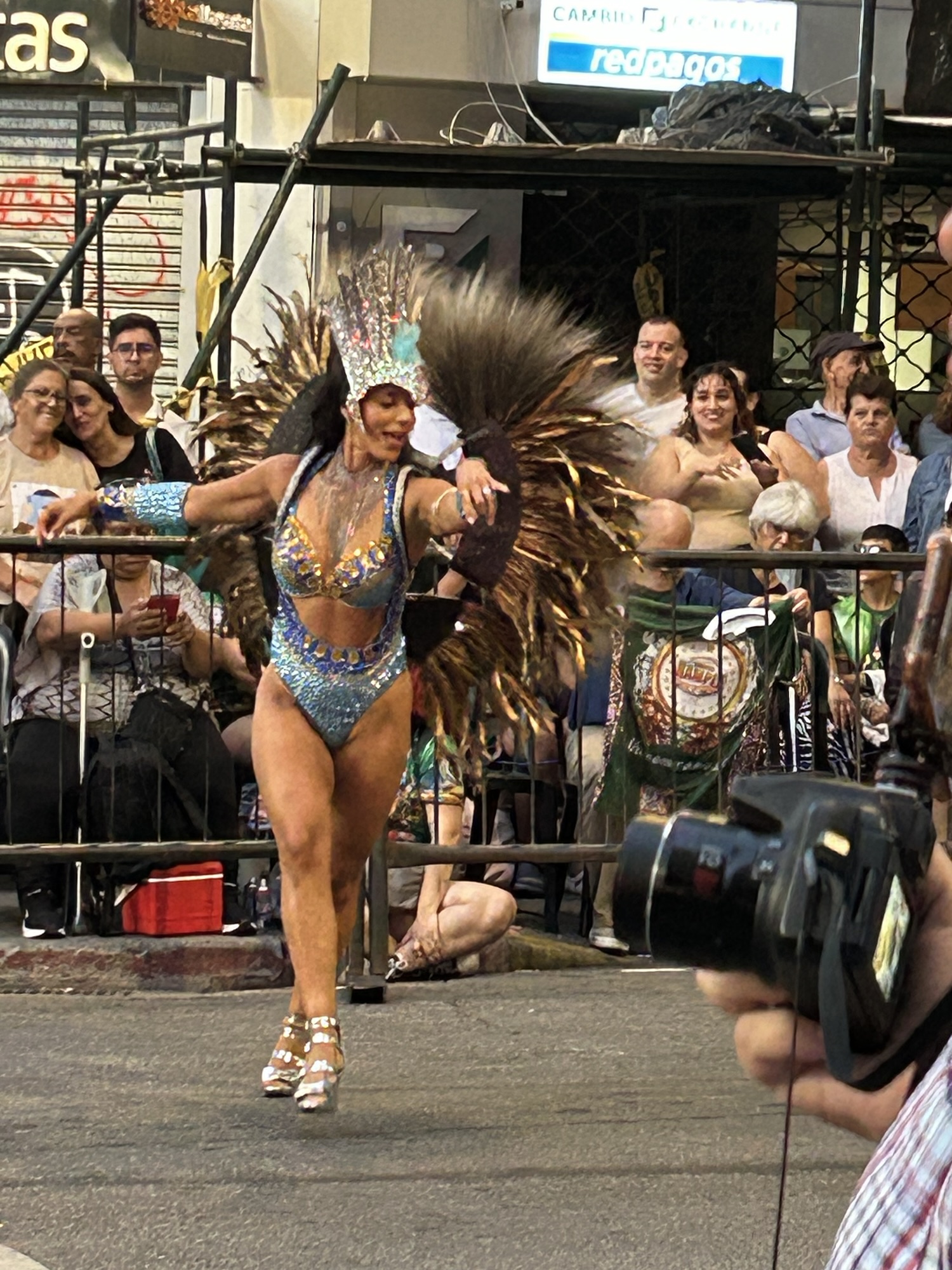
This disheartening news left us with eight more days in Uruguay we had not planned for. Overcoming her anger and disappointment, my partner Kate booked five nights in a hotel in the center of the City’s social and cultural life. Three blocks from the hotel the following night Montevideo’s main street would be electric with dancers and spectators celebrating the opening of the world’s longest Carnaval festival. For the next forty days barrios and leading cultural venues would feature music and dance, theater and mime, social and political commentators and humorists.
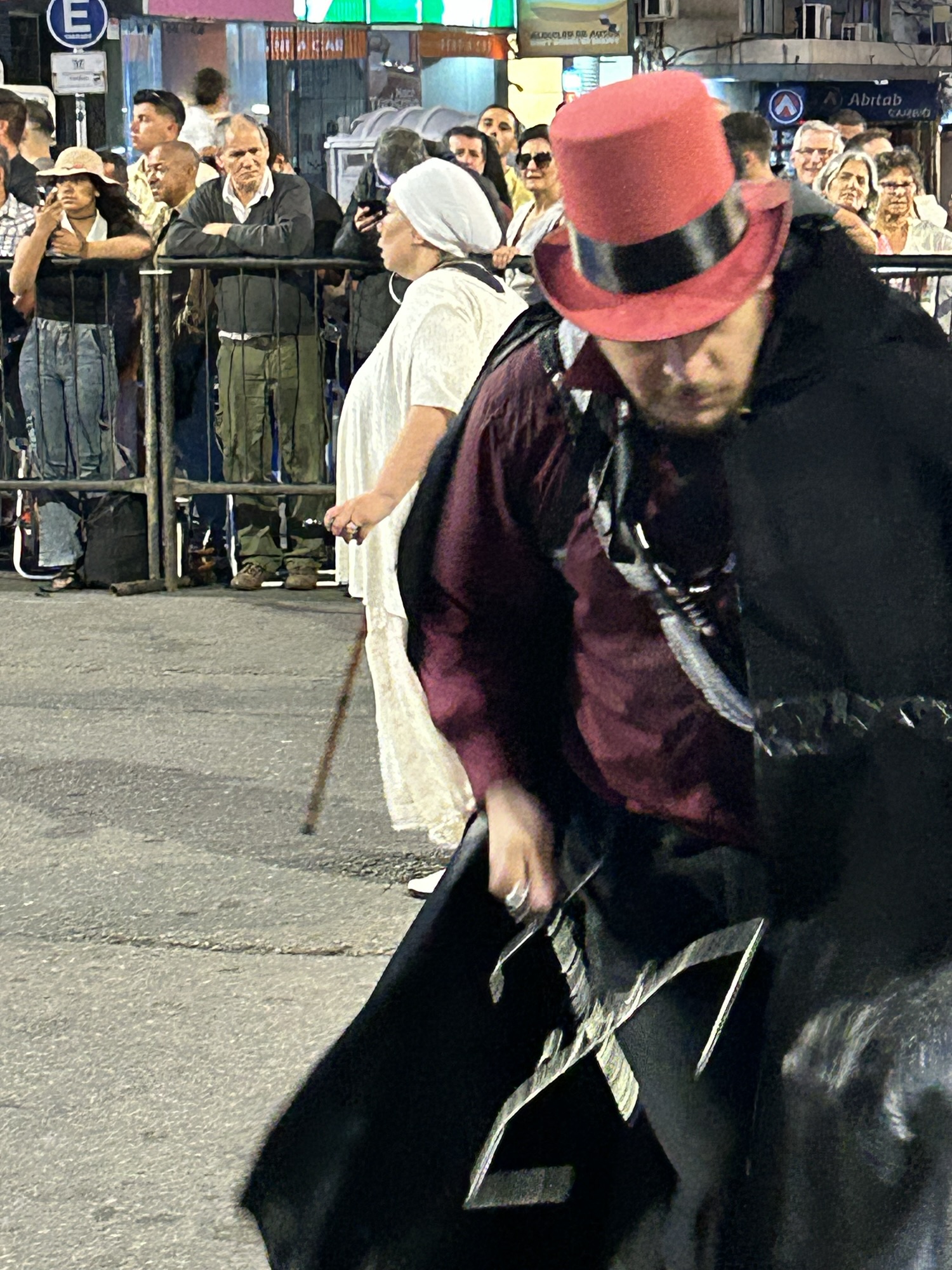
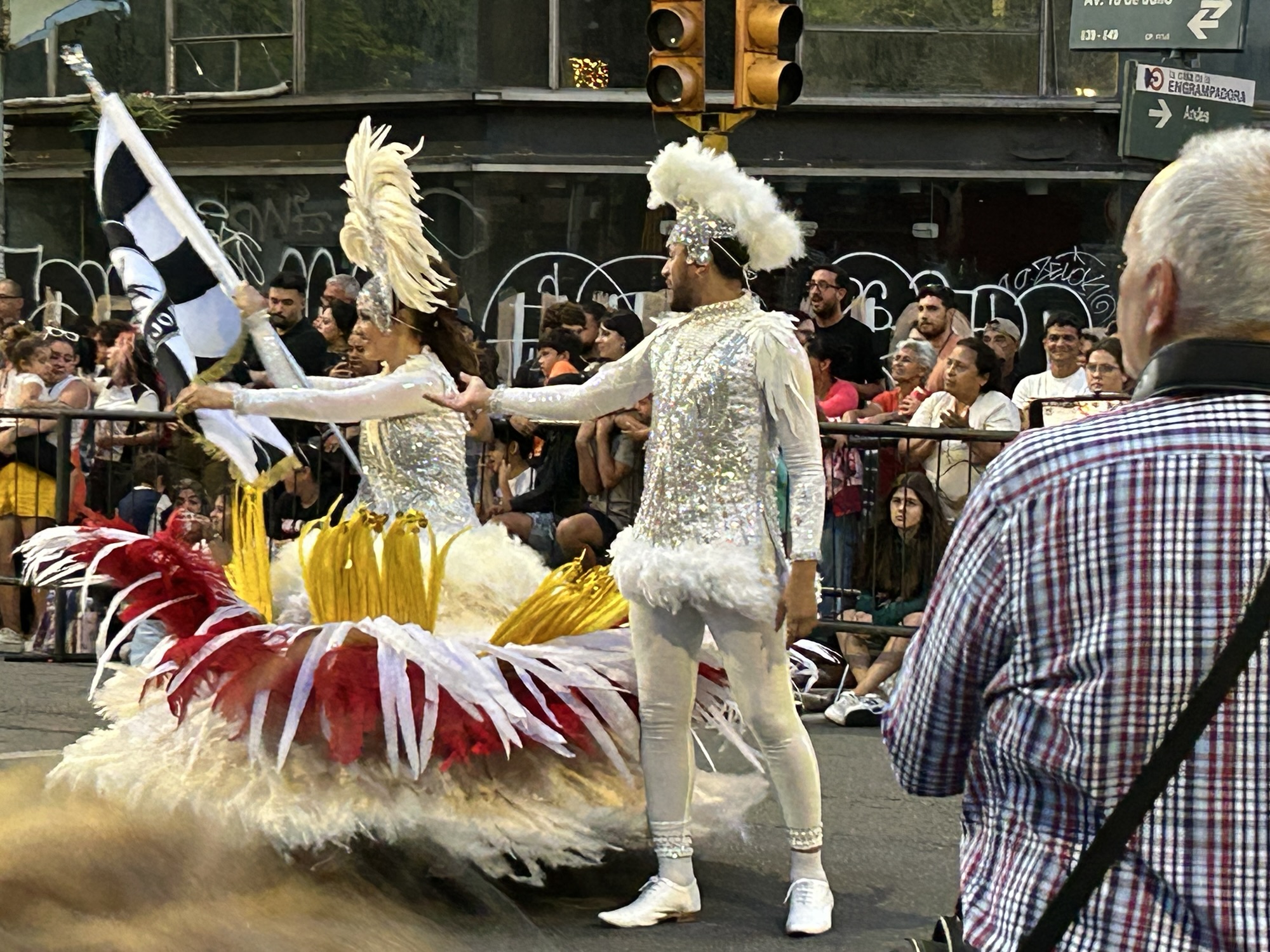
For the city-wide spectacle’s first two nighs the collective imagination would be reflected in the masks, costumes, songs, and dancing in two parades in the City center. Neither Kate nor I were prepared to be cast into the maelstrom of exuberance and creativity inspired by the traditions of Carnaval in Montevideo. Though ignorant of the meaning and roles of the parade participants it would be impossible not to feel, momentarily at least, that in the cavorting and foolishness we the spectators savor the sweetness of life’s drama. Even a cursory introduction to the candombe’s African originated music and dance and the murga Spanish derived traditions of satire and social commentary might ignite the desire to explore further the roots and interpretation of Uruguay’s Carnaval.
As in its unique Carnaval celebration, Uruguay shares with its neighboring countries the daily ritual of maté consumption. Unlike coffee you will not see maté on the menu and maté cafés are rare. The devotée of the drink carries to work or an event a thermos of hot water to be added throughout the day to the stimulant’s leaves. They brew in a cup made from a dried, hollowed out squash covered in leather. Critical to the drink is the “bombilla” straw filtering the herb leaves. People can be seen on the street passing a cup around while discussing a current news item. For North Americans it is curious to note that some carry their thermos and cup in a wooden box resembling the shoe shine boxes formerly seen in train and bus stations.
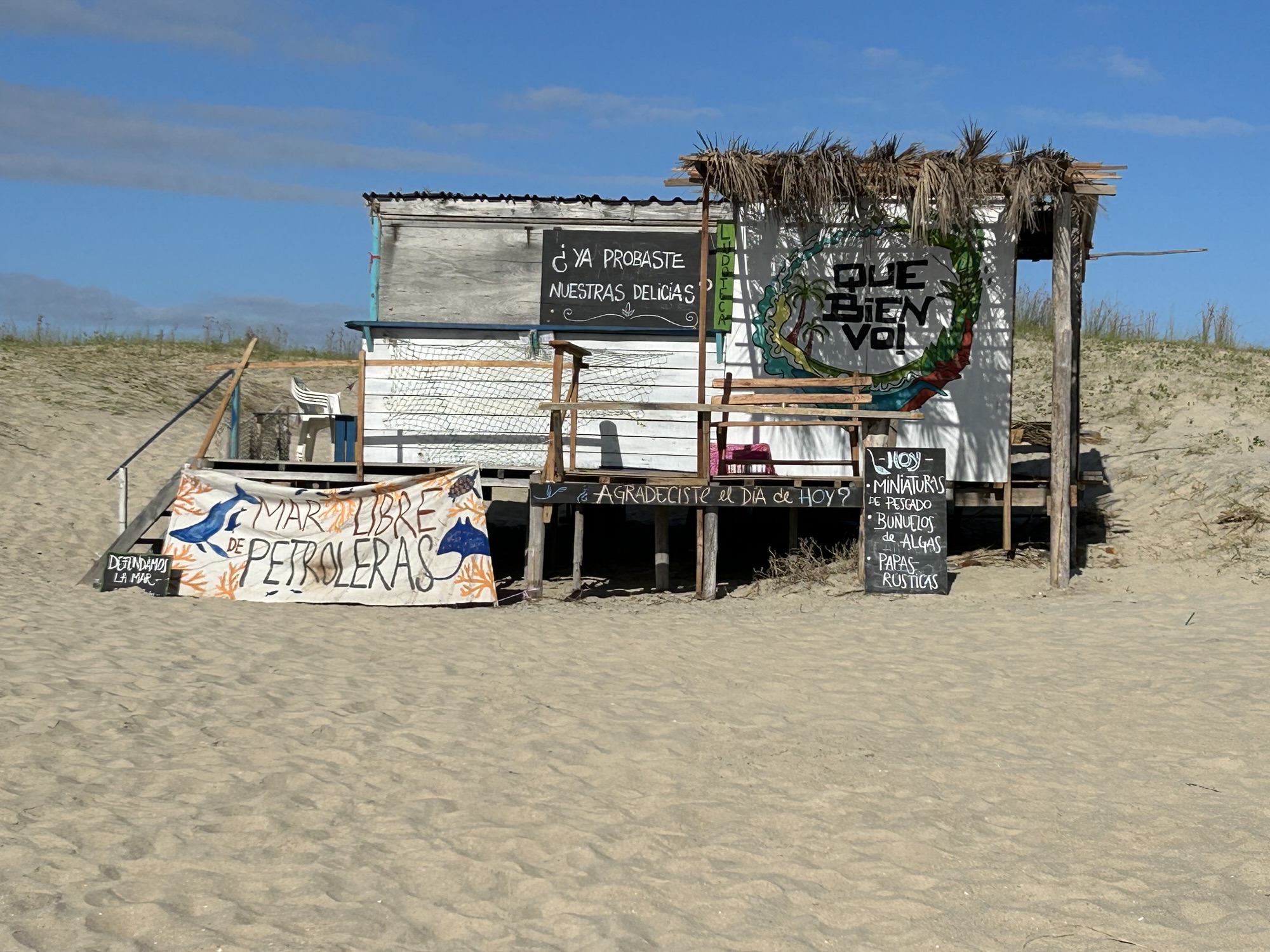
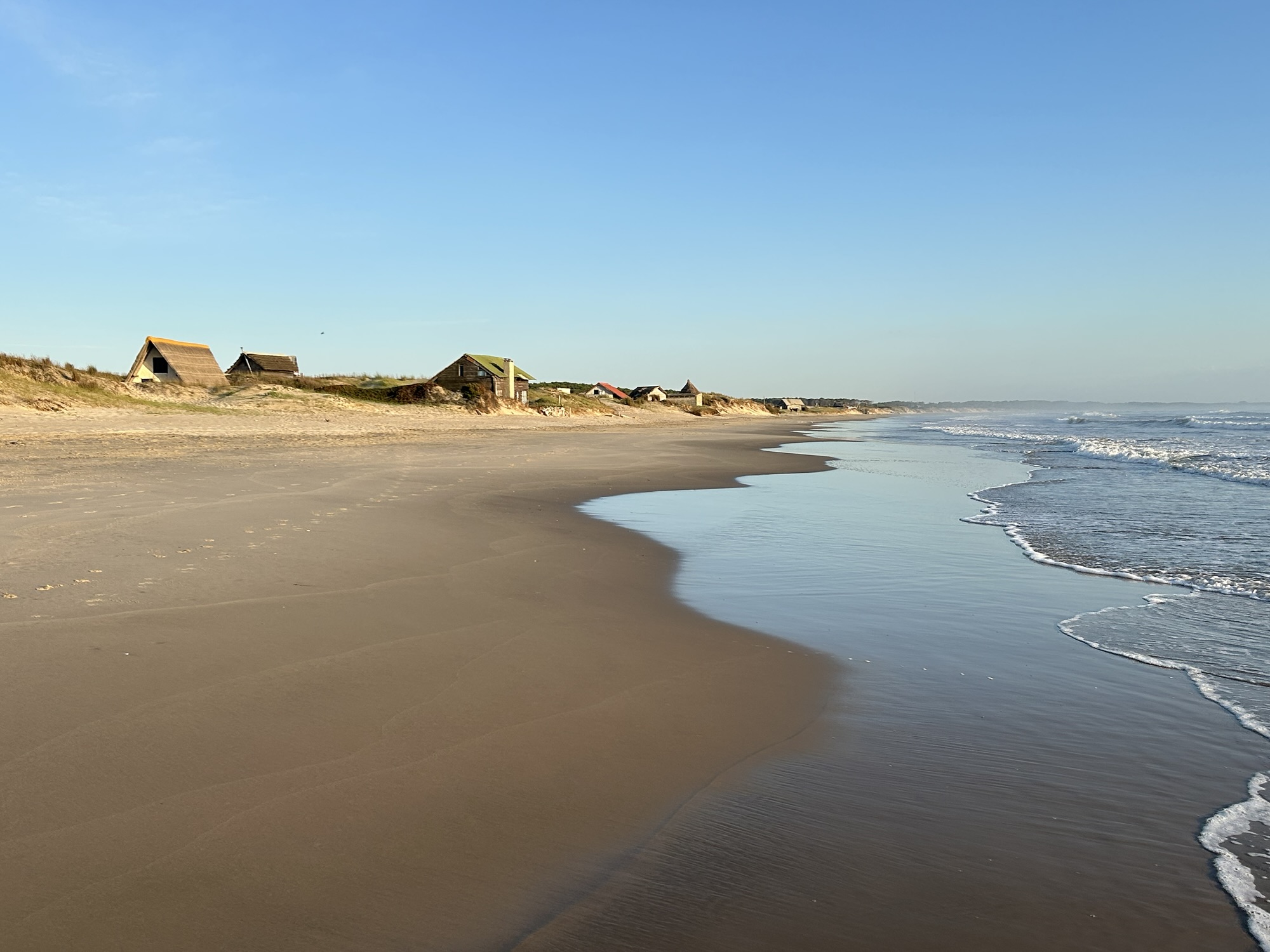
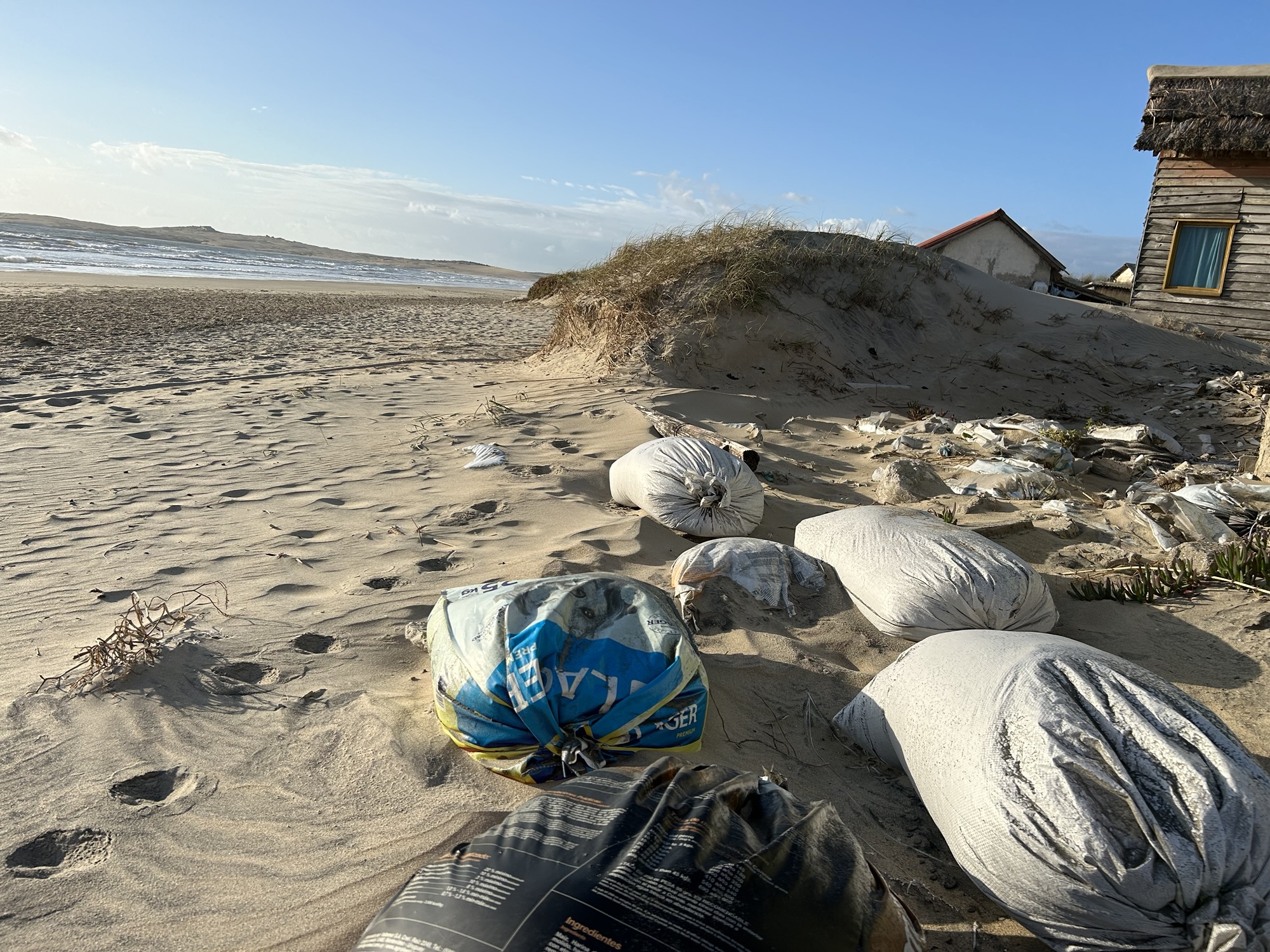
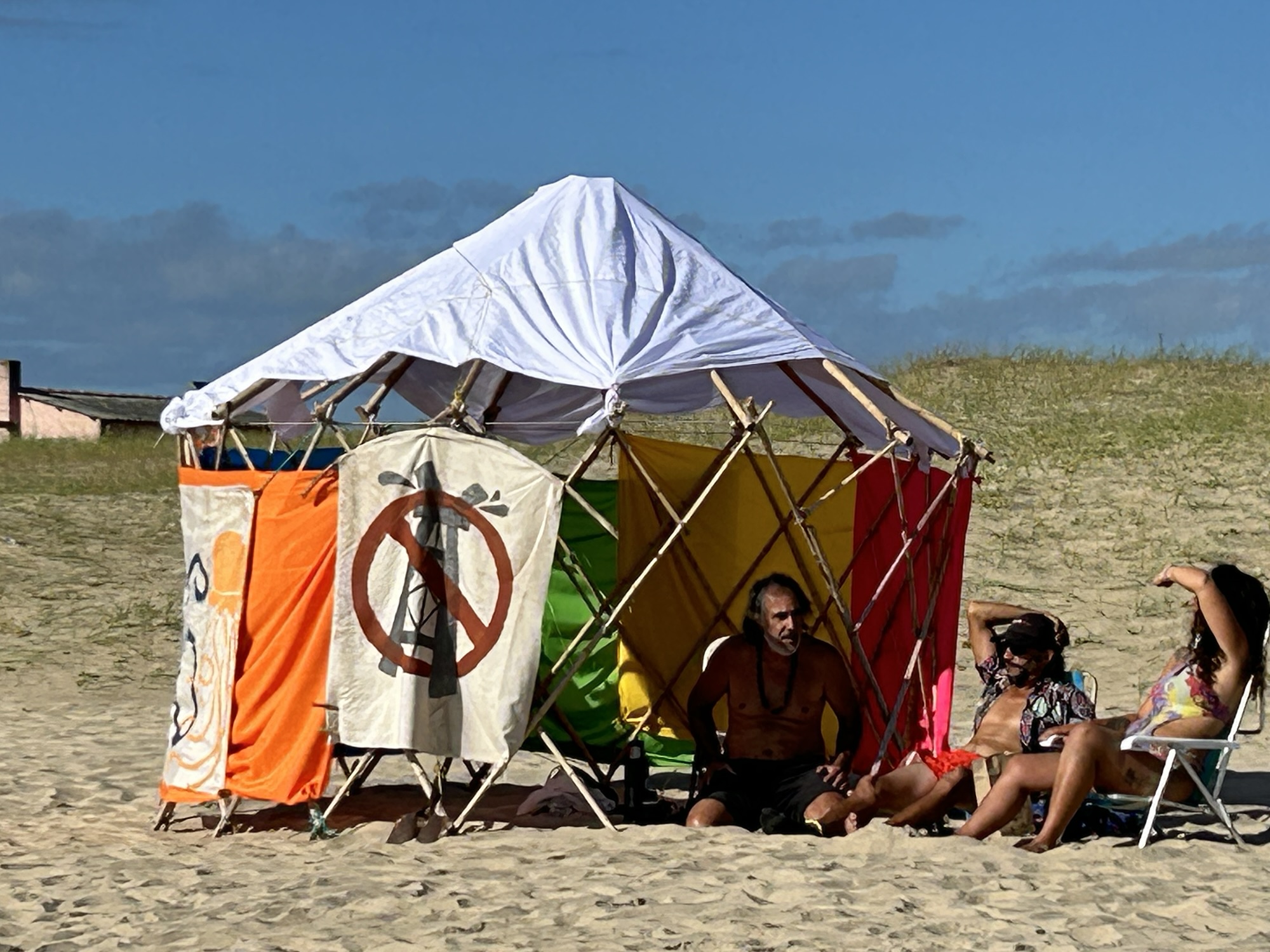
Our stay during the Uruguayan summer concluded as planned with six days on a beach less than four hours north from Montevideo. Soft golden sands massaged our feet, temperate water roared invitingly, solitary early morning walks, and the afternoon panorama of beautiful, bronzed bodies whispered to us from the deep. Sale of food and drink was advertised outside several shacks along the beach which invariably also had posted signs opposing any future oil exploration along the coast. This hostility to fossil fuels was a lone reminder of the country’s oppressive, deadly rule by the military 1973-1985 during which dissent was brutally repressed. The next blog of erasing-borders.com will be devoted to the transition from dictatorship to the flourishing democracy Uruguay enjoys today.


 Erasing Borders