Category Archives: U.S. Political Developments
U.S. Expansion of “Christian Nationalism” as a “Theology of Empire”

Among all the nation states now dominated by a form of religious nationalism – be it India, Afghanistan or Myanmar or others – there is only one nation in the world today beholden to a “theology of empire” and it is the U.S. The nation shaped originally by a theology of “exceptionalism” of a chosen people has today become the most far reaching, dominant military power in the history of the world. With over 800 bases in 85 countries, the U.S. capacity to influence and intervene in the politics of other governments is unprecedented. The fact that U.S. armed forces have conducted or led 211 deployments since 1945 (How to Hide an Empire, Daniel Immerwaher, 1945) reveals the nation’s aim of enforcing its worldwide economic and political dominance.
What began as leadership of the opposition to the expansion of “godless communism” has evolved since WW II as “endless war” in defense of the nation’s “national interest”. Contrary to those expecting a “peace dividend” after the break up of the Soviet Union’s republics, the 1990’s brought further growth of the U.S. armed forces and presence around the world. The Arabian peoples and the Muslim religion replaced Communism as the primary, most insidious threat to our way of life.
Following the 9/11 attacks, while the Bush and Obama administrations resisted subscribing to a “good” versus “evil” depiction of the U.S. and its allies’ actions, the ferocious conflicts and costs incurred did signal extremist views as justifying the empire’s invasions. Characterizing Arabs and the Muslim religion as congenitally hostile to the “infidels” dominated popular media and even academic discourse. The leading scholar cited and interviewed most often in the early 2000’s, Princeton’s Bernard Lewis, had long made elucidating his theory of the “conflict of civilizations” the basis for his scholarship.
The “theology of empire” of U.S. evangelical Christians touts Christianity as the only pathway to individual salvation and social coherence. In their eyes, every military campaign aimed at a Muslim society representing a religion with over one billion adherents worldwide is a precursor to the final Armagedden. Such a view helps justify a military budget of nearly 900 billion dollars, and brings hubris based on our status as the lone “superpower” in the world and the leading defender of free and democratic nations. Considering the nearly one trillion dollars spent on U.S. Middle East military intervention and the hundreds of thousands lives lost in those wars, the theology proclaimed by U.S. evangelical Christianity seems worthy of Pascal’s observation generations ago. “Men never do evil so cheerfully as when they do it from religious conviction” the philosopher wrote.
With billions of dollars to broadcast, fund evangelism tours and support like-minded church bodies, the U.S. “theology of empire” has been imprinted on the minds and communications of evangelical Christians outside the U.S.. Ten years ago I was distressed during several tours of Protestant churches in Mexico by the anti-Muslim comments of some of the laypeople. More disheartening, however, is how conservative evangelicals have sided with foreign companies extracting Latin America’s natural resources when opposed by the local citizens most affected.
Evangelical pastors and laypeople have been encouraged to scorn protestors of foreign seizure of natural resources as socialist-leaning trouble makers. The evangelical Protestant President of Guatemala Gen. Rios-Montt was the notorious adherent in the early 80’s of the U.S. evangelicals’ theology. Trained by U.S. advisers and espousing a virulent anti-communism, in a short lived rule the Gen. led a campaign that took the lives of thousands of indigenous Guatemalan villagers. During his two years as President, Rios-Montt delivered what were called weekly “Sunday sermons” deploring cheating, stealing, lying and promoting individual values. This emphasis, joined by an “otherworld” emphasis on the social plane, is characteristic of many evangelical groups throughout Latin America and holds special appeal in association with law and order politics even when accompanied by state violence.
Despite evangelical Protestant sharing of virulent opposition to abortion and gay rights with the Catholic hierarchy, there is often hostility to the Catholics where there has been significant Protestant growth. Chiapas now claims more Protestants than any other State in Mexico and has been the scene of some violent Catholic-Protestant conflict. During a February Mexico visit, I learned of the massacre of 45 Catholics in the village of Acteal, Chiapas. Pacifist supporters of Zapatista organizing in their village and others, they were attacked in the village’s Catholic Church. Residents of San Cristobal de las Casas 20 miles away described the paramilitary force responsible as having been largely recruited among the Protestant converts.
The prophets of the Hebrew Bible largely ignore the policies of succeeding empires of their times directing their messages rather to the settlers of the nations of Israel and Judea. Jesus also devotes himself to the reform and uplift of the “House of Israel”. The fundamental theme of his preaching and ministry is the treatment of the poor by the leaders of the nation he knows best. His spite and condemnation reaches a peak when observing those who exploit the downtrodden with a guise of piety.
Rev. Dr. King greatly expanded our vision of human rights to citizens of our nation when he declared that a nation that spends more on its military than on the well being of its people is a nation approaching spiritual death. Through the the 1960’s and later, the U.S. lawyer-theologian William Stringfellow called his nation to repentance. He wrote of repentance in a 1984 essay, “Repentance is not about forswearing wickedness as such; repentance concerns the confession of vanity.” Without such a confession, he wrote, “For America – for any nation at any time ……. the very presumption of the righteousness of the American cause as a nation is blasphemy.”
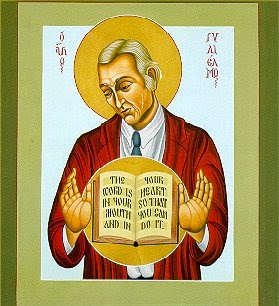
Erasing Borders of Global Acceptance and Agreement

One of this blog’s readers asked recently in the Comments section what I have in mind by the title “erasing borders”. I am grateful for the question enabling a written dialog between this writer and the blog readers.
In responding I begin with the observation that among the tectonic shifts we humans must grapple with today there is one transformation of the global landscape that represents hope for our species as well as unprecedented challenge. With the evolution of the multiple crises forcing themselves on all human beings we are becoming more and more aware that no single nation state can acting alone remedy any of them.
It is, however, equally evident that the history and global politics of the United States is uniquely unprepared and ill fit for participation much less leadership in shaping such global actions. As the world’s remaining superpower of the Cold War era, the U.S. policy-making elite are used to preserving our right to go it alone. When we consider collaboration with nations formerly identified as the communist bloc and with those now stereotyped as Islamic terrorist states heavy lies the crown on the head of the leading “defender of the free world”. What is required of us now entails the kind of change called for by the idealistic vision of “erasing borders”.
“Erasing borders” is not therefore intended as solely applying to a nation state’s immigration policies and border enforcement. Its metaphorical content calls for no borders in our compassion; no borders in our respect and appreciation of other cultures; no borders in our relationships; no borders in building trust. “Erasing borders” was chosen to express with a short phrase the conviction that our “national interest” has now become obsolete in guiding our relationships and agreements. It is now more and more evident that what is in the interest of all nations is what promises to be the best for the U.S.
When the largest U.S. corporations now prosper by means of expanding their “global reach” ** we find little to no evidence that the U.S. national interest is a priority of their manufacturing, marketing strategies, corporate tax planning and so on. All our crises today – whether it be the spiral in the number of refugees and migrants, the threats to species survival dealt us by the production and consumption of fossil fuels, the emergence of global pandemics or the pall cast over our lives by the “strategic deployment” of nuclear weapons – our reliance on national interest and military might as the primary security strategy is as antiquated as relying on an operator to make a long distance call. When has U.S. led military interventions overseas contributed to long term advances in resolving any of the global crises?
The Christian faith serves my interpretation and response to the message of our troubled times. That message urges us to dream and proclaim the kind of radical change – the kind of change represented by technological change from the horse and buggy to interplanatary travel – and to begin thinking about what will improve the lives of all peoples. The handwriting on the wall that “erasing borders” interprets is “work together or perish together”.
All the world’s major religions appeal for unity among all peoples. In the first pages of the Jewish Christian scriptures, the creation of humankind begins with the creation of one family as our shared ancestors. Christianity originally grew from the vision of celebrating our common ancestry across the barriers of language, nation and culture in praise and thanksgiving of our one God, creator of all.
While living in France in the summer of 1963, I learned about the proposal to create a common enconomic network, a “Common Market”, on that continent. The details were still to be worked out and while my informant, a Protestant pastor, referred to serious opposition to the plan he had no doubt such an ambitious change was not only possible but inevitable. Among the fundamental changes he mentioned were abolition or lowering of tariffs and no control over Europeans’ travel across the continent’s borders.
Although we in the U.S. may not be ready to design abolition of our borders, the sudden behavioral changes demanded by the COVID pandemic indicates our general population may be more prepared than our economic and political elite for radical change. The resolution of the multiple global crises through universal dialog and agreement demands change from our unilateral approach that is at least as radical as the opening of borders by all nations.
*********************** ********************
** Global Reach: The Power of the Multinational Corporations is a 1976 book by Richard Barnet and Ronald Miller which forecast the changes brought about by the cross national operations of U.S. based corporations.
The Heart to Heart Spirituality of the Mayans
The practice and significance of a Mayan community creating a sacred altar is described in what follows. It is based on a handout provided visitors to the Institute of Intercultural Studies and Research (INESIN) in San Cristobal de las Casas, Chiapas, Mexico. All quotations are from the handout written by the Institute’s Mayan staff members.
“The altar begins to take shape as the community gathers” the handout tells us. Most of us have read it before making our group’s altar following INESIN staff member jPetul’s instruction. “Each brings his or her offering from the fruits of their gardens or other labor” the handout continues. Our church group from Kansas City bring our desire to experience at a deeper level the Mayan culture and religion of forty percent of the population of San Cristobal de las Casas, Chiapas where the Institute is based.
So we read in preparation that “In the Chiapan Highlands, we often begin by spreading a bed of pine needles as a base that marks the ritual space with color, sound and smell….” Adorning the altar with their “flowers, fruits, seeds and symbols” the participants create “a representation of the whole community”. Candles of a variety colors are placed at the four compass points on the altar.
“The Mayan altar represents the cosmos and the universe” the handout relates. So the colors’ association with the four directions of our world are a crucial element in the symbolism of the altar ceremony. After the Spaniards brought wax and candlemaking to the New World, the candles’ colors were matched to their location in the “vision of the universe as seen by our grandparents”.

The red candle on the altar’s east side “represents sunrise, the birth of life, strength, love and the color of blood.” It also represents “the birth of God”. Incense is burned on the east side where red flowers, red beans and corn and red fruit are also placed. A guardian of this side is dressed in red.
On the West, a black (or purple) candle “represents sunset, darkness, rest and death”. In the Mayan worldview, darkness and night occur when the sun dies, passes toward the underworld, walks in other worlds and finally is “born again as a new, radiant sun.” This passage and its color signifies “the death of God, who dies to give us life”. For us humans the passage enacts whatever we do to nurture life and “leave behind that which destroys life”. In concrete terms for us humans, the passage signifies sowing seeds “when we bury these in the belly of the mother earth”. Purple flowers, black beans, corn and black soil are placed on the westside of the altar where a guardian would be dressed in black.
In Mayan belief, the colors of the altar also reflect our unity as human beings. Red is the color of our blood; black is our hair; white is our teeth and bones and yellow is the color of our skin. The Mayan tradition affirms that we humans share common traits while every person is also different. Our handout further states that the altar’s colors “represent the diversity of languages, thoughts, beliefs and ways of seeing the world of peoples and cultures”. Participation in the creation of an altar invites us to “ respect and appreciate our differentness and our oneness, our uniqueness and our sameness”.
We learned that the passage from red to black, from East to West, is the way of God. The passage from North to South “is the way of humankind”. The white candle of the North represents the “side of the sky, the wisdom of our ancestors, the peace and tranquility of the heart, the search for truth and clarity in thought and feeling”. The North also tests us: “cold rain and wind, the winter freezes, sickness and death also come from the North”. Bones, white beans and corn, white flowers, shells and seeds, a sea conch may be placed on the North side of the altar. The guardian “and protector” is clad in white.
The yellow candle of the South is associated with the feminine, and the direction from which comes good crops and abundant harvests. “Yellow flowers, yellow seeds and corn, yellow fruits, and water” are found on the South side with a guardian dressed in the same color.
A human’s life passage to maturity and fullness is symbolized in the altar’s depiction of movement from North to South. Intersecting with God’s path from East to West, the Center is where “humankind participates in the divine and the divine in the nature of humanity”. The two paths are also seen as the passage for God and for humankind from life to death and death to life.
In the Center is a blue candle, symbol of the “heart of the sky” and the eternal, “that which does not end”. Water is sometimes placed in the Center and someone may be assigned to wear blue and serve as guardian of the sky’s path. The green candle in the Center stands for the earth, for nature, for life that continues. Along with nature, men and women make up “the community of divine creation”. We, like all of nature, are divine “because we have the ‘ch’ulel’, the spirit that comes from the Sacred, ‘Ch’ul’ (or) the divine breath”. Earth or soil may be placed in the Center. Symbolic elements of the Center remind us that “our grandparents taught us that all that exists has ‘ch’ulel’, spirit and heart”.
In the Mayan view, our spirituality is cultivated and grows from the heart. Before each person plants one or more candles on the altar’s periphery, we were instructed to diagnose the present state of our heart. We were to ask ourselves, “how is your heart or how has your heart arrived in this place?” Our handout notes this question is “asked from the heart to the heart, for we as Mayans speak from there.”

In some villages of the Chiapan highlands, residents greet one another by asking “how is your heart seen or what is your heart feeling?” The response can be “my heart is blooming” or “my heart is full of flowers”. Harmony and good will reign when Mayans say they are of one heart or, in one of the leading Mayan languages, when they say “jun o’tonal”.
The significance of incense and smudging in the altar ceremony, the prayers and significance of placing the candles before concluding will be described in the next and final article on the Mayan sacred altar. It too will be based on the handout “Theological Perspectives on the Mayan Altar” written by jPetul and other Mayan workshop leaders of the Institute for Intercultural Studies and Research (INESIN) in San Cristobal de las Casas. A community’s periodic creation of a sacred altar has contributed significantly to the survival of five million Maya for three thousand years as a people and culture.
The fine Institute website in Spanish and English is at http://inesin-mx.org/
Erasing Borders in Chiapas

I’ve just returned from a week long stay in Chiapas, the southernmost State of Mexico. I went with six other adults from my Peace Christian Church (United Church of Christ/Disciples of Christ) in Kansas City. We did not go to “help” those who hosted us in any substantial, tangible way. On what can be best described as a “decolonizing mission” pilgrimage, we went to learn about the legacy of Spanish seizure of land, suppression of indigenous culture and the native resistance to the foreign presence and influence in Chiapas. These all remain sources of the multiple conflicts Chiapas has experienced in recent years. In tandem with the oppression of the indigenous people, religious differences have been used by the Mexican State, foreign corporations and the cartels to stir conflict among the indigenous Mayan peoples and others in the State.
One of our partner agencies in global mission today hosted our delegation and introduced us to how they work for inter-religious and inter cultural understanding, reconciliation and peace. The INESIN staff represent and interpret well the diverse cultures of the Mexican State of Chiapas. There is jPetul, a former Catholic priest of Lacandon Mayan origin, who instructed us in the meanings and practice of creating a Mayan sacred altar. His spouse is a former nun led us one morning in moving through the Catholic daily meditation on “the liturgy of the hours”. In his welcome and introduction to the history of INESIN, the director told us he serves too as pastor of a Protestant church in the Chiapas capital, Tuxtla Gutierrez. We worshipped there on the Sunday of our week long stay.
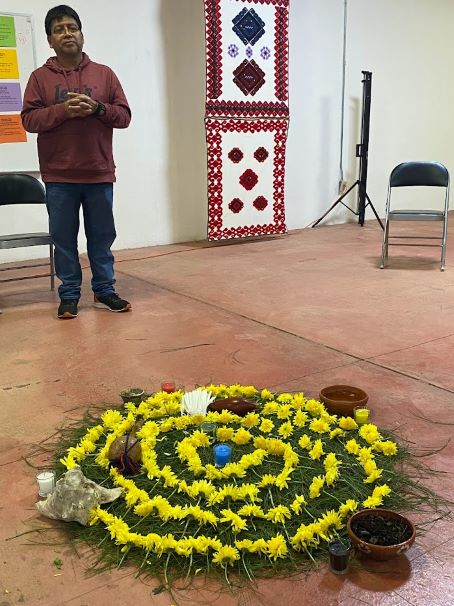
We learned about the sources of the multiple conflicts in Chiapas after the Conquest through three hundred years of Spanish colonial rule from another partner of our denominations’ “Global Ministries”. Sipaz (https://www.sipaz.org) presents workshops designed to free and protect the population from Chiapas’ cycles of violence while other programs aim to educate and encourage advocacy among foreign visitors. The Sipaz director for the past 20 years is a woman who described recent political and economic developments as well as Chiapas’ historical context.
Marina noted that the trafficking in migrants through the State of Chiapas and on to the U.S. is now largely controlled by leading Mexican cartels, formerly primarily engaged in the drug trade. Lax security and immigration enforcement at the Guatemalan border reflects Mexican Government border policy, funded by the U.S., of interdicting undocumented migrants on the roads of Chiapas. The immigration attorney among our pilgrims had prior to our trip discovered that the Guatemalan State and one of the country’s leading banks have profited from their fellow citizens’ migration. Failure to repay loans for the U.S. journey results in loss of a Guatemalan migrant’s land.
Another grim aspect of the situation is the targeting of older children and youth in recruitment by the cartels and local militias. We observed the third of our denominations’ partner agencies in San Cristobal working with poor children, of Mayan families, who are encouraged and trained by Melel Xojobal (“true light” in the Tzotzil Mayan language) to value their earning potential outside the cartels’ grip and to defend their human rights. Melel Xojobal (https://www.melelxojobal.org.mx/ ) meets and organizes groups of children at the markets. A recent series of protests by Melel children won expansion of bathroom facilities in the City’s largest markets.
With a crammed schedule on little sleep, I took a break mid-week and missed the trip to the Guatemalan border with stops at two Precolumbian centers of Mayan culture and religion. The recently excavated ruins were built and flourished during what some scholars refer to as the “Dark Ages” in Europe. Between the third and tenth centuries A.D. the Mayans made their most significant contributions to the advance of our species. Viewing the vestiges of the Mayan legacy in the early 1500’s, and judging them as “pagan”, the Spanish missionaries and soldiers destroyed all they could identify as Mayan. Of the hundreds of books written on scrolls of bark by Mayan scribes, only three remain to instruct us on Mayan civilization.
Oppression of the Mayans under Spanish colonialism and decades of discrimination have led to speculation, even at present, that the magnificent Mayan temples, observatories and stone sculptures were created by members of Atlantis’ lost continent or another fabled people. Sadly there are Mexicans who still hold, along with their neighbors in the U.S., demeaning views of the indigenous people of their country. Anyone today who spends time in Yucatan or Chiapas or one of the four Central American nations inhabited by Mayan peoples today cannot question the resemblance of the figures depicted on the ancient sculptures and the indigenous people around them.
After visit of a great Mayan city of the past like Palenque in Chiapas, one is moved to think that the capacity of over 5 million Mayans to have survived centuries of exploitation and genocidal attack is in itself a remarkable achievement. The leading U.S. scholar of Mayan history and culture, Michael Coe, attributes the endurance of the Mayan peoples to three factors. In the ninth edition of his book The Maya he writes,
“What has kept the Maya people culturally and even phsically viable is their hold on the land (and that land on them), a devotion to their community and an all-pervading and meaningful belief system.” Coe then comments, “It is small wonder that their oppressors have concentrated on these three areas in incessant attempts to exploit them as a politically helpless labor force.”

I had in a 1980 journey through Chiapas been able to spend a day at Palenque which is touted by many visitors as the most dramatic and beautiful of the Mayan centers revealed to date. Our hosts advised against a visit as there is now a relatively insecure and substandard 200 km. plus route from San Cristobal to Palenque. Comparable in my mind to the majesty and achievement represented by the French cathedrals of Mont St. Michel and Chartres, an experience of Palenque insists that we revisit our stereotypes of the Mexican people and the Mayans of Mexico in particular. After taking in Palenque one cannot fail to be amazed and moved that the waiter serving you dinner or the woman cleaning your room comes from an ancestry that created such monumental beauty.
A Shared Risk
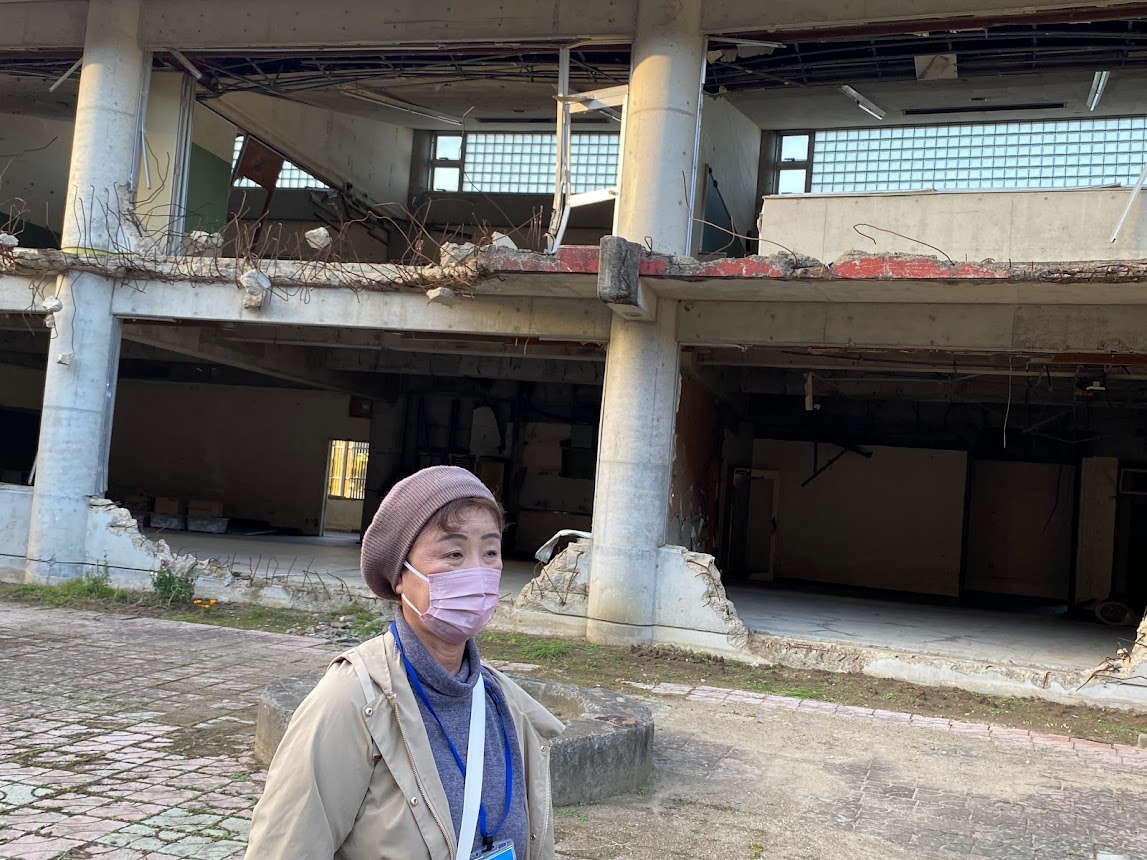
The clock read 2:46 on March 11, 2011 when the quake shook Japan’s biggest island. It was the most severe jolting ever experienced on the islands of earthquake-prone Japan. Some registered the impact as over 9 on their scales.
The teachers and students of Okawa Elementary School 400 kms. north of Tokyo knew this was not like former earthquake And they knew to duck under their desks as they had been instructed to do first. They then had to evacuate the school buildings and head out to the expansive playground whose new shoots of grass had just begun appearing. What the occupants of the buildings did not then know was that the real danger was yet to come.
Less than 4 kms. away the Pacific Ocean seethed in turmoil as though angered by the quake’s insolence. A massive wave was gathering force for a pounding of the land. The river close to the school fled in a mad rush inland from its estuary. Students and teachers gathered closer as they listened intently to the playground’s speaker amplifying the announcement that a tsunami was preparing to strike the area.
Although the word “tsunami” is derived from the Japanese language and many “tidal” or “harbor” waves have repeatedly struck modern Japan, school personnel and officials of Okawa’s prefecture were not prepared for the 2011 disaster. The evacuation measures following a quake were familiar and unambiguous. What to do to escape a tsunami of such size and power was yet to be decided.
With no directive coming from the radio, the teachers began a frantic discussion. It was clear they were divided. Bordering the school grounds stood a hill rising in a steady incline over 1000 feet. Even the school’s smaller students had partially climbed it. They had planted and harvested mushrooms there and upper level students enjoyed running or ambling up the hill. When teachers rejected a climb as the best escape route, at least one sixth grader voiced his disagreement. The teachers feared multiple injuries among younger students sliding on the light snow covering the hill.
No one on the playground knew they had 51 minutes between the quake’s first jolts and the wave’s appearance. Or that it would rise above them 30 meters high one minute after the loudspeaker warning. When the river suddenly overflowed its banks and roared as its water surged inland, a handful of sixth graders fled the playground. Four of them along with one teacher survived when the river water began slamming the playground and school buildings. 34 students and 5 teachers perished. When the earthquake occurred, most of the student body had already gone home. The victims were preparing to board the last bus whose driver was also killed. There were over 200 fatalities in the houses near the school.

The tsunami terror left the newly organized Church World Service Japan with a valuable lesson. At a coastal elementary school in a Sendai suburb there were no fatalities. There, immediately following the shock of the quake, students and teachers followed the school stairs to the roof. They witnessed and heard around them the ghastly destruction. But there were no injuries. For Church World Service it was as though the disaster had scrawled a message to guide its future. Disaster Risk Reduction would be their emphasis in preparedness work across Asia.
A variety of measures for risk reduction have been introduced by CWSJ in multiple countries of Asia. Working through local partner non-profits Church World Service Japan implements Disaster Risk Reduction projects in Vietnam, Indonesia, Bangladesh, Myanmar and elsewhere. In most instances, the locale’s evacuation planning is first assessed. Some areas of DRR demanding specialization in expensive technology, such as radiation control measures, are addressed in international conferences CWSJ has helped organize.
That the twelve year old NGO has assumed a leadership in the DRR field is more evidence that government and other NGO’s have been slow to respond to the need. Although 14 countries in Asia experienced over 227,000 fatalities from the 2004 tsunami centered on Indonesia, Japan appears to be setting the standards across Asia in earthquake and tsunami preparedness. There are two major earthquake fault lines on the main island, with one running vertically through Tokyo.
ANOTHER SCHOOL’S STORY


Climbing the Mountain in Japan
There continues to be surveys and accounts of the decline in attendance and affiliation with churches in the U.S. Although often characterized as evidence of the increasing secularization of the society, I believe this mischaracterizes what is really happening. At the very least, more consideration needs to be given to the trend among persons under the age of 35-40 to adopt practices of meditation and even faith in a power beyond our self from a buffet of beliefs. It is long past time to reject the label secular for any non-Christian or non-Church organized belief or form of meditation.
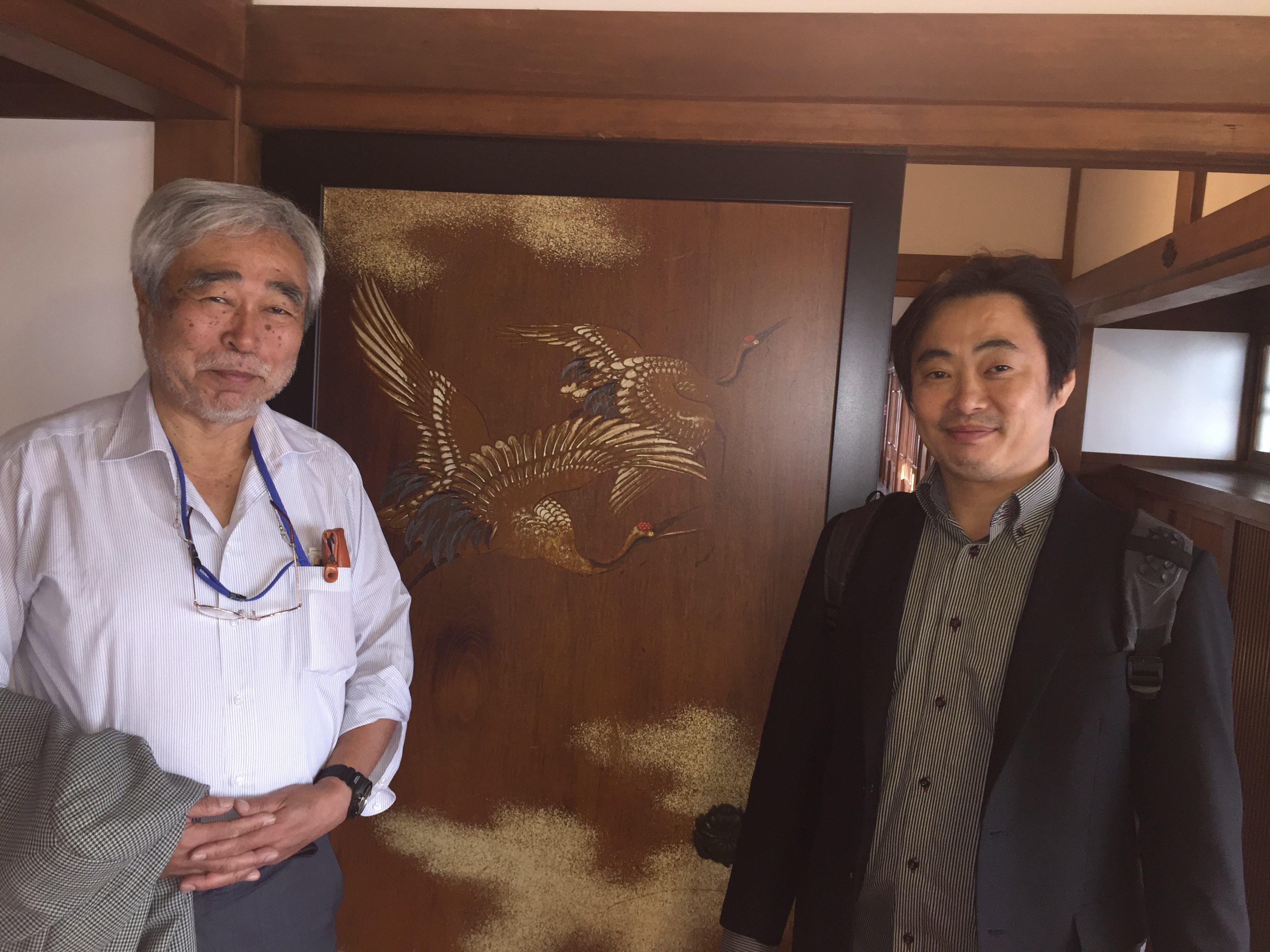
I am certain that for a majority of U.S. Christians the ten days I just spent in Japan were devoted to a “secular” cause. In accepting the privilege of meeting with the staff of Church World Service Japan for the second time, the first being pre-pandemic in 2018, there was no intention to gain adherents or bolster the churches there. My aim and that of the CWS Japan invitation was for me to assist in developing a public fund raising and outreach strategy for the humanitarian aid agency in a land where 98% of the population is non-Christian. Only one of the six full time staff members, Ms. Yukiko Maki, is Christian and active in the United Church of Japan. Her portfolio as Director of Programs includes cultivating the relationship with the Christian international aid network of the World Council of Churches’ ACT Alliance.
Since its creation in 2011 to help respond to the devastation of the massive earthquake, tsunami and Fukushima nuclear disaster, CWS Japan has grown significantly in its capacity and programs. Its General Secretary Takeshi Komino is now a leading voice in Japan and across Asia in the field of Disaster Risk Reduction. In a few years Mr. Komino has led other chief executives in Japan’s non profit sector in setting standards of accountability and engaging in partnerships with the Japanese Government and corporations.
So were my preparations and efforts to help further the presence and public support of CWS Japan to be considered as “secular” in nature? Only if we define religious, as do many U.S. Christians and analysts of social trends, as confined to activity advocating or espousing belief in Jesus Christ.
In fact, in my own tradition of the Christian faith, proselytism has for decades been superseded by another aim of “mission” in other lands. The founding of indigenous-governed churches in Asia, Africa and Latin America has made redundant and obsolete mission and “missionaries” primarily focused on conversion. The joint Global Ministries office of the United Church of Christ and Christian Church (Disciples of Christ) in the U.S. now recruit their partisans to “accompany” Christians and non-Christians in tasks which enhance and protect lives and the land where they are invited to do so.
One may well respond to this “call” to “accompanimiento”, as the Latin American origin of this approach to mission describes it, as a pilgrimage with people abroad and our Creator to restore and “make all things new”. This is, however, a significant historic departure from the traditional U.S. Christians’ view of “mission” in other countries. The Global Ministries avoidance of referring to their personnel deployed overseas as “missionaries” in favor of the term “Mission Co-Worker” grows out of the dramatic changes in the 20th century world. The struggles for independent nation status and self reliance resulting in the decolonization of the Euro-American colonies found support among progressive and aware U.S. Christians and their church denominations.
The new outlook on world mission that emerged in the more contemporary church bodies demanded a wholly different set of skills of their mission “co workers” in other countries. Gone was the emphasis on sending “authoritative” voices on the scriptures and preachers of “the Word” to be replaced by mutual learning, listening, affirmation and “accompanimiento”. To build relationship in an effective partnership with a colleague or colleagues in the foreign setting, one first had to devote oneself to learning about the local context. Never appropriate or needed was someone who, with little listening or learning in the local context, presumed to offer “expert” advice on any activity or program.
My rewards in taking such a posture and approach flow from the sense of solidarity and mutual affirmation I have experienced. Rather than a tally of converts I celebrate the beginning and the growth of relationships with those who fulfill the purpose of their lives with life-enhancing, loving works. Following my recent trip, I am grateful for the meeting of new CWS Japan staff and for the deepening of my relationship with those staff I interacted with in 2018. Vastly different but equally fulfilling have been the relationships enabled by mission assignments in Congo (1969-71 and 2010), Mexico (2012-2015), and with Church World Service US donors in Kenya (periodic visits 2003-2011).
A primary difference in my recent experience in Japan has been the strengthening of my conviction that there are many paths up the mountain of faith. Christians are by no means alone in their life work of seeking and paying homage to the hope, peace, joy and love we celebrate at Christmas as Jesus’ offering to all humankind. During this latest Japan visit, I found new strength and assurance from those of other faith traditions and no faith at all in my own trek up the mountain of faith. As we join persons taking a different path we can all know the solidarity and love of Christmas every day as we climb to the mountaintop.
***************** ********************** ****************
Visit the CWS Japan English website at https://www.cwsjapan.org/english/. Make a monthly or one time donation while there!
Global Christians’ Appeal for Reconciliation and Unity
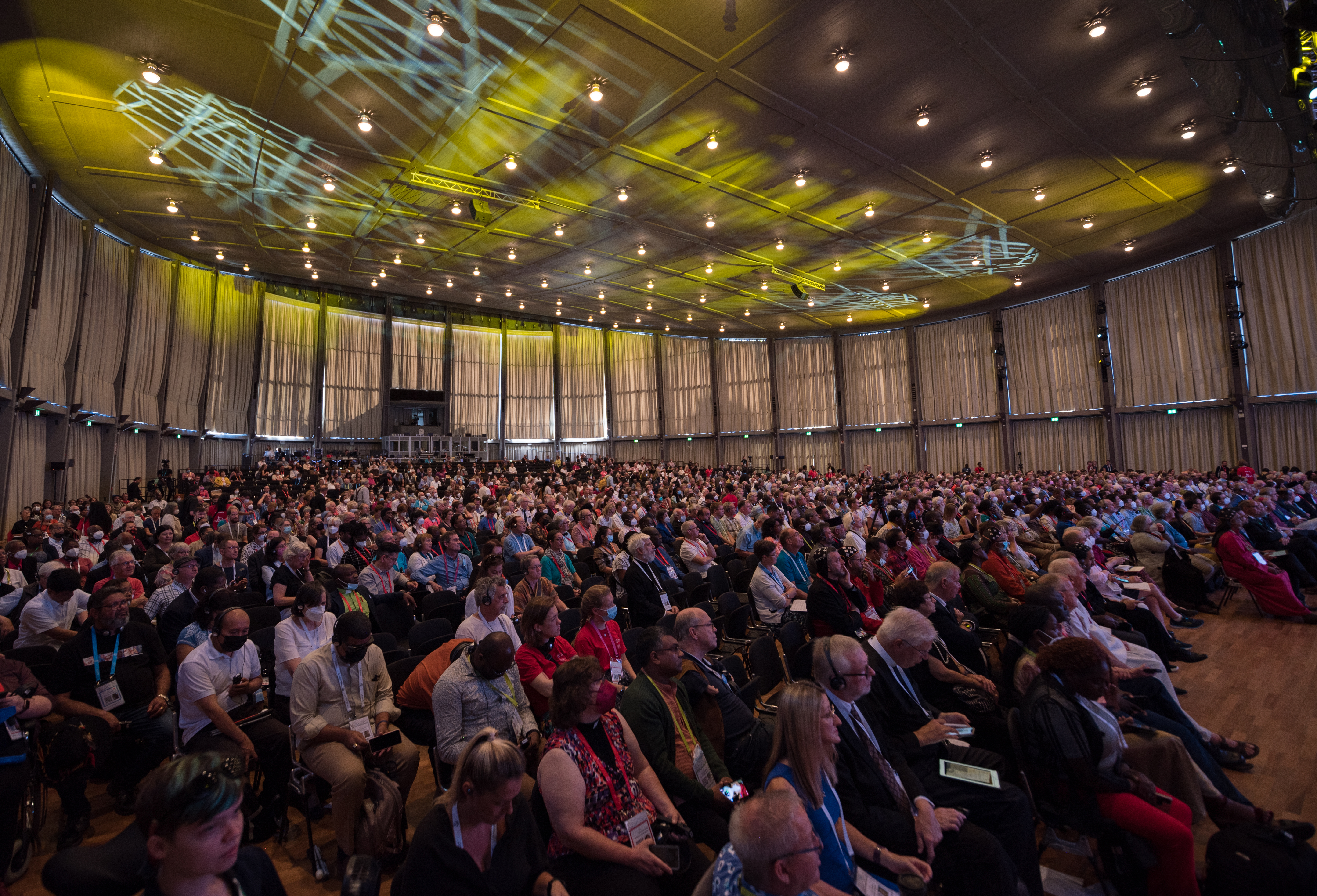
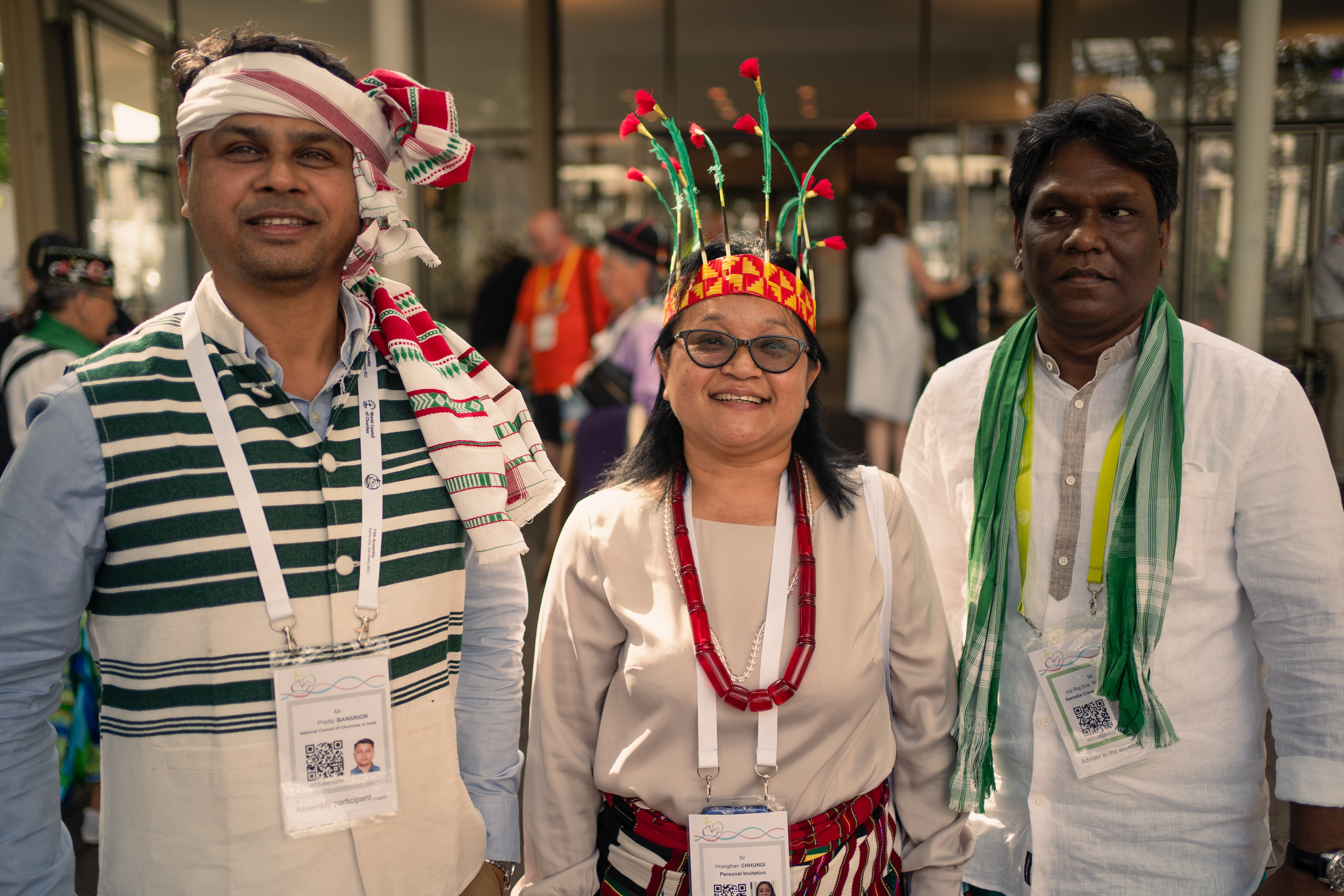
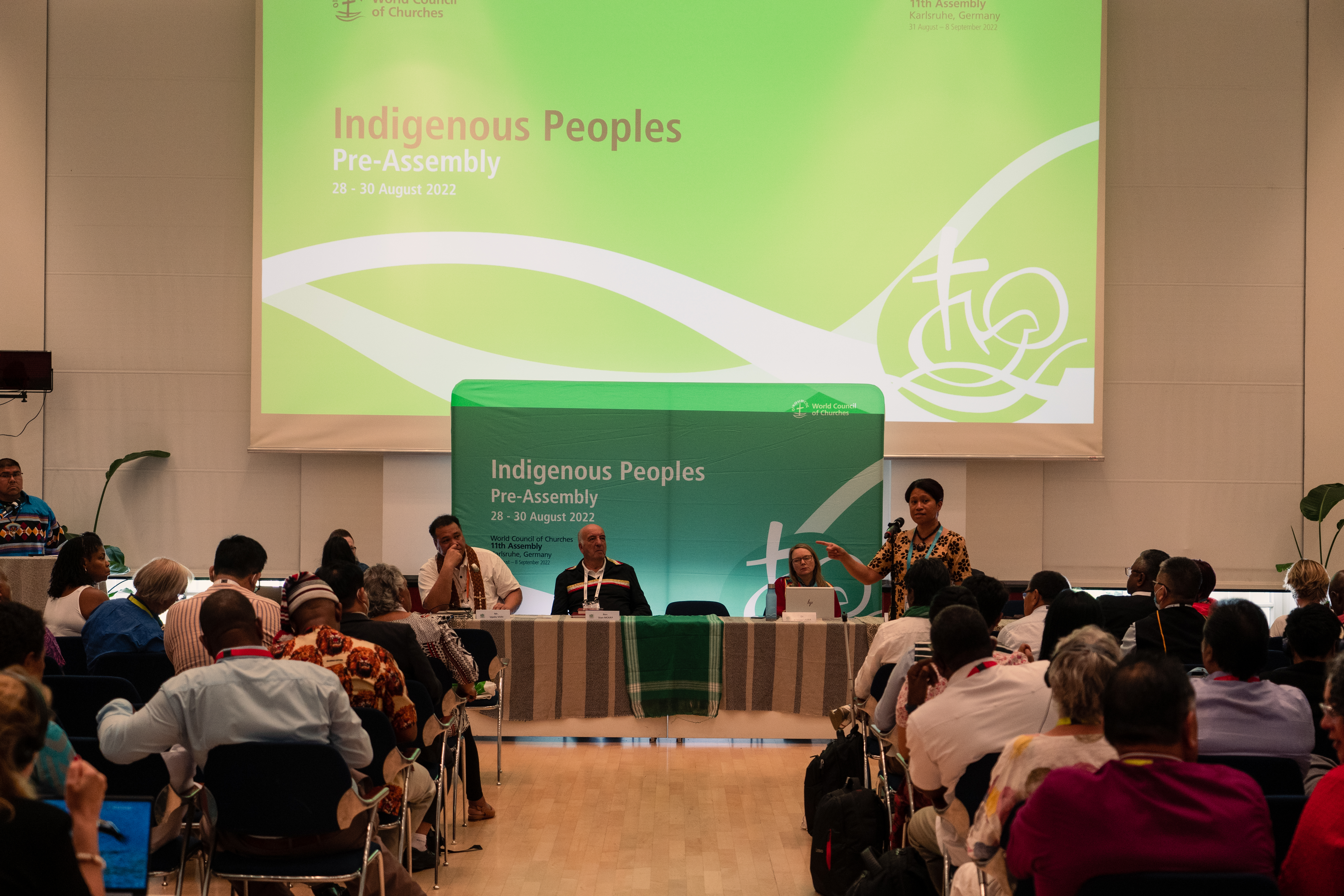
A “Call to Act Together” for reconciliation and unity concluded the recent Assembly of the World Council of Churches. Charged with sharing the message of “a unity founded in God’s love” the 4000 Assembly delegates cited the scripture “the love of Christ urges us on”. The delegates represented many of the World Council’s 325 Orthodox and other church bodies active in 120 nations. There were also 160 Roman Catholic observers attending the most diverse gathering of Christians held every seven years. Jewish and Muslim observers also attended the 11th Assembly.
Since the founding Assembly in 1948, Council membership has shifted from a majority European and North American body to a gathering which reflects the growing number of Christians in the global South. Summarizing the experience of living and listening together for 11 days, the delegates celebrated that “amid all our diversity, we have relearned in our assembly that there is a pilgrimage of justice, reconciliation, and unity to be undertaken together. ”
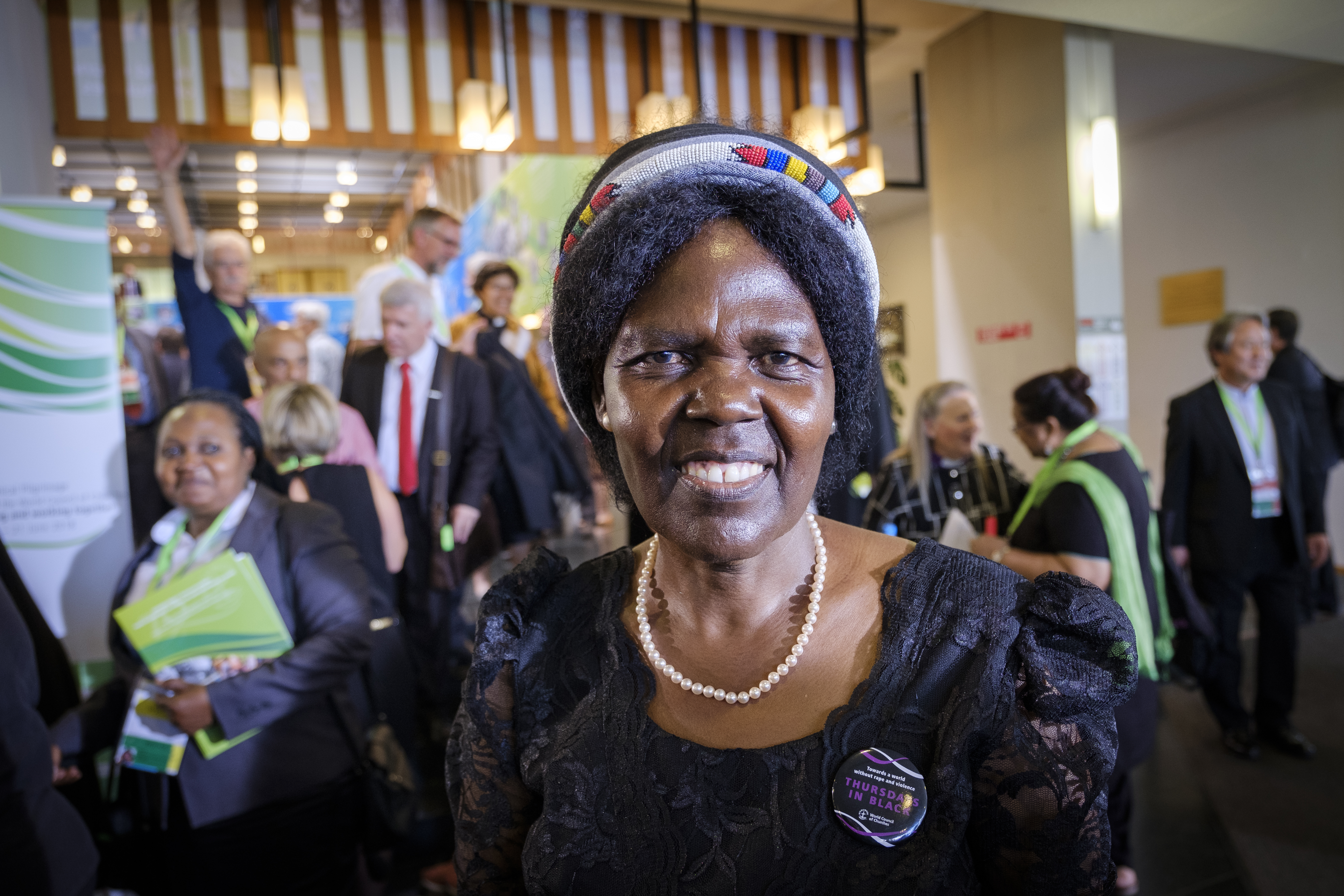
The Assembly experience and its “Call to Act” stands in contrast to the current trend of political leaders worldwide to foment division and distrust. Its call should be taken as a response to the use of division and disinformation to gain unfettered power. Voters in the U.S. would do well to consider the language and aims of their preferred candidates as the Republican Party sows distrust, antipathy and scorn of others. Over 150 Republican candidates in this week’s U.S. midterm election reject the 2020 presidential election of Joe Biden.
The Republican candidate for Governor in Wisconsin, construction company owner Tim Michels, promised that were he elected his Party will never again lose an election in Wisconsin. (as reported by Martin Pengelly of The Guardian, Nov. 2, 2022) Republican candidate for Governor of Arizona, former Fox News anchor Kerri Lake, was asked if she would accept defeat in the election. Appearing prepared to challenge such a result, Lake responded she would not lose.
The U.S. election featured the former President Trump campaigning for midterm candidates backing his “Stop the Steal” denial of results of the 2020 election. No one doubts he will again run for President in 2024 particularly should his Party seize control of Congress in the midterms. His campaigning takes place following dismissal of dozens of court cases in which his backers advanced claims of election malpractice and fraud. In the cases where a ruling called for an audit, no evidence was found of malfeasance.
In an era when the global economic order is incapable of effectively responding to the climate crisis, increasing inequality, and unprecedented migration of people, the World Council Assembly’s reminder of God’s vision of unity is especially timely. “As reconciliation brings us closer to God and each other, it opens the way toward a unity founded in God’s love.”
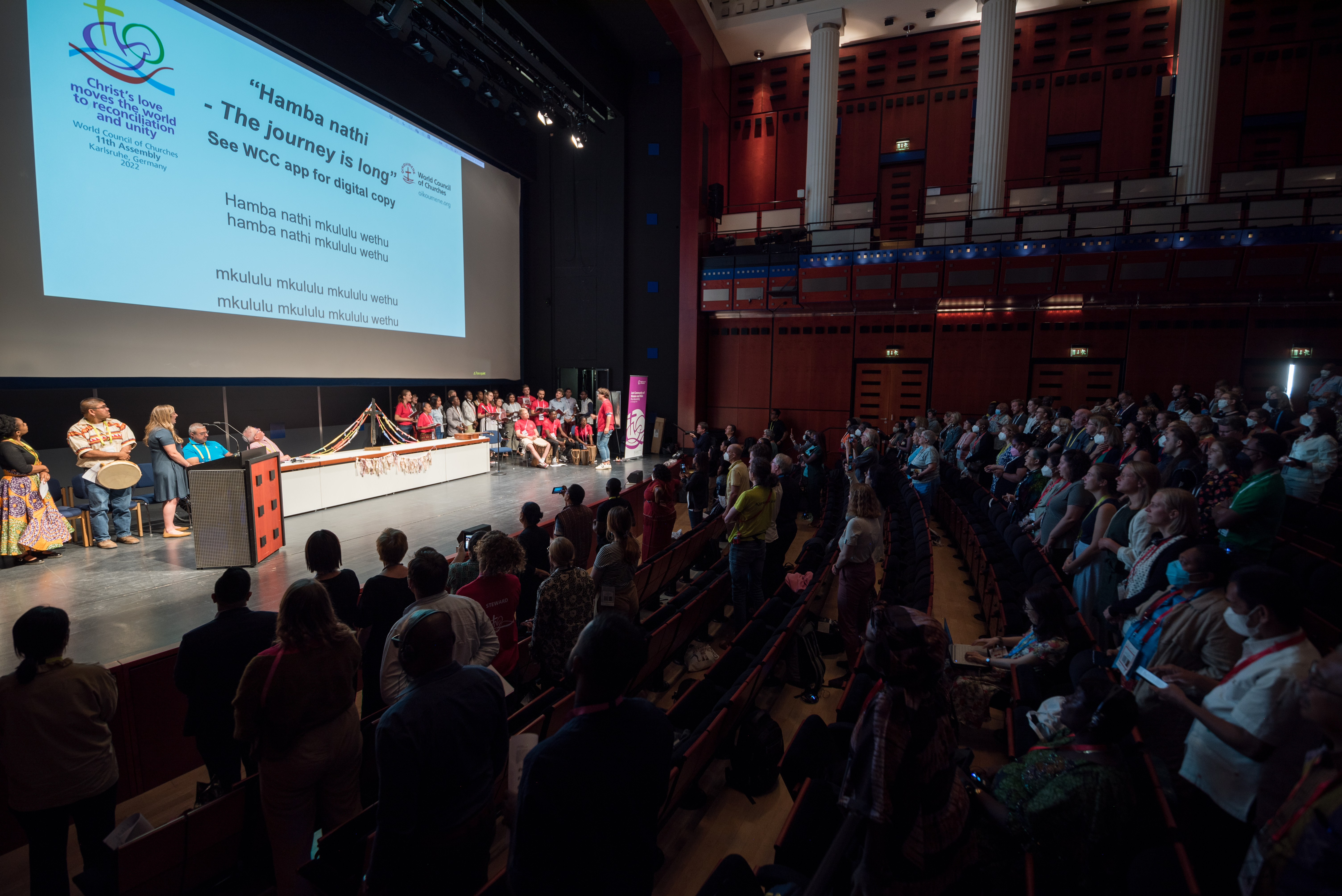

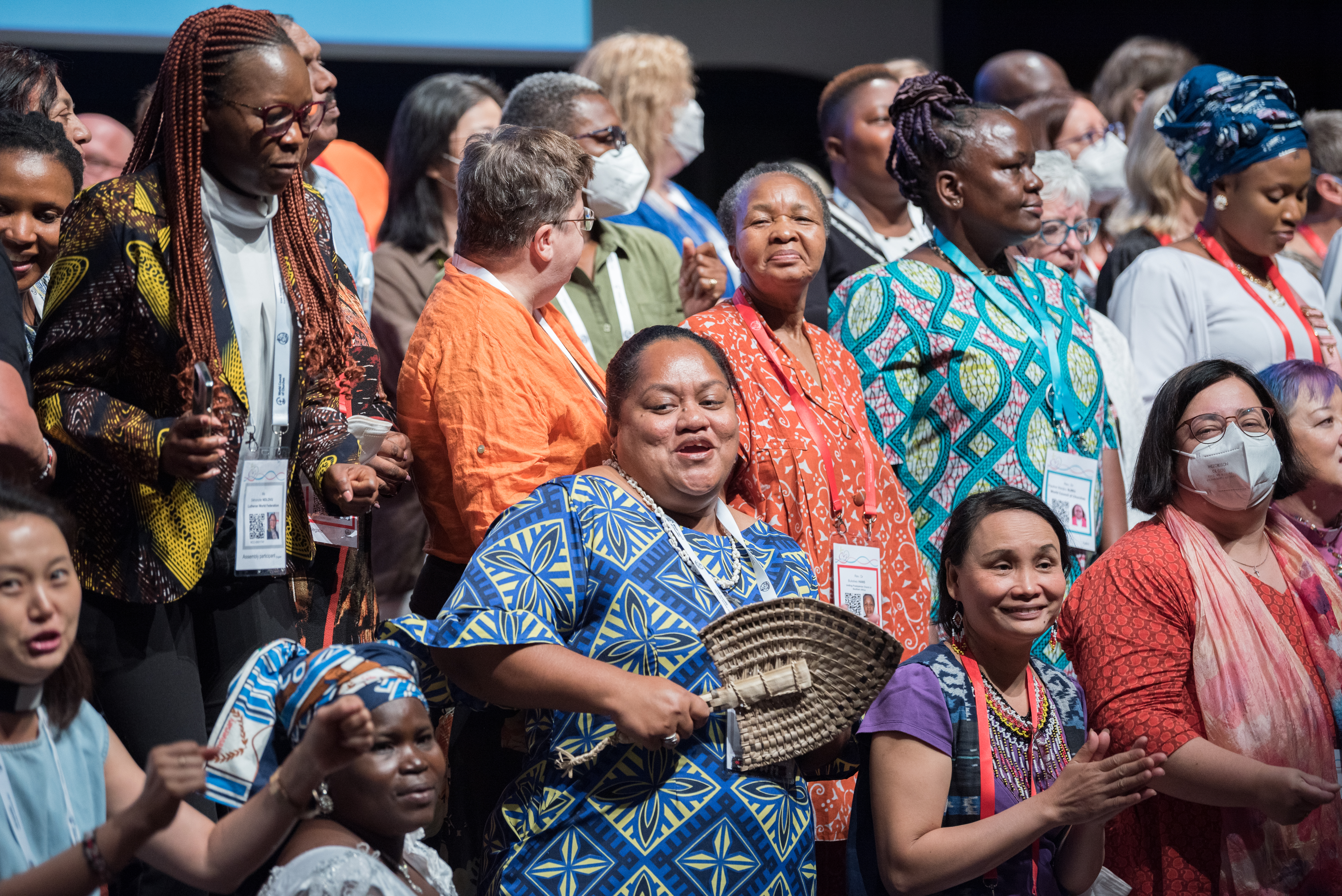


See all the photo galleries from the Assembly at:
https://oikoumene.photoshelter.com/galleries/C0000VFYoZ6eMlZc/WCC-11th-Assembly-Karlsruhe-Germany
The thirteen points of the Assembly’s Call to Act Together can be found at:
file:///C:/Users/User/Desktop/ADOPTED-MC01rev-Message-of-the-11th-Assembly.pdf
B.Traven’s and Our Struggle to Be Human
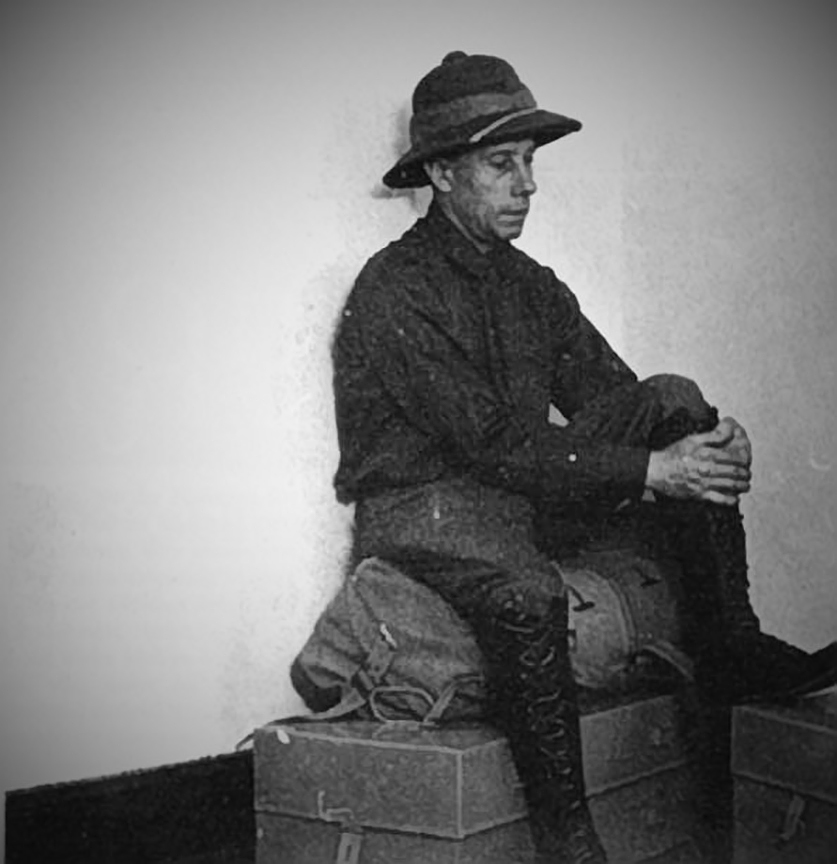
There were some years in the 1930’s when B. Traven was the most widely read fiction writer in the world. Today, his many novels and collections of stories have exceeded 25 million in sales and been translated into more than 30 languages. In spite of his huge legion of readers, his biography and even his name continue to be debated. After his death, in his late 70’s? or late 80’s?, in 1969, his first and only wife Rosa Elena Lujan, suggested “He believed that individual stories are not important until they flow into the collective life”. She elaborated that he was “very much in love with communal life and communal thinking”.
Lujan, translator of many of his books into English, also revealed that Traven had indeed been the German revolutionary Ret Marut. Condemned to death by firing squad in 1919 in Munich, the former communications officer of the Bavarian Socialist Republic escaped from his captors and sought refuge on a freighter that took him, an undocumented man claiming to be born in the U.S., around the world. We know for certain that for more than five years, he was a man without a country.
In 1925 he chose life on land in México and jumped ship in the northern port of Tampico. Two novels that he had likely written while at sea were published a year later in Germany by the author B. Traven. The Death Ship tells of an undocumented sailor and his mates exploited ruthlessly by the captain and owners of a global freighter. Gerald Gales, the sailor, is also the protagonist of The Cotton Pickers, first titled The Wobbly, who tells his fellow farmworkers that he identifies with the Wobblies (Industrial Workers of the World). Wobbly publications and artifacts remained stored among his personal items to his death.
Not surprising that many literary critics as well as readers have described Traven as a proletarian writer. This is true to a limited degree but there is a larger view of the man’s work and his life as a whole. I prefer thinking of him as an internationalist with exceptional compassion for people of all nationalities, tribes, and cultures. And a man with an unsurpassed talent for expressing that compassion through tales set in the highly diverse environments of México, his adopted country. A foremost example of what I see as his “internationalist” affiliation is found in his dedication of The Bridge in the Jungle:
“To the mothers
of every nation
of every people
of every race
of every color
of every creed
of all animals and birds
of all creatures alive
on earth
This begins the story of a mother’s and her Chiapas villagers’ anguished search for her exuberant pre-teen son. The same “internationalist” devotion can be found in most of Traven’s fiction. While exploitation of the workers by the man with capital is present in his best known book in the U.S., The Treasure of the Sierra Madre, other non-proletarian specific themes prevail. The grizzled old prospector cures an Indian on the way to the “treasure” and finds his place among his patient’s people. Thompson renounces the pursuit of great wealth for the envisioned peace with a loving wife and small farm in the Midwest. And Dobbsie, who resembles Traven the most, is tamed through the grueling pilgrimage to more knowledge of himself.
The passion of celebrating the worth and dignity of every human being drives Traven’s creativity. The writer’s utopian dream was of a world where the work of the typesetter, the secretary in the publisher’s office, the mailroom clerk, and the writer were all equally valued. What sets Traven apart from other modern writers in the hundred years since his fiction first appeared is his embrace and affirmation of all peoples and cultures. While his focus continued to be on the surviving Mayan cultures and people of Chiapas, southern México, he didn’t romanticize or set them apart from other “pre-modern” cultures or our own today. Traven lived off and on in Chiapas for a total of at least two decades and his ashes were scattered over the jungle there.
In her introduction to The Kidnapped Saint and Other Stories Mrs. Lujan wrote of his love for Chiapas. “Traven went to the Indians of Chiapas as a brother, a friend, and a comrade, not as most outsiders did, to steal from or exploit them.” She heard from her husband how he lived among them: “At night Traven slept on the hard ground with only his serape wrapped around him. In the morning he rose early and ate tortillas and chili with them.” She notes that her husband had a gift for languages and could converse in several Mayan dialects.

Why B. Traven spurned the great wealth and fame that would have come from his life work he explained in 1929. Writing a German professor who lectured on his books, Traven wanted it understood that “I do not want to give up my life as an ordinary human being”. To do so would have undermined his aim to “do my part to get rid of all authorities and the veneration of authorities so that every man can feel stronger in the knowledge that he is absolutely as indispensable and important for the rest of humanity as every other person no matter what they do.” Our duty as human beings was to “serve humanity according to our understanding and capacity, to lift up the lives of others, bring them more happiness and direct their thoughts to meaningful goals of life.” Forty years later, at his death, Traven could look back on a lifetime of remaining faithful to this goal. B. Traven, presente!
Building Community For a New World

There were networks of trade that fed the Native American people in the United States long before the arrival of the first European settlers. Their corn, a staple for them, came from the South, Mexico and Guatemala, before they learned to grow the crops for themselves. Several varieties of bean imported from the South were also added to their diets. The hunter gatherer people of the U.S. imported from the same areas cacao, peppers, squash, sweet potatoes, and the tomato. And tobacco was introduced along with the food crops.
According to the theories of the late Russian geneticist N.I. Vavilov, most of the world’s basic food plants originated in a relatively few places on the planet, most of them close to the equator. Experts in this field call these places Vavilov Centers to commemorate their importance to our world.
The diets of the first European settlers on the Atlantic coast benefited greatly from the well established trade networks with the South. Had they been restricted to consumption of what were native plants only, they would have had to make do with the sunflower, blueberries, cranberries and the Jerusalem artichoke. Development of trade between the settlers and the “Old World” sparked cultivation of almonds, carrots, flax, hemp, lentil, onion, peas and wheat from Central Asia. Asparagus, beets, hops, lettuce and olives originated in the Mediterranean. The settlers’ tastes governed which of the plants were favored and cultivated more widely. “American cuisine” largely relied on what were “non-native” crops.
In the last 50 years diets in the U.S. have been transformed not by imports of new crops so much as by the addition of new dishes introduced by immigrants to the country. Mexican restaurants and recipes have swept the country. When I returned from a year in Guadalajara in 1980 I had to search for a Mexican restaurant in U.S. cities I visited. Today our favorite “neighborhood” take out meals in Kansas City are from a Mexican restaurant and a Palestinian restaurant/grocery store less than two miles from home. Hummus and the fresh pita bread have become staples of my diet. A primary attraction of most U.S. urban centers today is the variety of ethnic restaurants opened by immigrant families across the country.
For many residents of and visitors to our urban centers the diversity of ethnic foods offered is part of the appeal. Any major city stages an international feast every night. In some venues the food is accompanied by music and/or dance enhancing the flavors of the culture. Beyond the food, music and art work decor, there is, however, little exposure to the culture. In most restaurants, we eat at separate tables. That might change though.
Someone asked Myles Horton at the beginning of the Civil Rights era how he was able to get whites and black residents of the South to meet and learn together at the Highlander Center. Horton quickly replied, “First, you set the table; then you call everyone to dinner and serve the hot meal.” We can imagine one long table for everyone gathered at Highlander. This story reminds me of my own experience in New York City in the mid-1960’s. One of the most popular restaurants in Manhattan’s Little Italy was Mama Leone’s. You usually had to wait for places to open up but you were seated at one of the two or three long tables with strangers already enjoying their pasta fagioli and lasagna. I never left the place without a happy stomach and a full spirit.
May we all find places in the future where new dishes are enjoyed and the tables are long. And may the delight in sharing a meal with people who are strangers lead to thanksgiving for and celebration of the diversity of food and cultures in our lands today.
In Praise of Small Town Kansas
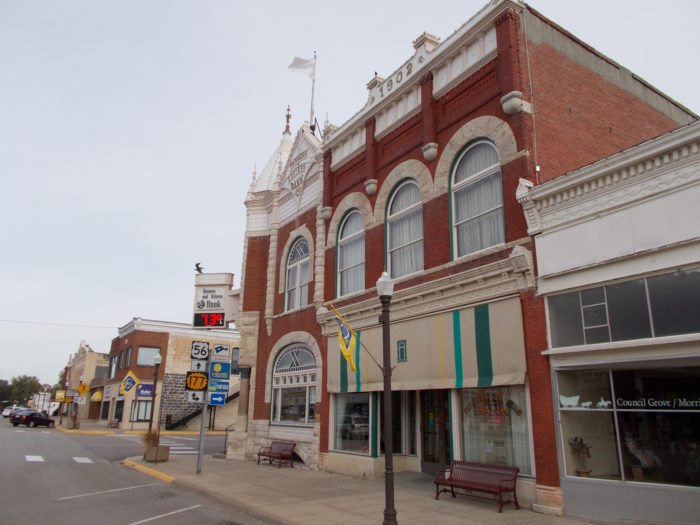
Since moving to Kansas City six years ago, my identity as a city boy, an urbanite, has taken on new meaning. We now live three hours from the small town of Neodesha, KS, where my partner spent twenty plus years before our marriage. I have gotten to know some of her long time friends and like all of them a lot. They live in small towns of southeast Kansas like Chanute, Coffeyville, Yates Center, Fredonia and Climax and I have enjoyed thinking about what if anything makes them different from the big city residents like myself
The observation that there is a greater appreciation of the value of community in small towns I accept as true but inadequate. Spending a recent weekend on a Lake near the town of Emporia, KS yielded for me a better understanding of what community in a small town feels like. And it was a pleasure to experience. Almost all those present resided in a small town of the region. Some still lived in the town of their birth, some nearby in the state college town of Emporia.

During the early decades of the 20th century, William Allen White’s opinion pieces in Emporia’s newspaper were read nation wide. He became famous as the voice of small town residents in the “heartland of America”, People in the big cities, and the nation’s capital in particular, saw him as a kind of oracle, a modern day sage expounding on the enduring values of what made the U.S. a “great” nation. The origin of those values he attributed to the community life that grows in small towns across the Midwestern United States.
The weekend festivities at the Lake began with a rousing jam session Friday night where the musicians joined around the lead guitars of Kenny and Jeff, both leaders of popular regional bands thirty or forty years ago. Two or three newcomers to the “shrimp boil” weekend joined to sing or play some fiery rock-a-billy” and blues, including a few songs written by the musicians themselves.
The harmonica player in Jeff’s band and his wife, who now live on 40 acres of woods on the outskirts of Neodesha remain among Kate’s best friends. Though not herself a musician, Kate has been a fan of the bands represented at the “Shrimp Boil” since moving to southeast Kansas. Later in the weekend I was amused to learn that “Uncle Vance” who trucked the seafood up from the Alabama Gulf Coast had been an eager fan of hers forty years ago.
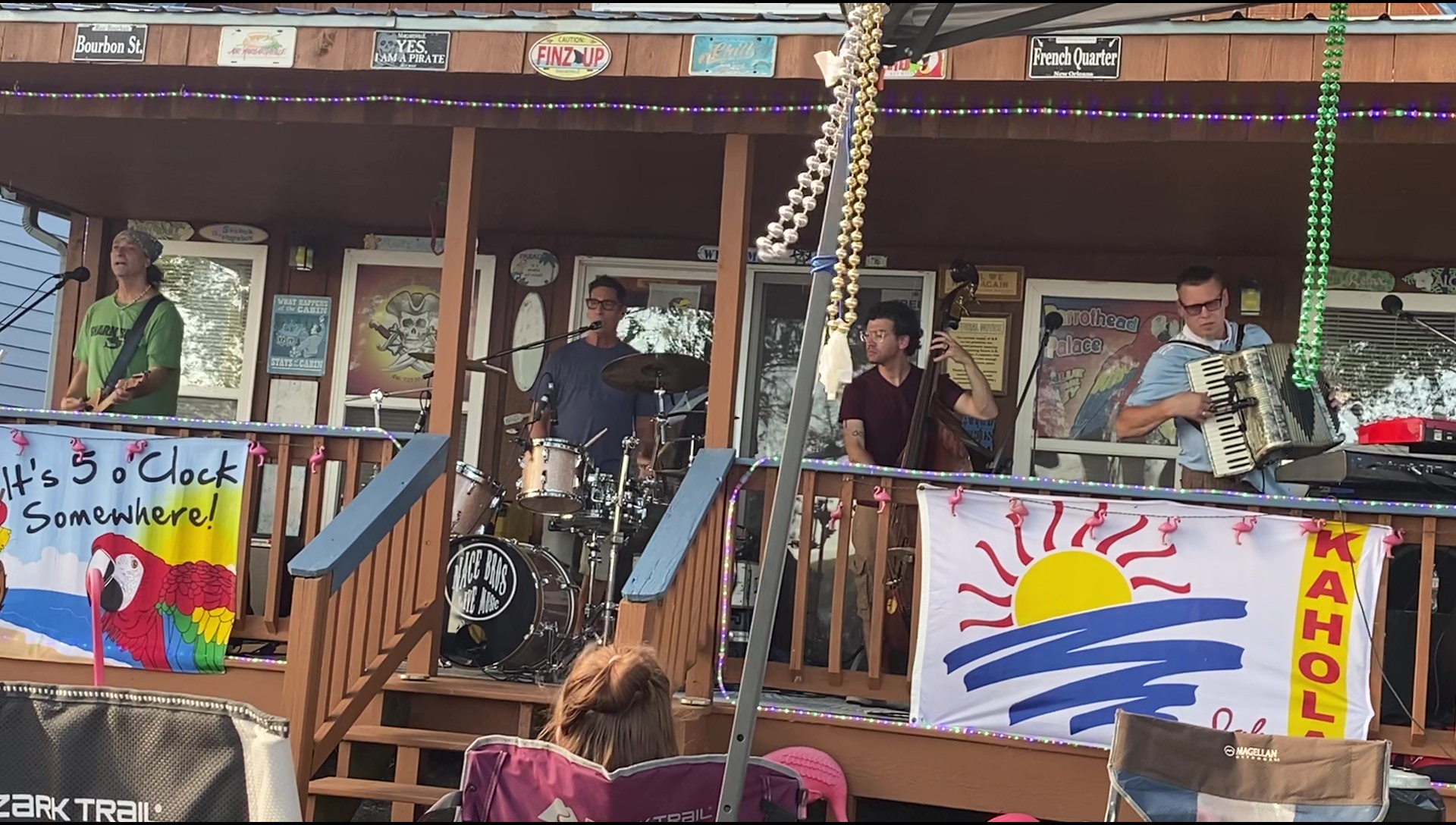
The fact no one needed a ticket to be present either for the jam night or Saturday, when one of Kansas City’s favorite rock-a-billy bands played, added to the joy, ambience and charm of the weekend. Most of the Lake’s families who attended did bring a dish and all were displayed on a crammed L shaped table arrangement. Uncle Vance supervised the preparation of a delicious gumbo soup made with the shrimp, mussels, crabs, scallops. For me the melt in your mouth scallop was the eating highlight.
There seemed to be an instant community created at the “shrimp boil” by the seafood smorgasbord, the music that summoned us all to “let the good times roll” and the lifelong relationships renewed and restored by the gathering. It had the feel of a family reunion which all present had looked forward to attending. People were at their best: not a despairing word, not an offensive gesture, not a cutting remark, no wrestling for the limelight. William Allen White would have been proud.
I returned to Kansas City assured that human beings are social creatures who thrive in community. We are made for life in communities. Whether it be a community of musicians, a church congregation, a union local, a small town. We are most productive, we are more creative and satisfied when we submerge our personal interests to participate in a group. For many people in this heavily urbanized country, the small town they live in or were raised in is that “something bigger than ourselves” which transmits the values they seek to defend and represent.
Life in a small town encourages a panoply of values, sometimes conflicting and all seen at risk by some of the residents and former residents. There is first the identity of belonging to a community created by geographic isolation. Relationships with persons who hail from the same town endure often in spite of age, class and vocational differences. One honors and elevates one’s own existence through reminiscencing about shared experience and the persons, alive and dead, whose lives continue to intersect with our own. Each conversation with persons of the community, after a prolonged absence or not, reinforces our recognition of the sacred quality of relationships and our desire to preserve them against threats both perceived and real.
That commitment to preserving the community and the relationships rooted there means once a community member always a community member. Unfortunate and at a disadvantage is the politican who cannot announce his or her candidacy in the community which nurtured them. How distressing it is, though, whenever politicans twist and distort small town values to stoke fear and division. Recent history of the U.S. proves there is nothing good, whether it be faith in a loving God, the values fostered by life in a small town, democratic ideals expressed in our founding documents, nothing good that cannot be used for the pursuit of self interest and power. Loyalty to a community’s way of life becomes easily transformed into opposition to the changes required by the climate crisis, opposition to acceptance of migrants fleeing from injustice and violence, or opposition to the truth of the nation’s oppression and cruelty. But rather than close this blog on a somber note, let’s consider some lines written for books or articles by the sage of Emporia, KS William Allen White.
“Peace without justice is tyranny”
“Liberty is the only thing you cannot have unless you are willing to give it to others”
“Any appeasement of tyranny is treason.”
“My advice to the women of America is to raise more hell and fewer dahlias.” (Prior to passage of the 19th Amendment to the U.S. Constitution granting women the right to vote)


 Erasing Borders