Category Archives: Theology and Mission
Pope Francis’ Heart for the People

In aligning the Church with the world’s poor and marginalized and avoiding the defense of its traditional positions on LBGTQ issues, abortion and the role of women Pope Francis has made the Church an ally of the progressive forces creating a more equitable, peaceful and sustainable world. With his actions, his simple lifestyle and his words he has sought to ensure the Church’s relevance and role in responding to our global crisis.
Pope Francis’ thirteen year papacy coincided with the further degredation of the planet Earth and its species. As the threats caused by the burning of fossil fuels and overconsumption in general became more evident, the Pope’s written reflections on the ecological crisis became more pointed. Issued in 2023, his “apostolic exhortation” titled Laudate Deum or “Praise God” was addressed to “all people of good will on the climate crisis”. His much longer, didactic 2015 “encyclical letter” titled “Laudate Si” (“Praise to You, my Lord”) was sub titled “on care for our common home”.
In the Laudate Deum the former Argentine Bishop more directly addresses the world’s leaders guided by the “technocratic paradigm” he deplored in the earlier “encyclical letter”. The insights of his “exhortation” more clearly describe the threat posed by our leaders and technocrats: “We have made impressive and awesome technological advances, and we have not realized that at the same time we have turned into highly dangerous beings, capable of threatening the lives of many beings and our own survival.” The document’s warnings conclude with the words, ‘“Praise God” is the title of this letter. For when human beings claim to take God’s place, they become their own worst enemies.”
While Francis spares us the anger of the prophets of the Hebrew Bible, his “exhortation” should be considered a firm repudiation of thinking “goodness and truth automatically flow from technological and economic power as such”. Destruction of our environment results from accepting the “idea of infinite or unlimited growth which proves so attractive to economists, financiers and experts in technology”.
In his travels, actions and lifestyle as Pope, Francis remained wedded to the simplicity demonstrated by his veneration of Francis of Assisi and the motto he chose for his term in office, “Miserando atque eligendo” or “lowly but chosen”. He embraced the significance of being named the first Pope born and raised outside Europe since the 8th Century. As a child of the Southern Hemisphere he represented well the aspirations and heartache of the peoples where the Church continues to grow the fastest. As a leader in the Argentine Catholic Church during the military junta’s “dirty war” of the seventies and early eighties, he shared the suffering of a population subjected to violent repression, lying and harsh deprivation of the poor. His praise of the writings of Gustavo Gutierrez, the pioneering liberation theologian, marks a radical change in the Vatican’s position on the theology that grew from the Latin American struggle against exploitation by foreigners and national collaborators.
Prior to Francis’ going to Mexico in February 2016, he shared the purpose in visiting the world’s second largest population of Catholics was to:
To be close to the people and places where there is most need:
The Indians in San Cristobal, Chiapas.
The violence in Michoacan.
The Migrants in Juarez City (on US Border)
Defense of the rights of indigenous peoples worldwide, pastoral ministry with families grieving members lost to drug cartel and state violence, and the plight of migrants preyed on in Mexico had early on become the Pope’s priority concerns. One journalist noted that Pope Benedict in his 2012 visit of Mexico’s Catholic heartland of Guanajuato failed to mention the over 100,000 dead and thousands disappeared in Mexico’s war on the cartels. Following Francis’ visit, he named Michoacan’s leading Catholic prelate to Cardinal to help protect him from the violence.
Francis’ impact seems destined to grow in the future. In his few years in office he was able to make the Church less Eurocentric and more globally oriented. In the upcoming conclave 80 per cent of the Cardinals naming the new Pope will have been appointed by Francis. A significant increase in the number of Cardinals from Asia and Africa will be there. Over half of those selecting the new Pope have served the Church in formerly colonized nations. As a prophet foresaw 2800 years ago, “As the rain and the snow come down from heaven…….giving seed to the sower and bread to the eater, so shall the word be that goes out from my mouth; it shall not return to me empty.” (Isa 55:10-11)
In a final statement issued on Easter Sunday, Francis made an “ appeal to all those in positions of political responsibility in our world not to yield to the logic of fear which only leads to isolation from others, but rather to use the resources available to help the needy, to fight hunger and to encourage weapons that build the future, instead of sowing seeds of death!” This appeal was preceded by his Easter affirmation of hope and encouragment, “Evil has not disappeared from history; it will remain until the end, but it no longer has the upper hand; it no longer has power over those who accept the grace of this day.” In praying for peace his final “Orbi et Urbi” highlighted Israel’s war on the Palestinians in Gaza and the Holy Land.
“Make American White Again”
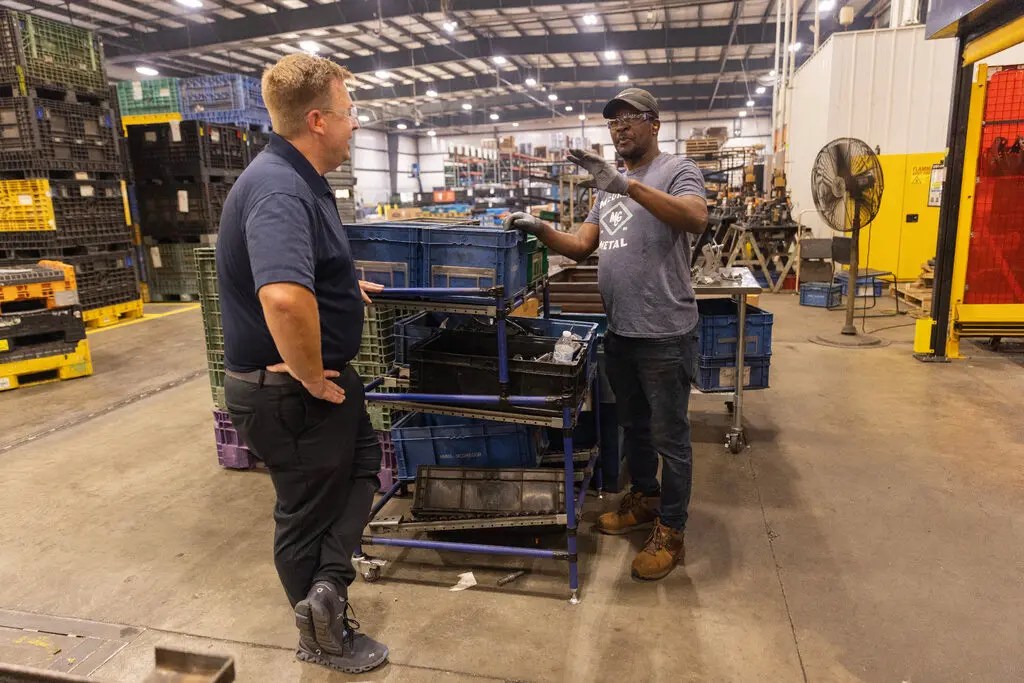
The U.S. economy has long relied on immigrant labor in its growth. The United States is a nation of immigrants. The 19th century transition from an economy devoted to agriculture to a modern industrial system funded by agricultural produce depended on the import of immigrants, with Germans and the Irish leading the way. Along with their essential labor for the new manufacturing sector and the expansion of farming, their arrival and that of immigrants after them brought deep political division reflecting the conflicts in work places and neighborhoods. Charismatic personalities have for two hundred plus years made political careers out of those divisions. Using the tools of distortion, lies, religious differences and buffonery, nation-wide political movements have been created and the nation’s ethnic divisions deepened.
The U.S. Civil War resulted from decades of simmering conflict over the proper role for the African immigrant brought to these shores as slave labor. Sacred texts dated as two millenia and more in origin were interpreted as assigning back breaking labor in fields and estates to the African sold as a slave. Low to no wages producing lucrative crops, cotton especially, for the world made the southern U.S. the supplier of much of the capital for the new nation’s financiers of south and north.
Angry debate over the causes and meaning of the Civil War continues today. Our most hallowed symbol of the United States as a welcoming refuge, the Statue of Liberty, was subjected to controversy and opposition in its creation one hundred fifty years ago. The Frenchman who created the original design saw the Statue as a celebration of the abolition of slavery with broken shackles to be draped from Liberty’s left hand. But to avoid the protests of former slaveholders and their supporters, who portray slavery as an idyllic era, the shackles now are partially hidden by her gown’s layers of folds and are barely visible from the ground level promenade.

America’s long history of anti-black racism and professed white superiority makes the nation’s response to the rise in the world’s immigrant population especially challenging, emotionally and politically. In the comprehensive study of world immigration by the U.S. Pew Research Center, it was found that one out of five immigrants in the world live in the U.S. While we now have far more immigrants and children of immigrants inside our borders, the majority of our more recent arrivals are persons of color, not the white adults and children from Europe and Scandanavia of the 19th century. As late as 1920, most of the newly arrived came from Italy and Germany, with Canada a distant third. Much of the shift to the immigration of persons of color has occurred since passage of the 1965 immigration reform. In 2022 the nation’s largest immigrant populations hailed from Mexico and India.
The 1965 Immigration and Nationality Act supported the shift in the origin of immigrants. Eliminating quota provisions favoring immigration from Europe, it gave preference to skilled workers and immigrants from anywhere with family members already settled in the U.S. The Act thus contributed to the rise in immigrants of color primarily from the earth’s southern hemisphere and a considerable increase in the numbers of immigrants in the country.
In the fifty years after passage of the 1965 law there were a total of 72 million immigrants and their children who came to the “land of freedom”. They accounted for 55% of the growth in U.S. population and Pew researchers project they will make up 88% of the growth from 2015 to 2065 when the nation will number 441 million persons and no ethnic group will constitute a majority of the population. Whereas non-Hispanic whites totaled 84% of the U.S. population in 1965, Pew studies project they will number 46 % in 2065. Continuing immigration from Latin America will make Hispanics 25% of the population and by 2065 14% of the nation will be Asian in origin.
Given voting trends in recent elections showing Hispanics favoring Democrats, the Republican party leadership has been particularly concerned by the dizzying increase in their numbers. Their current response is to support with near unanimity a candidate for U.S. President who has made the country wide settlement of immigrants of color the focus of his campaigns. His primary policy proposal, virtually his only concrete pledge, is to return two million recent immigrants to their countries of origin. The Republican candidate has repeatedly characterized Democrats’ relatively lenient response to the shift in immigration from the southern hemisphere as admitting “criminals and rapists” into our communities. In this month’s debate between the Democratic and Republican candidates for President, regardless of the question at hand Trump returned again and again to foreign nations sending their most dangerous citizens across our borders.
Trump’s history of racist rhetoric and commentary reveals the underlying message of the campaign slogan “Make America Great Again” for his 2016 and 2024 campaigns for President. A Wikipedia article on the phrase reports the candidate still denies the influence of Ronald Reagan’s successful 1980 campaign use of “Let’s Make America Great Again” as a slogan. Trump does outdo Reagan in disclosing the covert intent of its use as “Let’s Make America White Again”.
His outrageous claim that Haitians, migrants from one of the “shithole countries”, are eating the pets of residents of Springfield in the crucial State of Ohio may, however, have back fired. Not only did the city’s top administrator deny the report which Trump culled from an extreme racist’s social media posting, the town’s populace has been patronizing the Haitian restaurants as never before and emphasizing their new businesses and Haitian labor as vital to the growth of the local economy.
While the heavily Republican area may still vote for Trump in this year’s election, the recent affimation of the Haitian immigrants by many Springfield residents illustrates the central question raised by the candidates. Will the U.S. citizenry finally signal their embrace of the nation’s image as a haven of welcome for people of any and all ethnicities? Or will it step up its effort to hold back the migration patterns of our modern era in a futile effort to return the U.S. to a time when its white population were a majority. Representing the nation’s ideals as embedded in its history of immigration moving the economy, the culture, the community life forward, the opposition Democratic Party candidate is a woman of mixed Asian and African ancestry. If Harris’ Democratic Party is able to safeguard a victory in the upcoming election, the outcome will mark the nation’s progress to becoming a true “multi-racial democracy”.
Opposition to U.S. Christian Zionism
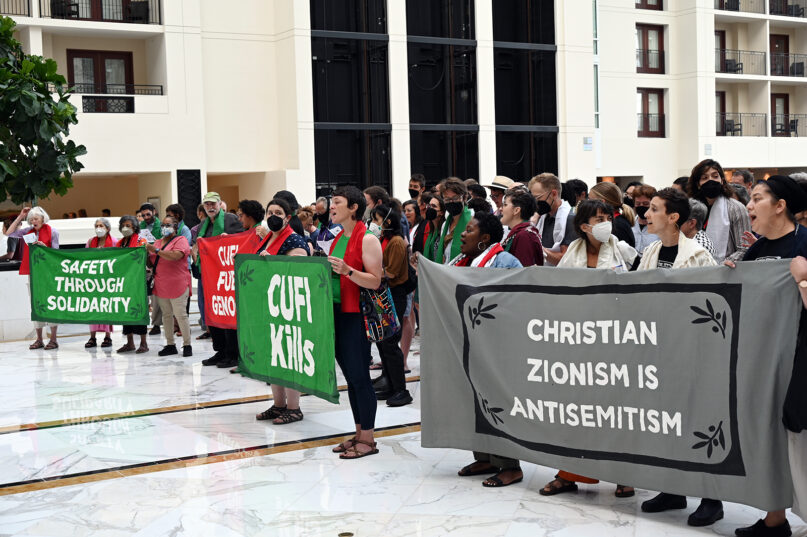
In a coast to coast tour of the U.S., the Palestinian Lutheran Pastor Rev. Munther Isaac, delivered the message to U.S. Christians and their leaders that our “Silence is Complicity”. Citing our unconditional official support for Israel’s War on Gaza and now on the West Bank occupied territories, Rev. Isaac appealed to all Christians to do more than pray in this time of unprecedented death and destruction in Gaza and the West Bank. Rev. Isaac told an interviewer, “I’m here to talk to faith leaders, and particularly church leaders – my own community – to speak louder, for it’s been 10 months now since this war has broken, and we’re tired of void calls for peace.”
The pastor of Bethlehem Christmas Lutheran Church reserved praise for those U.S. Christians joining rallies and demonstrations in opposition to continued sale of U.S. weapons and outright aid to Israel. Condemned most emphatically were the some 10 million members of Christians United for Israel (CUFI). The Palestinian Christian leader was encouraged by rallies held in opposition to the group during the CUFI annual convention held in Maryland this year on the banks of the Potomac River. The interfaith group demonstrating against the group’s position was around 700 people (est. of Religion News Service) with most of the leading U.S faith communities represented. Jewish organizations Jewish Voice for Peace, Rabbis for Ceasefire and If Not Now made a prominent impact during three days of rallies condemning CUFI. Jewish Voice for Peace members created a flotilla of 25 kayaks which unfurled on the Potomac a banner reading “CUFI kills”. The leader of Hindus for Human Rights summarized his organization’s intent in participating, “There is equal and inherent dignity in all of us, and so an attack on the people of Gaza is an attack” on all of humanity. (from the RNS article of July 30, 2024)
Rev. Isaac’s two week tour coincided with the CUFI convention and in interviews and sermons he called attention to the division among U.S. Christians that CUFI has deepened. In his July 30 interview with Amy Goodman of Democracy Now he described the rapidly growing organization’s theology. “The idea was that Jews will someday be restored, using a theological term, which really means convert to Christianity, embrace Jesus as their Messiah. And for that to happen, they must be in Palestine, the biblical land.” Along with this anti-Semitic theological vision is the potent irony that Christian Zionists greatly outnumber and predate Jewish Zionists.
Before returning to Palestine Rev. Munther Isaac preached at Riverside Church in New York City where Rev. Martin Luther King called for a revolution in values in the Church and nation in his April 1967 “Beyond Vietnam” sermon. Rev. Isaac delivered two urgent messages to U.S. Christians prior to his departure. First was the plea to acknowledge that the Palestinian people had lived on the land of the State of Israel long before its creation in 1948. Contrary to the neglect and failure to mention the historic Palestinian presence by the U.S. and Israeli media since 1948, Rev. Isaac reminded audiences that “Israel was not created on an empty land”.
A second message comes from the Pastor’s surveying the response of Christians world wide to the ethnic cleansing taking place under the Israeli occupation of Gaza and the West Bank. “Gaza has become the moral compass of the world” Isaac observed; it has divided even many Christians. And I think that’s a good thing, because we need to know where you stand.”
Nowhere is the division between Christians more pronounced and longstanding than in the country with the world’s largest number of Christians. Nowhere is the division deeper or the political consequences greater than in this nation. Sen. Lindsay Graham spoke for millions of CUFI members and other U.S. Christians when he stated, “As a young man in South Carolina, I was raised to understand that God blesses those who bless Israel, and that’s my foreign policy. It’s not that complicated.”
It is not complicated for Sen Graham and so many U.S. Americans because they have not given thought to the fate of the territory’s original occupants over the last one hundred years. At the beginning of the League of Nations approved British Mandate in 1920 the population of what was commonly called Palestine comprised 757,182 persons of whom 78% were Muslim Arabs, 11% Jewish and 9% Christian. As a Jewish-Arab War raged onin 1946-48, the U.N. created a partition plan of two states using figures reflecting a considerable increase in Jewish numbers. In the plan proposed by the U.N., Jews slightly outnumbered Arab Muslims and Christians in the Jewish state created by the partition plan while Arabs overwhelmed Jewish numbers in the new Arab state.
The 1946-48 War created over 700,000 Arab refugees whose land and homes were seized by Jewish armed force. Since the original “nakba” or disaster in Arabic, the Palestinians residing within the expanding borders of Israel continue their decline. In view of the impunity granted Israel in removing Palestinians by the U.S. and the West’s former colonial powers it is now unlikely the occupiers will ever agree to a “two state solution”. Nor will Palestinians who have resisted the seizure of their historic homeland for more than a century. No U.N. plan or resolution has proposed or will ever propose that Israel rule from “the River to the Sea”.
************************* ***********************
To listen to Rev. Munther Isaac’s sermon “Your Silence is Complicity” preached at Riverside Church New York City go to minute 40 of the You Tube video at: https://www.fosna.org/videos/v/riverside
For his Christmas sermon “Christ in the Rubble” preached at his home church in Bethlehem in Palestine go to the January 16 erasing-borders blog post or to: https://www.youtube.com/watch?v=ZPTrmN6Dzmw&list=FLP7qpo6R2ZdZ4sLKnDwFAng The sermon transcript can also be found there.

Palestinian Christians Call for Repentance
Raised by Christian minister parents I married a Jewish woman from a Conservative Jewish family and at age 35 did so with a commitment to Judaism. Following Jewish custom, the offspring’s religious education would be her responsibility and domain. Five years later the first of our two daughters was born and I was ordained as a pastor. My “call” to serve was thanks to a vibrant, progressive Christian Church I had joined and the rich discovery of the prophets/”nabi” of the Hebrew Bible. On visits of my wife’s family, their seder meals and shabat candle lighting deepened my honoring of the Jewish faith traditions.
Contemporary Israel and the ongoing struggle to share the land was never discussed on those visits but my wife may have informed her family of my views. They came in part from study of Africa’s colonial experience and my spending two years in the Congo which continues to suffer exploitation and oppression by the former colonizers allied with the new nation’s ruling class. My position on safeguarding Israel’s future was also shaped by my conscientious objector status and opposition to the War in Vietnam.
The leading U.S. pacifist organizer of the last century, A.J. Muste (see my former posts about Muste) originated the quote, “There is no way to peace. Peace is the way.” The 76 year history of the wars in the Middle East are for me conclusive evidence that war is not the way to peace for Arabs or Israelis. I understand, however, how American, Soviet and their allied armies’ war on three fascist regimes in WWII have influenced U.S. and Israel’s policies on making peace with Palestinians who were forcibly expelled in 1948.
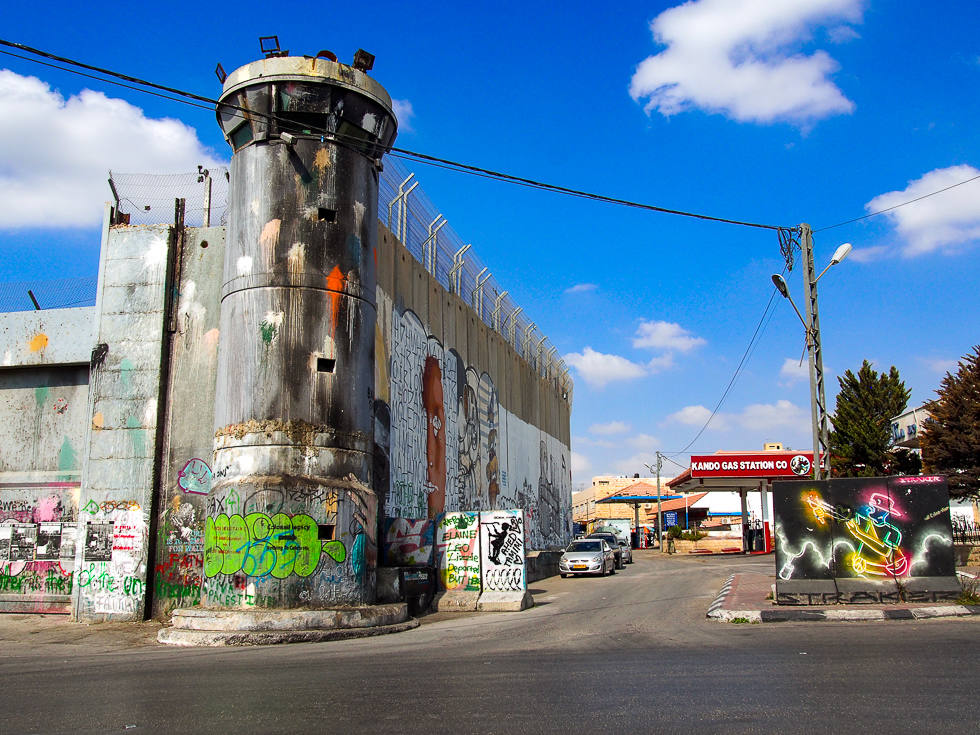
Today as a Christian minister and life-long student I have faith that the Hebrew and Greek holy writings reveal enduring truths about contemporary human societies and cultures. The truth that the Jewish-Christian authors of the New Testament proclaim Jesus as showing humanity the way to peace. The truth that we hear today false prophets and their errant rulers crying “Peace, peace when there is no peace” (Jer 6:14 and Jer 8:11). And that in the time of Ezekiel, “they have misled my people, saying ‘peace’ when there is no peace; and because, when the people build a wall, these prophets smear whitewash on it.” (Ezek. 13:10)
My faith has led me over the years to listen to the cries of anguish coming from Palestinians and support their rights affirmed by U.N. Resolution 194 in 1948. The unity and solidarity with all oppressed people that is envisioned by holy texts requires no less. The Sabeel Ecumenical Liberation Center (sabeel.org), created by Palestinian Churches and based in Jerusalem, has, for four decades, helped me sympathize with the cries of Palestinians living under Israel’s unequal and exclusionary occupation of their former homeland. In reading the letter I’ve excerpted below, I believe I hear the voice of God responding to the spiraling of the Israel-Palestine conflict since October 7. Less than two weeks after the Hamas attacks and initial Israeli bombardment of Gaza, Sabeel and several other Palestinian Christian organizations appealed for solidarity of all Christians and ultimately all of humanity. It appeals to all to pray with Thomas Merton that “if today I hear the voice of God, may I not resist a softer, more compassionate heart.”
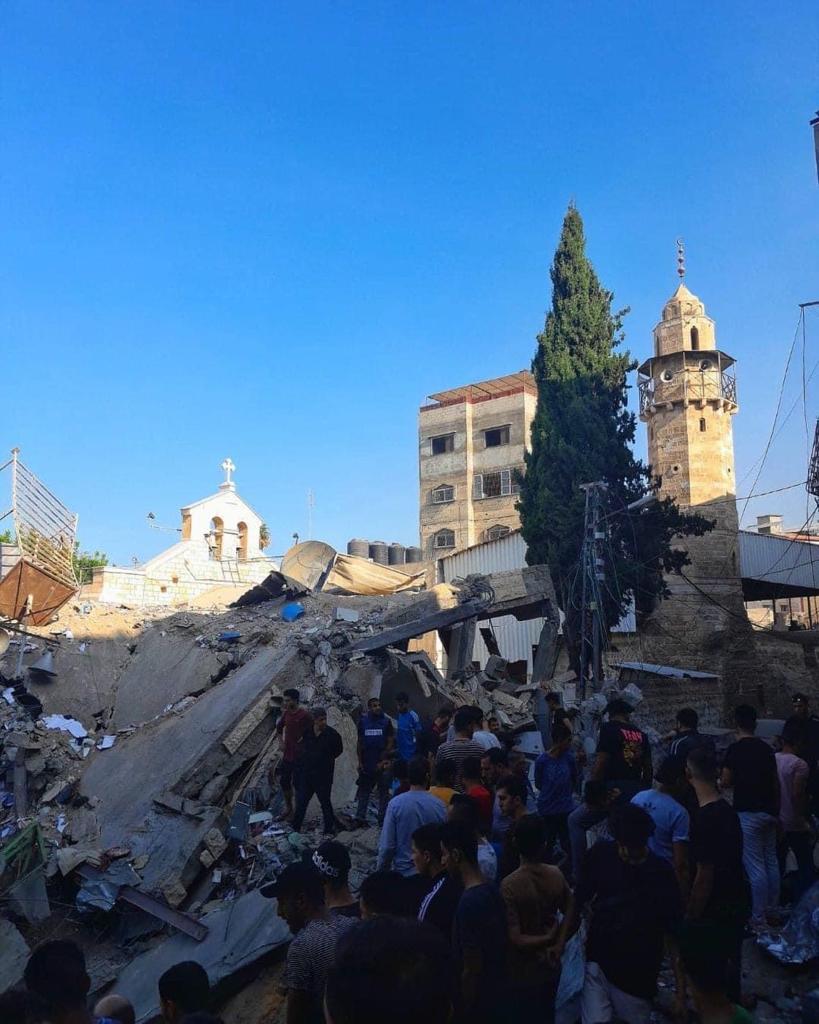
Dated the day Israel bombed the Church in the above photo, Sabeel and other Christian organizations in Israel-Palestine addressed their plea to Western church leaders and theologians. “Words fail to express our shock and horror with regards to the on-going war in our land. We deeply mourn the death and suffering of all people because it is our firm conviction that all humans are made in God’s image. We are also profoundly troubled when the name of God is invoked to promote violence and religious national ideologies” we read in the letter’s first paragraph.
The writers begin the second with “we watch with horror the way many western Christians are offering unwavering support to Israel’s war against the people of Palestine. While we recognize the numerous voices that have spoken and continue to speak for the cause of truth and justice in our land, we write to challenge western theologians and church leaders who have voiced uncritical support for Israel and to call them to repent and change.”
The Palestinian Christians then ’grieve and lament’ the Israeli military’s use of tactics that target civilians: “such as the use of white phosphorus, the cutting off of water, fuel, and electricity, and the bombardment of schools, hospitals, and places of worship—including the heinous massacre at Al-Ahli Anglican-Baptist Hospital and the bombardment of the Greek Orthodox Church of Saint Porphyrius which wiped out entire Palestinian Christian families.”
The letter ends with resounding notes of faith “remembering that God ‘will judge the world in justice’ (Acts 17:31). We also remind ourselves and our Palestinian people that our sumud (“steadfastness”) is anchored in our just cause and our historical rootedness in this land. As Palestinian Christians, we also continue to find our courage and consolation in the God who dwells with those of a contrite and humble spirit (Isa 57:15). We find courage in the solidarity we receive from the crucified Christ, and we find hope in the empty tomb. We are also encouraged and empowered by the costly solidarity and support of many churches and grassroots faith movements around the world, challenging the dominance of ideologies of power and supremacy. We refuse to give in, even when our siblings abandon us. We are steadfast in our hope, resilient in our witness, and continue to be committed to the Gospel of faith, hope, and love, in the face of tyranny and darkness.”
When I prepared for a surgery this week, my thoughts turned to the destruction of Gaza hospitals and dearth of medical supplies. I thought of the children in Gaza undergoing amputations and other excruciating procedures without benefit of anesthesia. I tried to imagine what had enabled those children to accept and survive what was happening to them. Their example helped me in an unfathomable way to prepare for the outcome of my surgery whatever it might be. In my gratitude afterwards for its success, along with doctors, nurses and other hospital care givers, I gave thanks for the resolute courage of the children of Gaza.
******************* *******************
Nearer to Gaza November 15, 2023

He couldn’t have been more than 17 seated across from a
middle aged man scrutinizing an Arabic newspaper
at the clothed table facing the
entrance “A snack” he responded quickly to my question about a
spinach/cheese roll wrapped in a delicate pastry dedicated to
protecting his mother from embarrassment with her timorous
perfectly constructed English “Two minutes” she assured me
holding up fingers as her husband made his appearance to
ask something before rushing back to the kitchen in an
effort to avoid messaging impatience I ambled over to
the tea sets displayed on a table under a Palestinian flag
spanning the length of the table and a t.v. tuned to Al-Jazeera
Arabic reporting on a protest at Democratic headquarters and
I said I hear Al-Jazeera English is very different from Al-Jazeera
Arabic the boy said he watches the Arabic only at the restaurant
for his mother the cook assistant to her husband and receptionist
because you know mumbling something “I don’t know if there’s
a difference” and I left wondering why the Arabic restaurant and
grocery also Palestinian owned and managed at the back of the
compound does not have a flag on the wall and whether it takes
courage.
U.S. Expansion of “Christian Nationalism” as a “Theology of Empire”

Among all the nation states now dominated by a form of religious nationalism – be it India, Afghanistan or Myanmar or others – there is only one nation in the world today beholden to a “theology of empire” and it is the U.S. The nation shaped originally by a theology of “exceptionalism” of a chosen people has today become the most far reaching, dominant military power in the history of the world. With over 800 bases in 85 countries, the U.S. capacity to influence and intervene in the politics of other governments is unprecedented. The fact that U.S. armed forces have conducted or led 211 deployments since 1945 (How to Hide an Empire, Daniel Immerwaher, 1945) reveals the nation’s aim of enforcing its worldwide economic and political dominance.
What began as leadership of the opposition to the expansion of “godless communism” has evolved since WW II as “endless war” in defense of the nation’s “national interest”. Contrary to those expecting a “peace dividend” after the break up of the Soviet Union’s republics, the 1990’s brought further growth of the U.S. armed forces and presence around the world. The Arabian peoples and the Muslim religion replaced Communism as the primary, most insidious threat to our way of life.
Following the 9/11 attacks, while the Bush and Obama administrations resisted subscribing to a “good” versus “evil” depiction of the U.S. and its allies’ actions, the ferocious conflicts and costs incurred did signal extremist views as justifying the empire’s invasions. Characterizing Arabs and the Muslim religion as congenitally hostile to the “infidels” dominated popular media and even academic discourse. The leading scholar cited and interviewed most often in the early 2000’s, Princeton’s Bernard Lewis, had long made elucidating his theory of the “conflict of civilizations” the basis for his scholarship.
The “theology of empire” of U.S. evangelical Christians touts Christianity as the only pathway to individual salvation and social coherence. In their eyes, every military campaign aimed at a Muslim society representing a religion with over one billion adherents worldwide is a precursor to the final Armagedden. Such a view helps justify a military budget of nearly 900 billion dollars, and brings hubris based on our status as the lone “superpower” in the world and the leading defender of free and democratic nations. Considering the nearly one trillion dollars spent on U.S. Middle East military intervention and the hundreds of thousands lives lost in those wars, the theology proclaimed by U.S. evangelical Christianity seems worthy of Pascal’s observation generations ago. “Men never do evil so cheerfully as when they do it from religious conviction” the philosopher wrote.
With billions of dollars to broadcast, fund evangelism tours and support like-minded church bodies, the U.S. “theology of empire” has been imprinted on the minds and communications of evangelical Christians outside the U.S.. Ten years ago I was distressed during several tours of Protestant churches in Mexico by the anti-Muslim comments of some of the laypeople. More disheartening, however, is how conservative evangelicals have sided with foreign companies extracting Latin America’s natural resources when opposed by the local citizens most affected.
Evangelical pastors and laypeople have been encouraged to scorn protestors of foreign seizure of natural resources as socialist-leaning trouble makers. The evangelical Protestant President of Guatemala Gen. Rios-Montt was the notorious adherent in the early 80’s of the U.S. evangelicals’ theology. Trained by U.S. advisers and espousing a virulent anti-communism, in a short lived rule the Gen. led a campaign that took the lives of thousands of indigenous Guatemalan villagers. During his two years as President, Rios-Montt delivered what were called weekly “Sunday sermons” deploring cheating, stealing, lying and promoting individual values. This emphasis, joined by an “otherworld” emphasis on the social plane, is characteristic of many evangelical groups throughout Latin America and holds special appeal in association with law and order politics even when accompanied by state violence.
Despite evangelical Protestant sharing of virulent opposition to abortion and gay rights with the Catholic hierarchy, there is often hostility to the Catholics where there has been significant Protestant growth. Chiapas now claims more Protestants than any other State in Mexico and has been the scene of some violent Catholic-Protestant conflict. During a February Mexico visit, I learned of the massacre of 45 Catholics in the village of Acteal, Chiapas. Pacifist supporters of Zapatista organizing in their village and others, they were attacked in the village’s Catholic Church. Residents of San Cristobal de las Casas 20 miles away described the paramilitary force responsible as having been largely recruited among the Protestant converts.
The prophets of the Hebrew Bible largely ignore the policies of succeeding empires of their times directing their messages rather to the settlers of the nations of Israel and Judea. Jesus also devotes himself to the reform and uplift of the “House of Israel”. The fundamental theme of his preaching and ministry is the treatment of the poor by the leaders of the nation he knows best. His spite and condemnation reaches a peak when observing those who exploit the downtrodden with a guise of piety.
Rev. Dr. King greatly expanded our vision of human rights to citizens of our nation when he declared that a nation that spends more on its military than on the well being of its people is a nation approaching spiritual death. Through the the 1960’s and later, the U.S. lawyer-theologian William Stringfellow called his nation to repentance. He wrote of repentance in a 1984 essay, “Repentance is not about forswearing wickedness as such; repentance concerns the confession of vanity.” Without such a confession, he wrote, “For America – for any nation at any time ……. the very presumption of the righteousness of the American cause as a nation is blasphemy.”
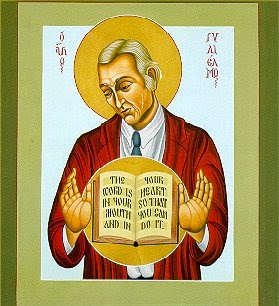
Erasing Borders of Global Acceptance and Agreement

One of this blog’s readers asked recently in the Comments section what I have in mind by the title “erasing borders”. I am grateful for the question enabling a written dialog between this writer and the blog readers.
In responding I begin with the observation that among the tectonic shifts we humans must grapple with today there is one transformation of the global landscape that represents hope for our species as well as unprecedented challenge. With the evolution of the multiple crises forcing themselves on all human beings we are becoming more and more aware that no single nation state can acting alone remedy any of them.
It is, however, equally evident that the history and global politics of the United States is uniquely unprepared and ill fit for participation much less leadership in shaping such global actions. As the world’s remaining superpower of the Cold War era, the U.S. policy-making elite are used to preserving our right to go it alone. When we consider collaboration with nations formerly identified as the communist bloc and with those now stereotyped as Islamic terrorist states heavy lies the crown on the head of the leading “defender of the free world”. What is required of us now entails the kind of change called for by the idealistic vision of “erasing borders”.
“Erasing borders” is not therefore intended as solely applying to a nation state’s immigration policies and border enforcement. Its metaphorical content calls for no borders in our compassion; no borders in our respect and appreciation of other cultures; no borders in our relationships; no borders in building trust. “Erasing borders” was chosen to express with a short phrase the conviction that our “national interest” has now become obsolete in guiding our relationships and agreements. It is now more and more evident that what is in the interest of all nations is what promises to be the best for the U.S.
When the largest U.S. corporations now prosper by means of expanding their “global reach” ** we find little to no evidence that the U.S. national interest is a priority of their manufacturing, marketing strategies, corporate tax planning and so on. All our crises today – whether it be the spiral in the number of refugees and migrants, the threats to species survival dealt us by the production and consumption of fossil fuels, the emergence of global pandemics or the pall cast over our lives by the “strategic deployment” of nuclear weapons – our reliance on national interest and military might as the primary security strategy is as antiquated as relying on an operator to make a long distance call. When has U.S. led military interventions overseas contributed to long term advances in resolving any of the global crises?
The Christian faith serves my interpretation and response to the message of our troubled times. That message urges us to dream and proclaim the kind of radical change – the kind of change represented by technological change from the horse and buggy to interplanatary travel – and to begin thinking about what will improve the lives of all peoples. The handwriting on the wall that “erasing borders” interprets is “work together or perish together”.
All the world’s major religions appeal for unity among all peoples. In the first pages of the Jewish Christian scriptures, the creation of humankind begins with the creation of one family as our shared ancestors. Christianity originally grew from the vision of celebrating our common ancestry across the barriers of language, nation and culture in praise and thanksgiving of our one God, creator of all.
While living in France in the summer of 1963, I learned about the proposal to create a common enconomic network, a “Common Market”, on that continent. The details were still to be worked out and while my informant, a Protestant pastor, referred to serious opposition to the plan he had no doubt such an ambitious change was not only possible but inevitable. Among the fundamental changes he mentioned were abolition or lowering of tariffs and no control over Europeans’ travel across the continent’s borders.
Although we in the U.S. may not be ready to design abolition of our borders, the sudden behavioral changes demanded by the COVID pandemic indicates our general population may be more prepared than our economic and political elite for radical change. The resolution of the multiple global crises through universal dialog and agreement demands change from our unilateral approach that is at least as radical as the opening of borders by all nations.
*********************** ********************
** Global Reach: The Power of the Multinational Corporations is a 1976 book by Richard Barnet and Ronald Miller which forecast the changes brought about by the cross national operations of U.S. based corporations.
Mayan Cultivation of the Human Heart

The traditional Mayan today lives by the metaphors inherited not only from their forebears’ poetic imaginations. They are also guided by intense and prolonged study of the night sky. The Quiche Mayan “Council Book”, the Popol Vuh, recounts the first dawning of our Sun, the coming of light, following the appearance of the “daybringer” star Venus in the heavens.
But it is not only celestial events and events in the natural world that take on metaphorical depth and meaning in ancestral Mayan thought. Topographic features of a landscape are, in Christian poet Gerard Manley Hopkins’ words, “charged with the grandeur of God”. A mountain or a lake is not just seen in geological and geographic terms. It is first and foremost a manifestation of the divine. Pilgrimages are made to a mountain or a people’s abandoned city to honor and enter into dialog with the presence of the ancestral spirits and the divine there.
“I lift up my eyes to the mountains where my help comes from; help comes to me from the Lord, the maker of heaven and earth” declares Psalm 121 of the Hebrew Bible. As in the ancient Hebrew scriptures, the Lord is referred to with multiple names by the Mayans. As the name Yahweh gains precedence in the oldest Hebrew passages, “Heart of Sky and Heart of Earth” is favored by the Mayan faithful. There is also agreement in the Mayan and Hebrew traditions that the purpose of human beings is to give honor and praise to the divine presence around and within them.
When the “daybringer” Venus ascended from the underworld to the morning sky, the “Council Book” tells us that human beings had gathered “in unity” to await the sun’s first appearance. They celebrated and gave thanks with lighting of copal incense and with feasting on the sacred mountain and they still do so when the diviner’s reading of the calendar directs. Humanity had to be created, out of water and corn meal, to be present and give thanks and praise for the first light of the sun. According to the Popol Vuh, such praise and thanks fulfill our purpose as a species.
For many Mayans today, every night still reenacts the sowing of seed in the earth, the “Underworld”, when the sun sets to be reborn as a sprout and a new day. Dawn takes on another metaphorical meaning in the human context. Conception of a human being occurs with the planting of seed in the womb and a child’s birth and subsequent growth. While there may be other dawnings in human existence, the dawning of the first sun and subsequent suns, of the plant sown and of a human being are the foremost events in human life and given the most attention in Mayan thought and religion.
Thanks for these “dawnings” are expressed to the Heart of Sky and Earth with offerings of incense and blood, usually deer and bird blood today, at a shrine or sacred site or community altar. In the ceremony of building an altar described in the last blog, incense and smudging also help prepare heart and spirit of the participants with purification and clarity. According to the INESIN handout on the altar’s significance to the community, the copal (or alternatively ocote, heart of pine) “harmonizes the integrity of the individuals and group”.
In the altar ceremony, in Mayan prayer and worship in general, there is special attention to the state of each person’s feelings, or “heart”, as well as to the harmony of the community. The building of the altar, the preparation of the setting, accompanies a self diagnosis focused on our heart, “like when we feel our pulse”. The altar experience aims to enable the heart of each individual to be guided in selecting a personal intention on which to focus in coming days. In concluding the ceremony, candles of a particular color (see the last blog for the colors’ symbolism) are chosen and “planted” around the periphery of the altar. The various intentions may then be shared verbally with the group, with another individual or kept to oneself. They may include a better harvest, healthy relationships in a new house, a safe and worthwhile journey.
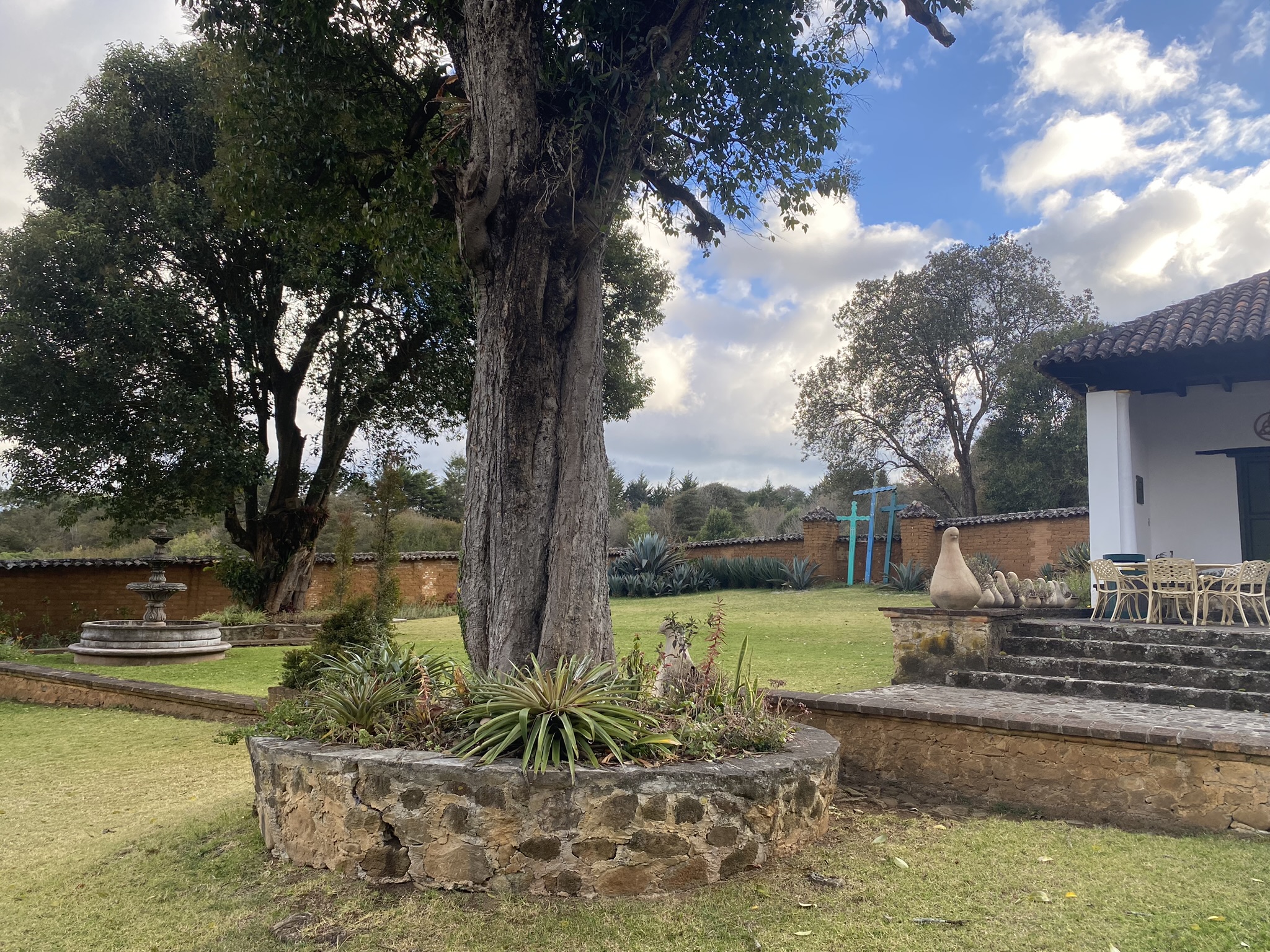
The revolutionaries of the Zapatista movement found their defense of the Mayan land and human rights in Chiapas on the hearts of their followers. In one of their manifestos, they include a message to foreigners who are likely to ignore or misunderstand this principal tenet of their position, “The ancestral philosophy of the Zapatistas which declares -without shame or fear- that the place of knowledge, truth and speech is in the heart”. It might be said that their attention to the heart of followers and the opposition has enabled the movement to continue to organize villagers and improve education, health and harmony in rural settings under their control today. In so doing they follow the ancient Chinese philosopher Lao Tzu who said, “there are many paths to enlightenment. Be sure to take one with a heart.”
The Heart to Heart Spirituality of the Mayans
The practice and significance of a Mayan community creating a sacred altar is described in what follows. It is based on a handout provided visitors to the Institute of Intercultural Studies and Research (INESIN) in San Cristobal de las Casas, Chiapas, Mexico. All quotations are from the handout written by the Institute’s Mayan staff members.
“The altar begins to take shape as the community gathers” the handout tells us. Most of us have read it before making our group’s altar following INESIN staff member jPetul’s instruction. “Each brings his or her offering from the fruits of their gardens or other labor” the handout continues. Our church group from Kansas City bring our desire to experience at a deeper level the Mayan culture and religion of forty percent of the population of San Cristobal de las Casas, Chiapas where the Institute is based.
So we read in preparation that “In the Chiapan Highlands, we often begin by spreading a bed of pine needles as a base that marks the ritual space with color, sound and smell….” Adorning the altar with their “flowers, fruits, seeds and symbols” the participants create “a representation of the whole community”. Candles of a variety colors are placed at the four compass points on the altar.
“The Mayan altar represents the cosmos and the universe” the handout relates. So the colors’ association with the four directions of our world are a crucial element in the symbolism of the altar ceremony. After the Spaniards brought wax and candlemaking to the New World, the candles’ colors were matched to their location in the “vision of the universe as seen by our grandparents”.

The red candle on the altar’s east side “represents sunrise, the birth of life, strength, love and the color of blood.” It also represents “the birth of God”. Incense is burned on the east side where red flowers, red beans and corn and red fruit are also placed. A guardian of this side is dressed in red.
On the West, a black (or purple) candle “represents sunset, darkness, rest and death”. In the Mayan worldview, darkness and night occur when the sun dies, passes toward the underworld, walks in other worlds and finally is “born again as a new, radiant sun.” This passage and its color signifies “the death of God, who dies to give us life”. For us humans the passage enacts whatever we do to nurture life and “leave behind that which destroys life”. In concrete terms for us humans, the passage signifies sowing seeds “when we bury these in the belly of the mother earth”. Purple flowers, black beans, corn and black soil are placed on the westside of the altar where a guardian would be dressed in black.
In Mayan belief, the colors of the altar also reflect our unity as human beings. Red is the color of our blood; black is our hair; white is our teeth and bones and yellow is the color of our skin. The Mayan tradition affirms that we humans share common traits while every person is also different. Our handout further states that the altar’s colors “represent the diversity of languages, thoughts, beliefs and ways of seeing the world of peoples and cultures”. Participation in the creation of an altar invites us to “ respect and appreciate our differentness and our oneness, our uniqueness and our sameness”.
We learned that the passage from red to black, from East to West, is the way of God. The passage from North to South “is the way of humankind”. The white candle of the North represents the “side of the sky, the wisdom of our ancestors, the peace and tranquility of the heart, the search for truth and clarity in thought and feeling”. The North also tests us: “cold rain and wind, the winter freezes, sickness and death also come from the North”. Bones, white beans and corn, white flowers, shells and seeds, a sea conch may be placed on the North side of the altar. The guardian “and protector” is clad in white.
The yellow candle of the South is associated with the feminine, and the direction from which comes good crops and abundant harvests. “Yellow flowers, yellow seeds and corn, yellow fruits, and water” are found on the South side with a guardian dressed in the same color.
A human’s life passage to maturity and fullness is symbolized in the altar’s depiction of movement from North to South. Intersecting with God’s path from East to West, the Center is where “humankind participates in the divine and the divine in the nature of humanity”. The two paths are also seen as the passage for God and for humankind from life to death and death to life.
In the Center is a blue candle, symbol of the “heart of the sky” and the eternal, “that which does not end”. Water is sometimes placed in the Center and someone may be assigned to wear blue and serve as guardian of the sky’s path. The green candle in the Center stands for the earth, for nature, for life that continues. Along with nature, men and women make up “the community of divine creation”. We, like all of nature, are divine “because we have the ‘ch’ulel’, the spirit that comes from the Sacred, ‘Ch’ul’ (or) the divine breath”. Earth or soil may be placed in the Center. Symbolic elements of the Center remind us that “our grandparents taught us that all that exists has ‘ch’ulel’, spirit and heart”.
In the Mayan view, our spirituality is cultivated and grows from the heart. Before each person plants one or more candles on the altar’s periphery, we were instructed to diagnose the present state of our heart. We were to ask ourselves, “how is your heart or how has your heart arrived in this place?” Our handout notes this question is “asked from the heart to the heart, for we as Mayans speak from there.”

In some villages of the Chiapan highlands, residents greet one another by asking “how is your heart seen or what is your heart feeling?” The response can be “my heart is blooming” or “my heart is full of flowers”. Harmony and good will reign when Mayans say they are of one heart or, in one of the leading Mayan languages, when they say “jun o’tonal”.
The significance of incense and smudging in the altar ceremony, the prayers and significance of placing the candles before concluding will be described in the next and final article on the Mayan sacred altar. It too will be based on the handout “Theological Perspectives on the Mayan Altar” written by jPetul and other Mayan workshop leaders of the Institute for Intercultural Studies and Research (INESIN) in San Cristobal de las Casas. A community’s periodic creation of a sacred altar has contributed significantly to the survival of five million Maya for three thousand years as a people and culture.
The fine Institute website in Spanish and English is at http://inesin-mx.org/


 Erasing Borders