Category Archives: Global Church
Land and Theologies in Conflict
| Territory | Arab and other population | % Arab and other | Jewish population | % Jewish | Total population | |
|---|---|---|---|---|---|---|
| Arab State | 725,000 | 99% | 10,000 | 1% | 735,000 | |
| Jewish State | 407,000 | 45% | 498,000 | 55% | 905,000 | |
| International | 105,000 | 51% | 100,000 | 49% | 205,000 | |
| Total | 1,237,000 | 67% | 608,000 | 33% | 1,845,000 | |
| Data from the Report of UNSCOP: 3 September 1947: CHAPTER 4: A COMMENTARY ON PARTITION | ||||||
Dating back to extensive use of “Kairos” in the New Testament, “kairos” in Christian theology refers to a time when the “kingdom of God” approaches and demands a decision from individuals and societies. In contrast with the Greek “chronos” meaning a segment of time, ordinary time, “kairos” describes a critical moment in a human context of social change. The first Kairos Document was written by an ecumenical team of South African Christian black theologians in 1985 at the height of the black population’s resistance to apartheid.
Secular media paid even less attention to the Kairos Palestine Document of 2009 than they did to the original South African Document or the other theological statements, including those in the U.S. and Europe, responding to the 1985 declaration of South African theologians. Since the Hamas attacks in October 2023 some commentators have noted how little reference to the Palestinian cause or Israel’s Palestinian occupants has been made in our media since founding of the state of Israel in 1948. So it is not surprising that outside of church circles there has been little notice of the Kairos Palestine Document.
The Document begins with an endorsement by thirteen “Patriarchs and Heads of Churches” in Jerusalem; they describe the declaration as “a word of faith, hope and love” calling on “all peoples, political leaders and decision-makers (to,ed.) put pressure on Israel and take legal measures in order to oblige its government to put an end to its oppression and disregard for the international law.” The thirteen Palestinian Christian authors advance a theological position “that the military occupation of our land is a sin against God and humanity, and that any theology that legitimizes the occupation is far from Christian teachings because true Christian theology is a theology of love and solidarity with the oppressed”.
In its theological discussion of the land governed or occupied by the State of Israel, the authors affirm that “the earth is the Lord’s and the fullness thereof” (Ps 24:1) and therefore assert no land can be seen as the possession of any particular people. Exclusion and expulsion of any group or groups from the land cannot be God’s intention. “God gives us the capacity, if we have the will, to live together and establish in it justice and peace, making it in reality God’s land.” The Kairos Palestine Document avers that the promise made by God to Abraham in the Hebrew Bible was to make him father of many nations living in justice and harmony in the land where he had been led.
In the current context of Israel’s continuing its indiscriminate killing of Palestinian civilians in Gaza, the 2009 Document takes on yet more urgent significance as a cry for justice to Christians and non-Christians worldwide. When issued, the conflict no longer was about a purely theological or political issue. “It is a matter of life and death” the authors and signators declared sixteen years ago and, as such, the Word of God in the Bible cannot be used to justify policies or State actions which bring death and destruction. As a living Word which addresses the Hebrew and Christian Bible’s themes of promise, chosen people, and land a literal interpretation makes the Word an instrument of death.
On the Bible’s treatment of the crucial topic of “the land” the Kairos Palestine Document was followed six years later by publication of the book From Land to Lands, from Eden to the Renewed Earth . Written by the young theologian and pastor Munther Isaac (see Erasing Borders blogs of September 1 and January 16, 2024), it is a sweeping study of a “Biblical theology” supporting a thesis of the universalisation of the land, indeed any land. Its lively and clear presentation of the positions of biblical scholars and theologians enables a closer reading of the texts by laypersons and their progress in shaping their own views. Although the author did not participate in creating the Kairos Palestine Document the book was written in service of its aims and concludes by asking, “Can it (the land) become a place where Jews, Muslims and Christians – while retaining their distinctive beliefs – can embrace each other as fellow human beings, and indeed as people of faith, and be reconciled in practice?”
Pope Francis’ Heart for the People

In aligning the Church with the world’s poor and marginalized and avoiding the defense of its traditional positions on LBGTQ issues, abortion and the role of women Pope Francis has made the Church an ally of the progressive forces creating a more equitable, peaceful and sustainable world. With his actions, his simple lifestyle and his words he has sought to ensure the Church’s relevance and role in responding to our global crisis.
Pope Francis’ thirteen year papacy coincided with the further degredation of the planet Earth and its species. As the threats caused by the burning of fossil fuels and overconsumption in general became more evident, the Pope’s written reflections on the ecological crisis became more pointed. Issued in 2023, his “apostolic exhortation” titled Laudate Deum or “Praise God” was addressed to “all people of good will on the climate crisis”. His much longer, didactic 2015 “encyclical letter” titled “Laudate Si” (“Praise to You, my Lord”) was sub titled “on care for our common home”.
In the Laudate Deum the former Argentine Bishop more directly addresses the world’s leaders guided by the “technocratic paradigm” he deplored in the earlier “encyclical letter”. The insights of his “exhortation” more clearly describe the threat posed by our leaders and technocrats: “We have made impressive and awesome technological advances, and we have not realized that at the same time we have turned into highly dangerous beings, capable of threatening the lives of many beings and our own survival.” The document’s warnings conclude with the words, ‘“Praise God” is the title of this letter. For when human beings claim to take God’s place, they become their own worst enemies.”
While Francis spares us the anger of the prophets of the Hebrew Bible, his “exhortation” should be considered a firm repudiation of thinking “goodness and truth automatically flow from technological and economic power as such”. Destruction of our environment results from accepting the “idea of infinite or unlimited growth which proves so attractive to economists, financiers and experts in technology”.
In his travels, actions and lifestyle as Pope, Francis remained wedded to the simplicity demonstrated by his veneration of Francis of Assisi and the motto he chose for his term in office, “Miserando atque eligendo” or “lowly but chosen”. He embraced the significance of being named the first Pope born and raised outside Europe since the 8th Century. As a child of the Southern Hemisphere he represented well the aspirations and heartache of the peoples where the Church continues to grow the fastest. As a leader in the Argentine Catholic Church during the military junta’s “dirty war” of the seventies and early eighties, he shared the suffering of a population subjected to violent repression, lying and harsh deprivation of the poor. His praise of the writings of Gustavo Gutierrez, the pioneering liberation theologian, marks a radical change in the Vatican’s position on the theology that grew from the Latin American struggle against exploitation by foreigners and national collaborators.
Prior to Francis’ going to Mexico in February 2016, he shared the purpose in visiting the world’s second largest population of Catholics was to:
To be close to the people and places where there is most need:
The Indians in San Cristobal, Chiapas.
The violence in Michoacan.
The Migrants in Juarez City (on US Border)
Defense of the rights of indigenous peoples worldwide, pastoral ministry with families grieving members lost to drug cartel and state violence, and the plight of migrants preyed on in Mexico had early on become the Pope’s priority concerns. One journalist noted that Pope Benedict in his 2012 visit of Mexico’s Catholic heartland of Guanajuato failed to mention the over 100,000 dead and thousands disappeared in Mexico’s war on the cartels. Following Francis’ visit, he named Michoacan’s leading Catholic prelate to Cardinal to help protect him from the violence.
Francis’ impact seems destined to grow in the future. In his few years in office he was able to make the Church less Eurocentric and more globally oriented. In the upcoming conclave 80 per cent of the Cardinals naming the new Pope will have been appointed by Francis. A significant increase in the number of Cardinals from Asia and Africa will be there. Over half of those selecting the new Pope have served the Church in formerly colonized nations. As a prophet foresaw 2800 years ago, “As the rain and the snow come down from heaven…….giving seed to the sower and bread to the eater, so shall the word be that goes out from my mouth; it shall not return to me empty.” (Isa 55:10-11)
In a final statement issued on Easter Sunday, Francis made an “ appeal to all those in positions of political responsibility in our world not to yield to the logic of fear which only leads to isolation from others, but rather to use the resources available to help the needy, to fight hunger and to encourage weapons that build the future, instead of sowing seeds of death!” This appeal was preceded by his Easter affirmation of hope and encouragment, “Evil has not disappeared from history; it will remain until the end, but it no longer has the upper hand; it no longer has power over those who accept the grace of this day.” In praying for peace his final “Orbi et Urbi” highlighted Israel’s war on the Palestinians in Gaza and the Holy Land.
Opposition to U.S. Christian Zionism
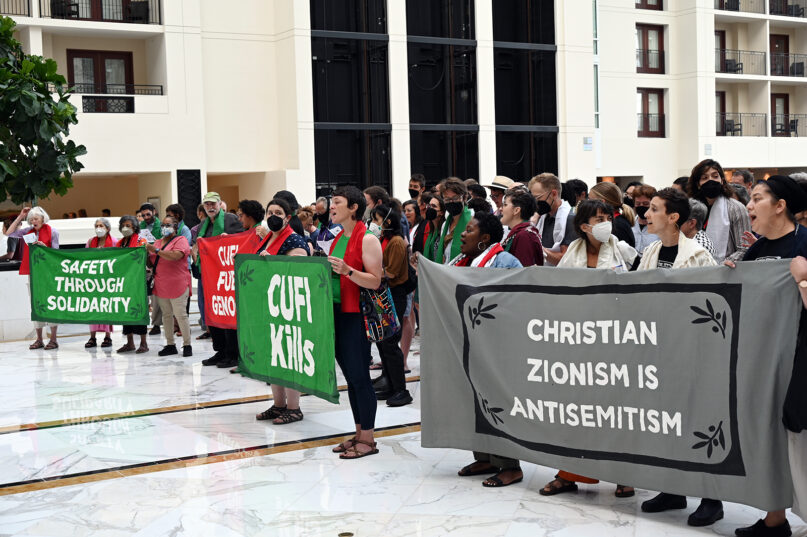
In a coast to coast tour of the U.S., the Palestinian Lutheran Pastor Rev. Munther Isaac, delivered the message to U.S. Christians and their leaders that our “Silence is Complicity”. Citing our unconditional official support for Israel’s War on Gaza and now on the West Bank occupied territories, Rev. Isaac appealed to all Christians to do more than pray in this time of unprecedented death and destruction in Gaza and the West Bank. Rev. Isaac told an interviewer, “I’m here to talk to faith leaders, and particularly church leaders – my own community – to speak louder, for it’s been 10 months now since this war has broken, and we’re tired of void calls for peace.”
The pastor of Bethlehem Christmas Lutheran Church reserved praise for those U.S. Christians joining rallies and demonstrations in opposition to continued sale of U.S. weapons and outright aid to Israel. Condemned most emphatically were the some 10 million members of Christians United for Israel (CUFI). The Palestinian Christian leader was encouraged by rallies held in opposition to the group during the CUFI annual convention held in Maryland this year on the banks of the Potomac River. The interfaith group demonstrating against the group’s position was around 700 people (est. of Religion News Service) with most of the leading U.S faith communities represented. Jewish organizations Jewish Voice for Peace, Rabbis for Ceasefire and If Not Now made a prominent impact during three days of rallies condemning CUFI. Jewish Voice for Peace members created a flotilla of 25 kayaks which unfurled on the Potomac a banner reading “CUFI kills”. The leader of Hindus for Human Rights summarized his organization’s intent in participating, “There is equal and inherent dignity in all of us, and so an attack on the people of Gaza is an attack” on all of humanity. (from the RNS article of July 30, 2024)
Rev. Isaac’s two week tour coincided with the CUFI convention and in interviews and sermons he called attention to the division among U.S. Christians that CUFI has deepened. In his July 30 interview with Amy Goodman of Democracy Now he described the rapidly growing organization’s theology. “The idea was that Jews will someday be restored, using a theological term, which really means convert to Christianity, embrace Jesus as their Messiah. And for that to happen, they must be in Palestine, the biblical land.” Along with this anti-Semitic theological vision is the potent irony that Christian Zionists greatly outnumber and predate Jewish Zionists.
Before returning to Palestine Rev. Munther Isaac preached at Riverside Church in New York City where Rev. Martin Luther King called for a revolution in values in the Church and nation in his April 1967 “Beyond Vietnam” sermon. Rev. Isaac delivered two urgent messages to U.S. Christians prior to his departure. First was the plea to acknowledge that the Palestinian people had lived on the land of the State of Israel long before its creation in 1948. Contrary to the neglect and failure to mention the historic Palestinian presence by the U.S. and Israeli media since 1948, Rev. Isaac reminded audiences that “Israel was not created on an empty land”.
A second message comes from the Pastor’s surveying the response of Christians world wide to the ethnic cleansing taking place under the Israeli occupation of Gaza and the West Bank. “Gaza has become the moral compass of the world” Isaac observed; it has divided even many Christians. And I think that’s a good thing, because we need to know where you stand.”
Nowhere is the division between Christians more pronounced and longstanding than in the country with the world’s largest number of Christians. Nowhere is the division deeper or the political consequences greater than in this nation. Sen. Lindsay Graham spoke for millions of CUFI members and other U.S. Christians when he stated, “As a young man in South Carolina, I was raised to understand that God blesses those who bless Israel, and that’s my foreign policy. It’s not that complicated.”
It is not complicated for Sen Graham and so many U.S. Americans because they have not given thought to the fate of the territory’s original occupants over the last one hundred years. At the beginning of the League of Nations approved British Mandate in 1920 the population of what was commonly called Palestine comprised 757,182 persons of whom 78% were Muslim Arabs, 11% Jewish and 9% Christian. As a Jewish-Arab War raged onin 1946-48, the U.N. created a partition plan of two states using figures reflecting a considerable increase in Jewish numbers. In the plan proposed by the U.N., Jews slightly outnumbered Arab Muslims and Christians in the Jewish state created by the partition plan while Arabs overwhelmed Jewish numbers in the new Arab state.
The 1946-48 War created over 700,000 Arab refugees whose land and homes were seized by Jewish armed force. Since the original “nakba” or disaster in Arabic, the Palestinians residing within the expanding borders of Israel continue their decline. In view of the impunity granted Israel in removing Palestinians by the U.S. and the West’s former colonial powers it is now unlikely the occupiers will ever agree to a “two state solution”. Nor will Palestinians who have resisted the seizure of their historic homeland for more than a century. No U.N. plan or resolution has proposed or will ever propose that Israel rule from “the River to the Sea”.
************************* ***********************
To listen to Rev. Munther Isaac’s sermon “Your Silence is Complicity” preached at Riverside Church New York City go to minute 40 of the You Tube video at: https://www.fosna.org/videos/v/riverside
For his Christmas sermon “Christ in the Rubble” preached at his home church in Bethlehem in Palestine go to the January 16 erasing-borders blog post or to: https://www.youtube.com/watch?v=ZPTrmN6Dzmw&list=FLP7qpo6R2ZdZ4sLKnDwFAng The sermon transcript can also be found there.

Palestinian Christians Call for Repentance
Raised by Christian minister parents I married a Jewish woman from a Conservative Jewish family and at age 35 did so with a commitment to Judaism. Following Jewish custom, the offspring’s religious education would be her responsibility and domain. Five years later the first of our two daughters was born and I was ordained as a pastor. My “call” to serve was thanks to a vibrant, progressive Christian Church I had joined and the rich discovery of the prophets/”nabi” of the Hebrew Bible. On visits of my wife’s family, their seder meals and shabat candle lighting deepened my honoring of the Jewish faith traditions.
Contemporary Israel and the ongoing struggle to share the land was never discussed on those visits but my wife may have informed her family of my views. They came in part from study of Africa’s colonial experience and my spending two years in the Congo which continues to suffer exploitation and oppression by the former colonizers allied with the new nation’s ruling class. My position on safeguarding Israel’s future was also shaped by my conscientious objector status and opposition to the War in Vietnam.
The leading U.S. pacifist organizer of the last century, A.J. Muste (see my former posts about Muste) originated the quote, “There is no way to peace. Peace is the way.” The 76 year history of the wars in the Middle East are for me conclusive evidence that war is not the way to peace for Arabs or Israelis. I understand, however, how American, Soviet and their allied armies’ war on three fascist regimes in WWII have influenced U.S. and Israel’s policies on making peace with Palestinians who were forcibly expelled in 1948.
Today as a Christian minister and life-long student I have faith that the Hebrew and Greek holy writings reveal enduring truths about contemporary human societies and cultures. The truth that the Jewish-Christian authors of the New Testament proclaim Jesus as showing humanity the way to peace. The truth that we hear today false prophets and their errant rulers crying “Peace, peace when there is no peace” (Jer 6:14 and Jer 8:11). And that in the time of Ezekiel, “they have misled my people, saying ‘peace’ when there is no peace; and because, when the people build a wall, these prophets smear whitewash on it.” (Ezek. 13:10)
My faith has led me over the years to listen to the cries of anguish coming from Palestinians and support their rights affirmed by U.N. Resolution 194 in 1948. The unity and solidarity with all oppressed people that is envisioned by holy texts requires no less. The Sabeel Ecumenical Liberation Center (sabeel.org), created by Palestinian Churches and based in Jerusalem, has, for four decades, helped me sympathize with the cries of Palestinians living under Israel’s unequal and exclusionary occupation of their former homeland. In reading the letter I’ve excerpted below, I believe I hear the voice of God responding to the spiraling of the Israel-Palestine conflict since October 7. Less than two weeks after the Hamas attacks and initial Israeli bombardment of Gaza, Sabeel and several other Palestinian Christian organizations appealed for solidarity of all Christians and ultimately all of humanity. It appeals to all to pray with Thomas Merton that “if today I hear the voice of God, may I not resist a softer, more compassionate heart.”
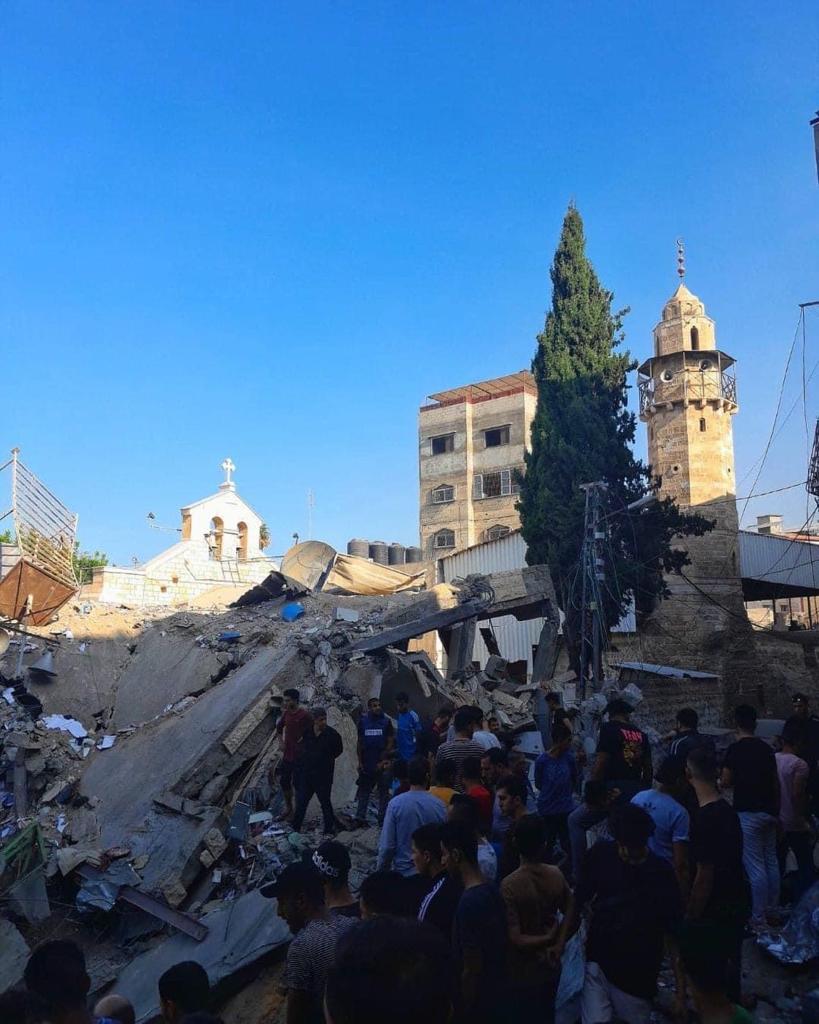
Dated the day Israel bombed the Church in the above photo, Sabeel and other Christian organizations in Israel-Palestine addressed their plea to Western church leaders and theologians. “Words fail to express our shock and horror with regards to the on-going war in our land. We deeply mourn the death and suffering of all people because it is our firm conviction that all humans are made in God’s image. We are also profoundly troubled when the name of God is invoked to promote violence and religious national ideologies” we read in the letter’s first paragraph.
The writers begin the second with “we watch with horror the way many western Christians are offering unwavering support to Israel’s war against the people of Palestine. While we recognize the numerous voices that have spoken and continue to speak for the cause of truth and justice in our land, we write to challenge western theologians and church leaders who have voiced uncritical support for Israel and to call them to repent and change.”
The Palestinian Christians then ’grieve and lament’ the Israeli military’s use of tactics that target civilians: “such as the use of white phosphorus, the cutting off of water, fuel, and electricity, and the bombardment of schools, hospitals, and places of worship—including the heinous massacre at Al-Ahli Anglican-Baptist Hospital and the bombardment of the Greek Orthodox Church of Saint Porphyrius which wiped out entire Palestinian Christian families.”
The letter ends with resounding notes of faith “remembering that God ‘will judge the world in justice’ (Acts 17:31). We also remind ourselves and our Palestinian people that our sumud (“steadfastness”) is anchored in our just cause and our historical rootedness in this land. As Palestinian Christians, we also continue to find our courage and consolation in the God who dwells with those of a contrite and humble spirit (Isa 57:15). We find courage in the solidarity we receive from the crucified Christ, and we find hope in the empty tomb. We are also encouraged and empowered by the costly solidarity and support of many churches and grassroots faith movements around the world, challenging the dominance of ideologies of power and supremacy. We refuse to give in, even when our siblings abandon us. We are steadfast in our hope, resilient in our witness, and continue to be committed to the Gospel of faith, hope, and love, in the face of tyranny and darkness.”
When I prepared for a surgery this week, my thoughts turned to the destruction of Gaza hospitals and dearth of medical supplies. I thought of the children in Gaza undergoing amputations and other excruciating procedures without benefit of anesthesia. I tried to imagine what had enabled those children to accept and survive what was happening to them. Their example helped me in an unfathomable way to prepare for the outcome of my surgery whatever it might be. In my gratitude afterwards for its success, along with doctors, nurses and other hospital care givers, I gave thanks for the resolute courage of the children of Gaza.
******************* *******************
U.S. Expansion of “Christian Nationalism” as a “Theology of Empire”

Among all the nation states now dominated by a form of religious nationalism – be it India, Afghanistan or Myanmar or others – there is only one nation in the world today beholden to a “theology of empire” and it is the U.S. The nation shaped originally by a theology of “exceptionalism” of a chosen people has today become the most far reaching, dominant military power in the history of the world. With over 800 bases in 85 countries, the U.S. capacity to influence and intervene in the politics of other governments is unprecedented. The fact that U.S. armed forces have conducted or led 211 deployments since 1945 (How to Hide an Empire, Daniel Immerwaher, 1945) reveals the nation’s aim of enforcing its worldwide economic and political dominance.
What began as leadership of the opposition to the expansion of “godless communism” has evolved since WW II as “endless war” in defense of the nation’s “national interest”. Contrary to those expecting a “peace dividend” after the break up of the Soviet Union’s republics, the 1990’s brought further growth of the U.S. armed forces and presence around the world. The Arabian peoples and the Muslim religion replaced Communism as the primary, most insidious threat to our way of life.
Following the 9/11 attacks, while the Bush and Obama administrations resisted subscribing to a “good” versus “evil” depiction of the U.S. and its allies’ actions, the ferocious conflicts and costs incurred did signal extremist views as justifying the empire’s invasions. Characterizing Arabs and the Muslim religion as congenitally hostile to the “infidels” dominated popular media and even academic discourse. The leading scholar cited and interviewed most often in the early 2000’s, Princeton’s Bernard Lewis, had long made elucidating his theory of the “conflict of civilizations” the basis for his scholarship.
The “theology of empire” of U.S. evangelical Christians touts Christianity as the only pathway to individual salvation and social coherence. In their eyes, every military campaign aimed at a Muslim society representing a religion with over one billion adherents worldwide is a precursor to the final Armagedden. Such a view helps justify a military budget of nearly 900 billion dollars, and brings hubris based on our status as the lone “superpower” in the world and the leading defender of free and democratic nations. Considering the nearly one trillion dollars spent on U.S. Middle East military intervention and the hundreds of thousands lives lost in those wars, the theology proclaimed by U.S. evangelical Christianity seems worthy of Pascal’s observation generations ago. “Men never do evil so cheerfully as when they do it from religious conviction” the philosopher wrote.
With billions of dollars to broadcast, fund evangelism tours and support like-minded church bodies, the U.S. “theology of empire” has been imprinted on the minds and communications of evangelical Christians outside the U.S.. Ten years ago I was distressed during several tours of Protestant churches in Mexico by the anti-Muslim comments of some of the laypeople. More disheartening, however, is how conservative evangelicals have sided with foreign companies extracting Latin America’s natural resources when opposed by the local citizens most affected.
Evangelical pastors and laypeople have been encouraged to scorn protestors of foreign seizure of natural resources as socialist-leaning trouble makers. The evangelical Protestant President of Guatemala Gen. Rios-Montt was the notorious adherent in the early 80’s of the U.S. evangelicals’ theology. Trained by U.S. advisers and espousing a virulent anti-communism, in a short lived rule the Gen. led a campaign that took the lives of thousands of indigenous Guatemalan villagers. During his two years as President, Rios-Montt delivered what were called weekly “Sunday sermons” deploring cheating, stealing, lying and promoting individual values. This emphasis, joined by an “otherworld” emphasis on the social plane, is characteristic of many evangelical groups throughout Latin America and holds special appeal in association with law and order politics even when accompanied by state violence.
Despite evangelical Protestant sharing of virulent opposition to abortion and gay rights with the Catholic hierarchy, there is often hostility to the Catholics where there has been significant Protestant growth. Chiapas now claims more Protestants than any other State in Mexico and has been the scene of some violent Catholic-Protestant conflict. During a February Mexico visit, I learned of the massacre of 45 Catholics in the village of Acteal, Chiapas. Pacifist supporters of Zapatista organizing in their village and others, they were attacked in the village’s Catholic Church. Residents of San Cristobal de las Casas 20 miles away described the paramilitary force responsible as having been largely recruited among the Protestant converts.
The prophets of the Hebrew Bible largely ignore the policies of succeeding empires of their times directing their messages rather to the settlers of the nations of Israel and Judea. Jesus also devotes himself to the reform and uplift of the “House of Israel”. The fundamental theme of his preaching and ministry is the treatment of the poor by the leaders of the nation he knows best. His spite and condemnation reaches a peak when observing those who exploit the downtrodden with a guise of piety.
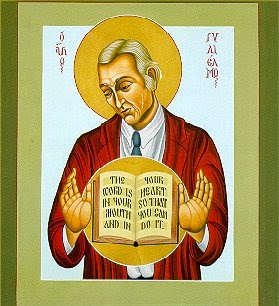
Rev. Dr. King greatly expanded our vision of human rights to citizens of our nation when he declared that a nation that spends more on its military than on the well being of its people is a nation approaching spiritual death. Through the the 1960’s and later, the U.S. lawyer-theologian William Stringfellow called his nation to repentance. He wrote of repentance in a 1984 essay, “Repentance is not about forswearing wickedness as such; repentance concerns the confession of vanity.” Without such a confession, he wrote, “For America – for any nation at any time ……. the very presumption of the righteousness of the American cause as a nation is blasphemy.”
Global Christians’ Appeal for Reconciliation and Unity
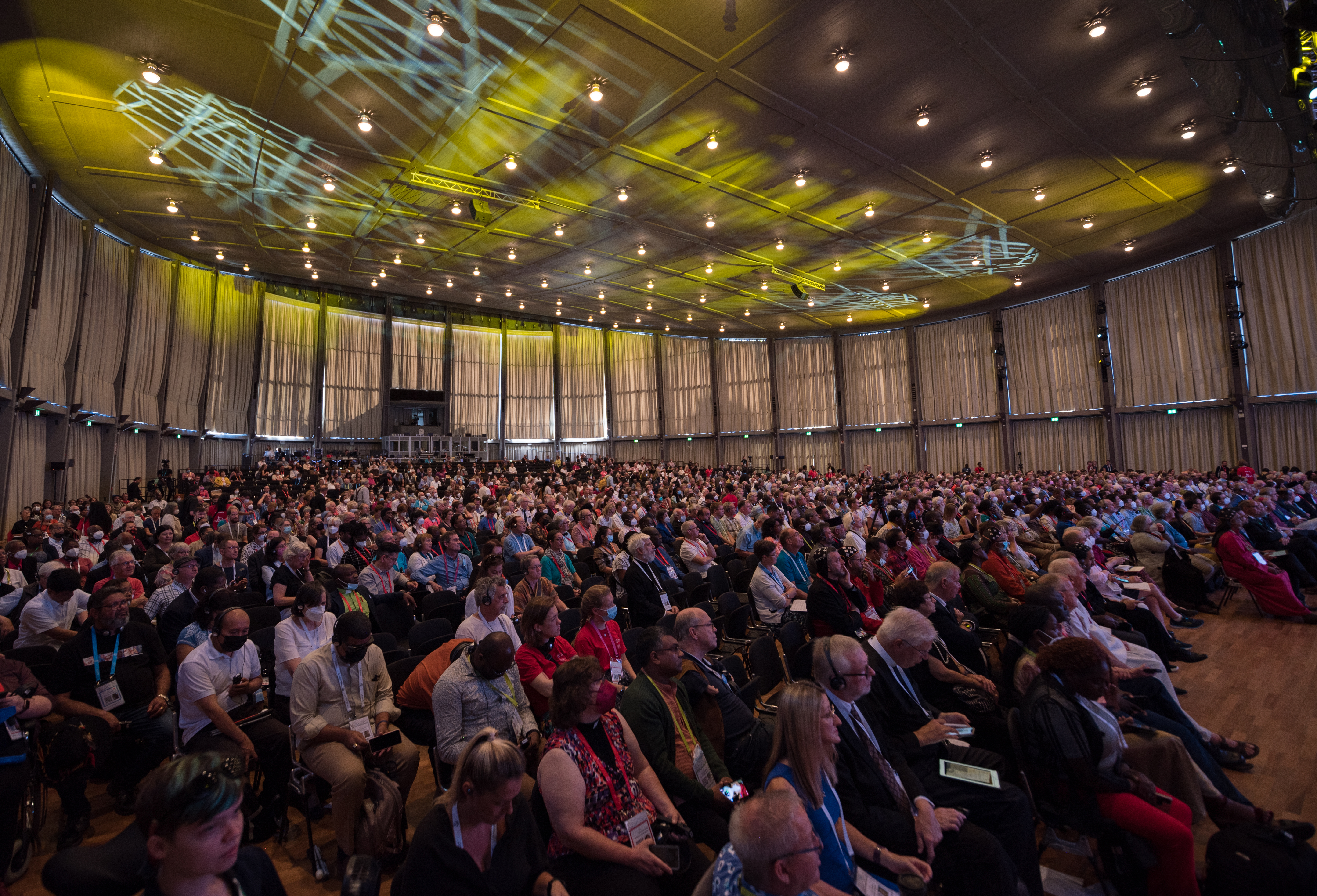
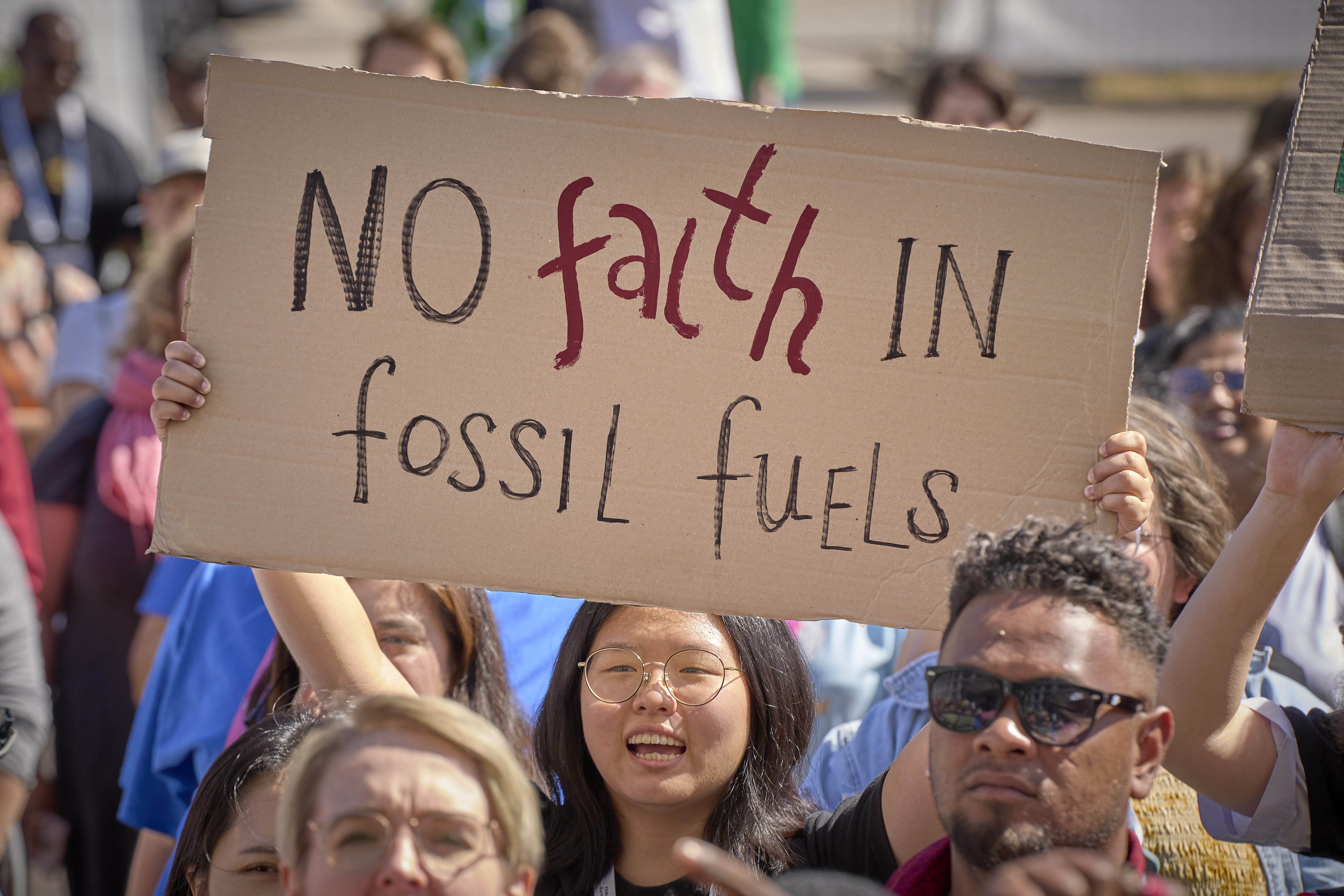
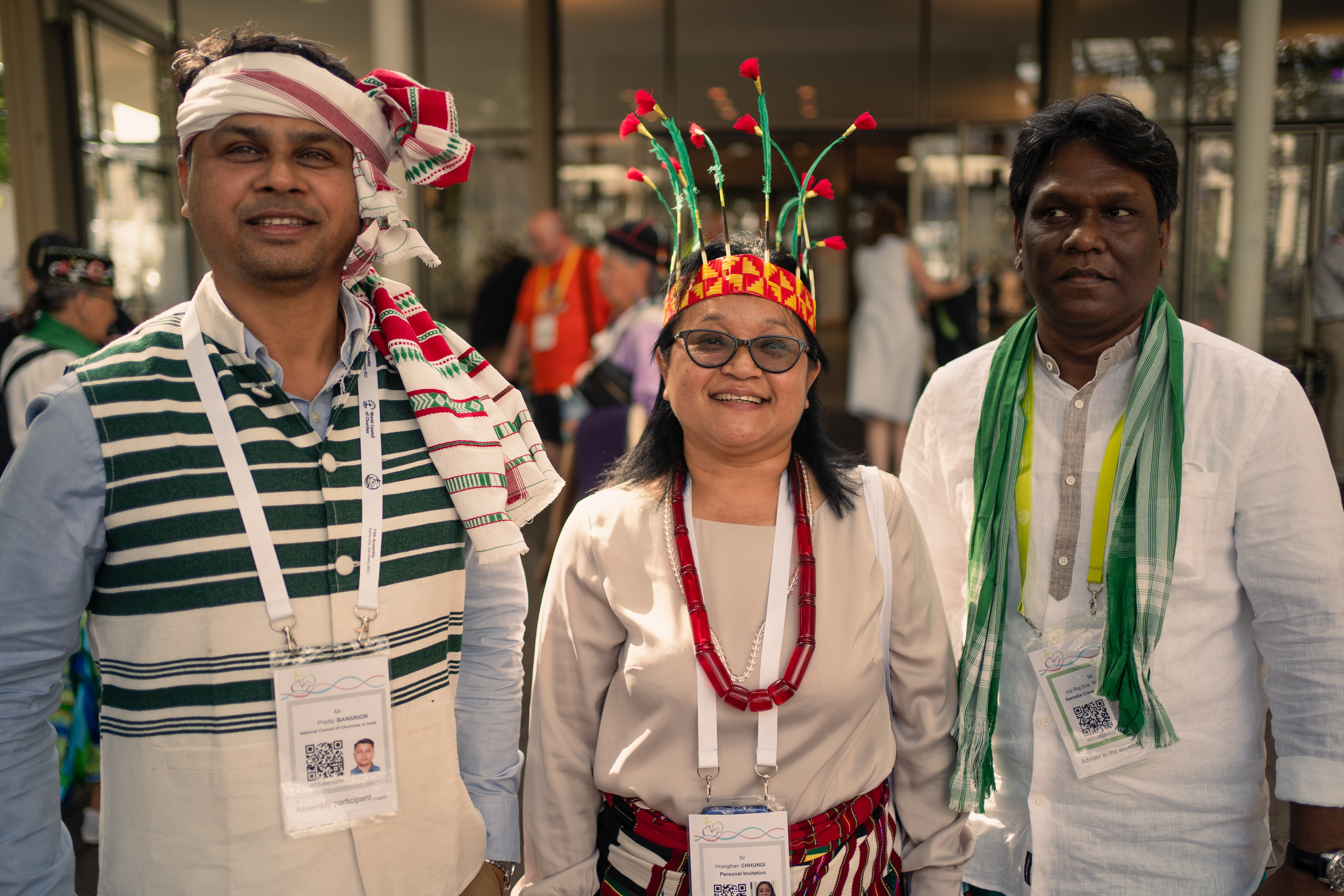
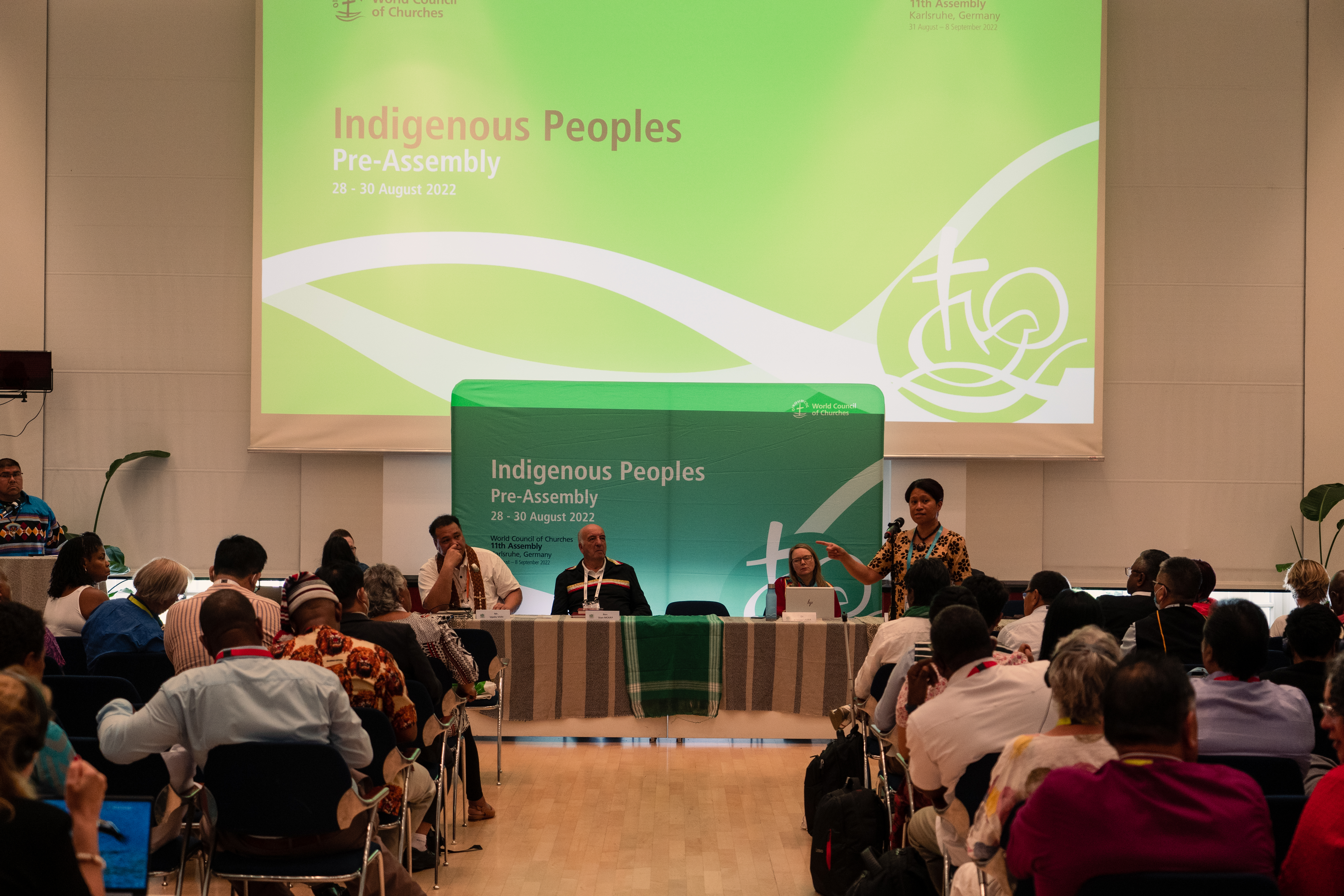
A “Call to Act Together” for reconciliation and unity concluded the recent Assembly of the World Council of Churches. Charged with sharing the message of “a unity founded in God’s love” the 4000 Assembly delegates cited the scripture “the love of Christ urges us on”. The delegates represented many of the World Council’s 325 Orthodox and other church bodies active in 120 nations. There were also 160 Roman Catholic observers attending the most diverse gathering of Christians held every seven years. Jewish and Muslim observers also attended the 11th Assembly.
Since the founding Assembly in 1948, Council membership has shifted from a majority European and North American body to a gathering which reflects the growing number of Christians in the global South. Summarizing the experience of living and listening together for 11 days, the delegates celebrated that “amid all our diversity, we have relearned in our assembly that there is a pilgrimage of justice, reconciliation, and unity to be undertaken together. ”
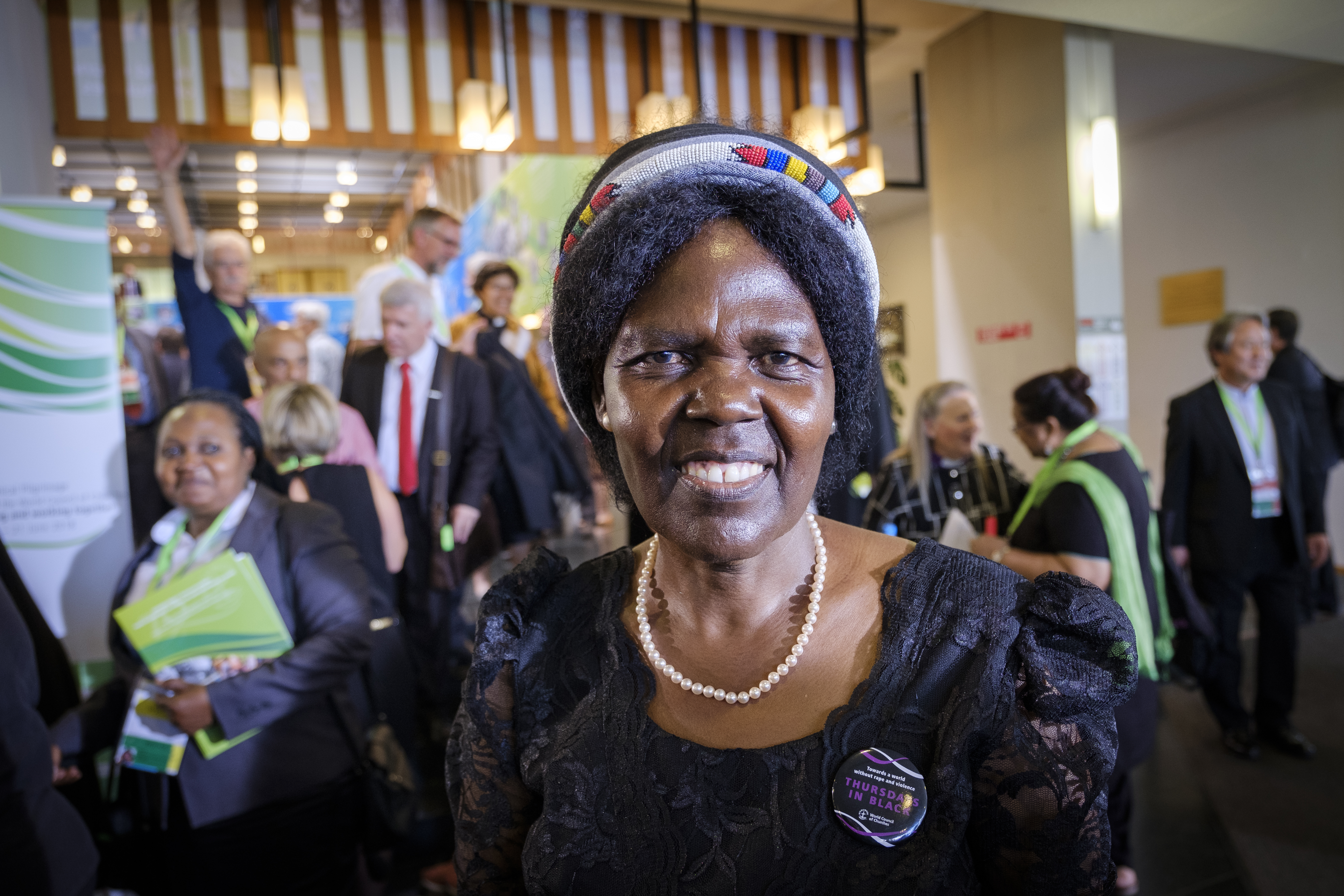
The Assembly experience and its “Call to Act” stands in contrast to the current trend of political leaders worldwide to foment division and distrust. Its call should be taken as a response to the use of division and disinformation to gain unfettered power. Voters in the U.S. would do well to consider the language and aims of their preferred candidates as the Republican Party sows distrust, antipathy and scorn of others. Over 150 Republican candidates in this week’s U.S. midterm election reject the 2020 presidential election of Joe Biden.
The Republican candidate for Governor in Wisconsin, construction company owner Tim Michels, promised that were he elected his Party will never again lose an election in Wisconsin. (as reported by Martin Pengelly of The Guardian, Nov. 2, 2022) Republican candidate for Governor of Arizona, former Fox News anchor Kerri Lake, was asked if she would accept defeat in the election. Appearing prepared to challenge such a result, Lake responded she would not lose.
The U.S. election featured the former President Trump campaigning for midterm candidates backing his “Stop the Steal” denial of results of the 2020 election. No one doubts he will again run for President in 2024 particularly should his Party seize control of Congress in the midterms. His campaigning takes place following dismissal of dozens of court cases in which his backers advanced claims of election malpractice and fraud. In the cases where a ruling called for an audit, no evidence was found of malfeasance.
In an era when the global economic order is incapable of effectively responding to the climate crisis, increasing inequality, and unprecedented migration of people, the World Council Assembly’s reminder of God’s vision of unity is especially timely. “As reconciliation brings us closer to God and each other, it opens the way toward a unity founded in God’s love.”
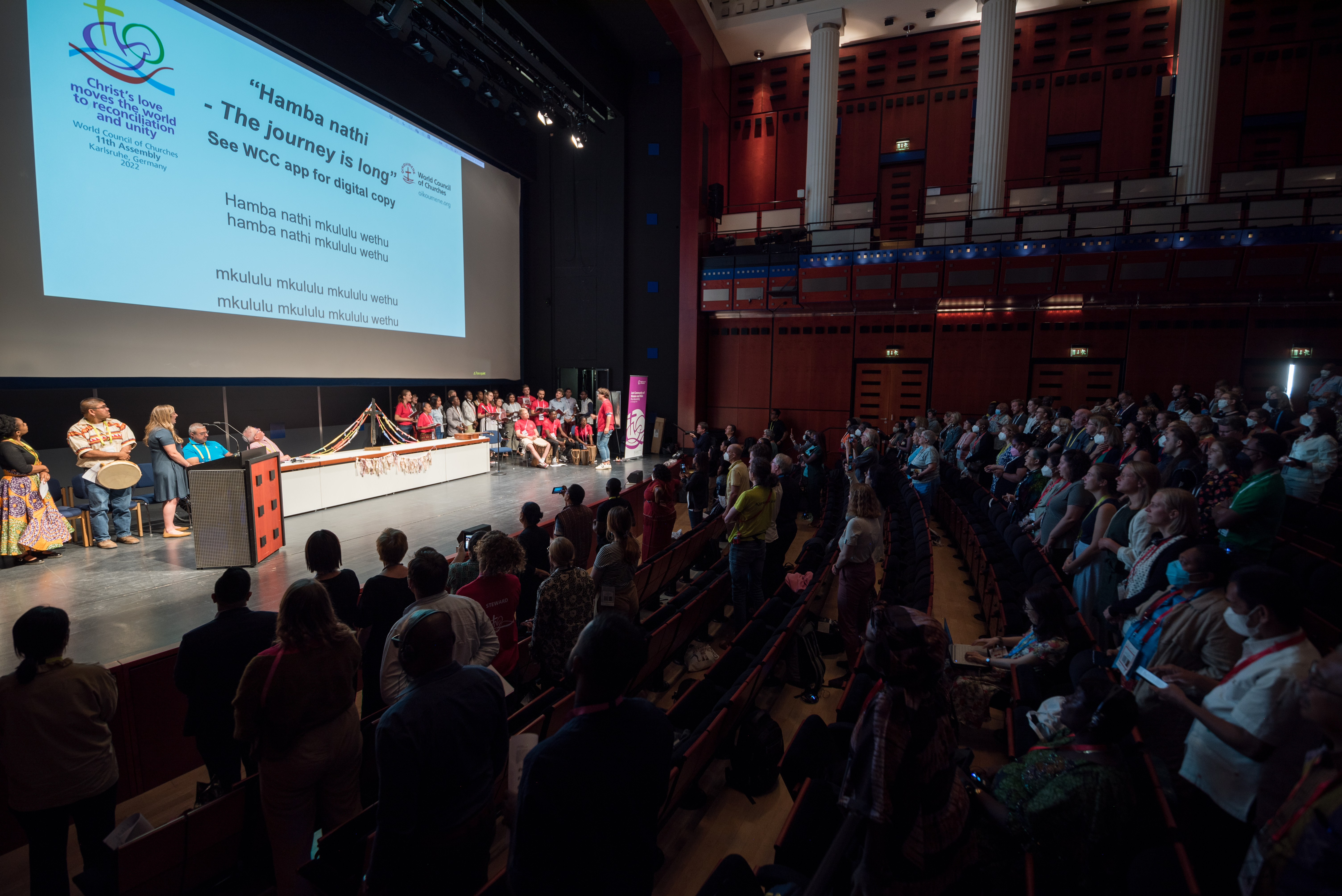

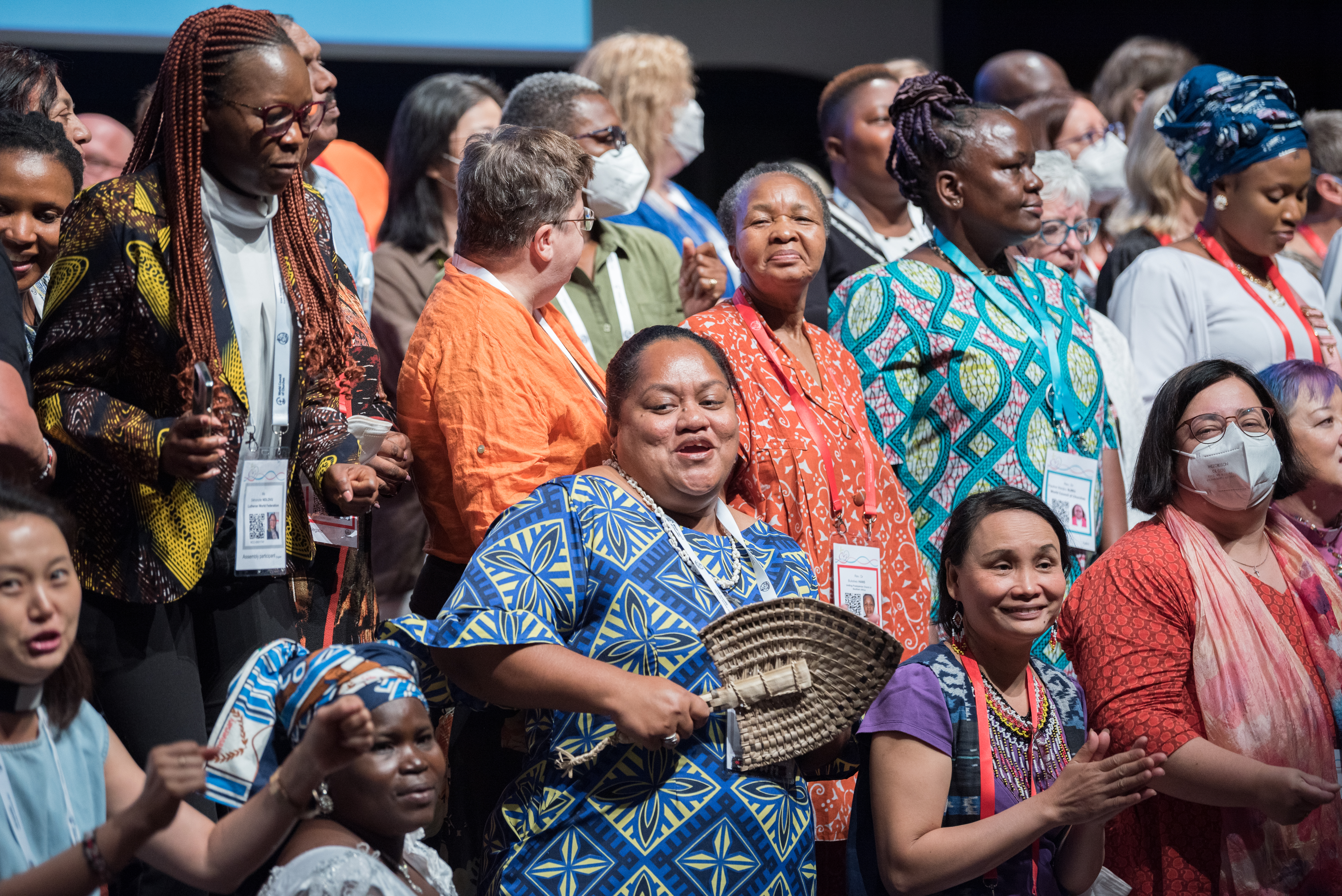

See all the photo galleries from the Assembly at:
https://oikoumene.photoshelter.com/galleries/C0000VFYoZ6eMlZc/WCC-11th-Assembly-Karlsruhe-Germany
The thirteen points of the Assembly’s Call to Act Together can be found at:
file:///C:/Users/User/Desktop/ADOPTED-MC01rev-Message-of-the-11th-Assembly.pdf
Unity Emphasis in Global Christian Mission Today

Elena Huegel is a “Mission Co Worker” in San Cristobal de las Casas , Chiapas, Mexico. She is assigned to work with INESIN, a local human rights and peacemaking agency, and leads workshops for the staff and community. INESIN is one of many “partner agencies” of the Global Ministries work of the theologically progressive U.S. Protestant denominations, the United Church of Christ (UCC) and the Disciples of Christ (DOC).
Like most partners of Global Ministries outside the U.S., it is ecumenical in nature and does not aim to found churches. Mission churches started decades ago with the help of missionaries of the two Global Ministries denominations are now self-governing and self-propagating. Most are growing much faster than the U.S denominations and benefit from Elena’s and other Mission Co Workers’ presence in the their programs of community economic development, agriculture, healthcare, education and protection of human rights.
Elena’s grandfather, Frederick Huegel, went to Mexico early in the twentieth century, as a missionary trained in preaching and evangelism with the intention of growing the Disciples of Christ presence in central Mexico. Elena’s parents also worked with the new churches of the Disciples of Christ in Mexico. Bilingual at an early age, Elena has been a Mission Co Worker in Chile for over twenty years and in Paraguay before returning to Mexico to work with INESIN staff.
The following interview with Elena Huegel took place last August while driving her to a speaking engagement in the U.S.
DS: So Elena what does INESIN stand for?

EH: The Institute for Intercultural Studies and Research.
DS: Tell us a bit about the history of that organization.
EH: When Rios Montt was President of Guatemala and all the refugees from the country were crossing the border into México, the Catholic Bishop (Bp Samuel Ruiz) had people all along the border helping with the refugee crisis. The UCC and Mennonites from the States had mission workers helping as well and they all got to know each other. In fact when opportunities opened for resettlement back into Guatemala the mission workers all began to accompany them back as human rights watchers. That resettlement began in January of ’94.
That’s also when Canada, the U.S. and México signed the Fair Trade agreement (NAFTA) and the Zapatistas had said that if the trade agreement was signed they were going into open warfare against the Mexican government. It was signed and the revolution explodes, the heart of it being San Cristóbal and the communities around it. So with that the inter-religious turmoil that there already had been between Catholics and Protestants was heightened. It took on a whole different turn because the government began taking advantage of the Protestants who were among the most oppressed of the population. The government encouraged creation of paramilitary groups among the Protestants. The groups were mainly children of Protestant converts from what I can tell.
DS: But you say there had been turmoil and tension between Protestants and Catholics before the Zapatistas came on the scene. What was that about?
EH: This is a simple question to a very complex situation. To read more I suggest:
There are many points of view as to why there are conflicts between the different protestant and Pentecostal groups and the different Catholic groups as well as newer religions (mainly Muslims) in Chiapas in general and the Chiapan Highlands (including San Cristóbal de las Casas) in particular. I would summarize by saying that there have been and are political and economic forces that have used religious differences to divide and conquer the Mayan communities. Nowadays, organized crime has also come onto the scene sowing further confusion and chaos within communities and, in some cases, bringing different religious groups together in the struggle against the cartels while in others causing further unrest and division. There is a very long history of violence connected to the different religious expressions, with victims and perpetrators connected directly or indirectly to different religious affiliations.
DS: So the Protestant grievances about the Catholics had been long standing and were used by the government.
EH: The government was trying to get at the Zapatistas from different directions. And as the inter religious strife got worse the Bishop (Samuel Ruiz) realized that he needed someone to help him build a bridge and talk to the Protestants. He had already done quite a few things to build bridges. There were a whole lot of Protestants driven off their lands in the Chamula area and he supported the ones who fled to San Cristóbal. As the Bishop saw better what was happening, he went to the UCC and Mennonites who had worked with Catholics on the border and together they went on to found INESIN, the Institute for Intercultural Studies and Research. It was to create a space for inter-religious and inter-cultural dialog using various forums and projects to do that.
DS: Did the UCC have people in place there to participate in INESIN’s creation with the Catholics, Bishop Ruiz in particular?
EH: The UCC overseas mission office, Global Ministries, had a couple down there at the time. The couple were preparing to go down in late ’93 but finally arrived in February ’94 and were there then for some pretty incredible things. They were Paula Biddle and George. They knew the area as they had been working with Guatemalan refugees in Chicago and had been traveling back and forth from Chicago to Chiapas since the refugees began crossing the border.
DS: And what are you doing at INESIN now?
EH: So I am helping in staff development and education in trauma healing and conflict transformation primarily with the staff of INESIN. Protestants in Chiapas have seen INESIN as a Catholic organization and there is a lot of distrust and suspicion of any Catholic program among the Protestants. It’s going to take a long time of trust building before they join with Catholics in a process of trauma and conflict healing. So I’ve had some small groups and I’ve done some Christian Education trainings for Protestant Sunday School teachers which have attracted larger groups. I do other things as a way to start building up trust and relationship. I am also the local, national and international coordinator, facilitator, and trainer of the Retoños en las Ruinas: Esperanza en el Trauma (Roots or New Shoots in the Ruins: Hope in Trauma) program with facilitators in Chiapas, different states of Mexico and 5 other countries in Latin America.
DS: In addition to your training for trauma healing and conflict transformation you’ve been trained in environmental education?
EH: My undergraduate training was in recreation and outdoor education and my first love has always been environmental education.
DS: What is the tie between trauma healing and the environmental education?
EH: I came to realize there is a soul wound in our relationship with the earth and that’s one of the great things about being here with the Mayans. There’s the opportunity to come full circle. It used to be environmental education was concentrating on how we take care of the earth. Now, coming full circle with the help of the Mayans and other indigenous groups we understand better how the earth takes care of us.

We can’t be fully healed unless we attend to this relationship with the earth and how this is an essential part of our wholeness. Many people among the Mayans have that very clear. How a healthy relationship with the earth is essential to our relationship with oneself, with others and with God. So I’ve been thinking more in the last four years here about how our reconnecting with nature brings about our healing and how for example a sense of awe is essential to our recognizing something bigger than ourselves, something where hope lies, something that moves our souls. I’m doing more work around that now. How immersing people in nature can be part of their healing process.
DS: So how is this Mayan tradition of relationship with nature transmitted these days?
EH: I would say that not all Mayans today practice or have experience of the relationship. One of the things that the Institute has been doing especially on the Catholic side is helping to reconnect to that spirituality that was connected to Mother Earth. So one of the things that is still practiced but not everyone practices is the Mayan altar. The Mayan altar is always transitory. It is made from things from nature. It is created by the community. Using different flowers but it can also have dirt and seeds and fruit. These are placed in four quadrants representing the four cardinal directions.
And that transitory altar also has candles on it. Once the candles are lit they’re not put out. And the altar lasts as long as the candles last and once the candles die down, the altar is taken apart and the fruits are eaten and everything goes back into nature again.
DS: And the altar is built at a certain time of year.
EH: No it can be at any time the community needs to gather. And we at INESIN always have groups that visit us build a Mayan altar together.
Mexican Women Defend Human Rights of U.S. Women
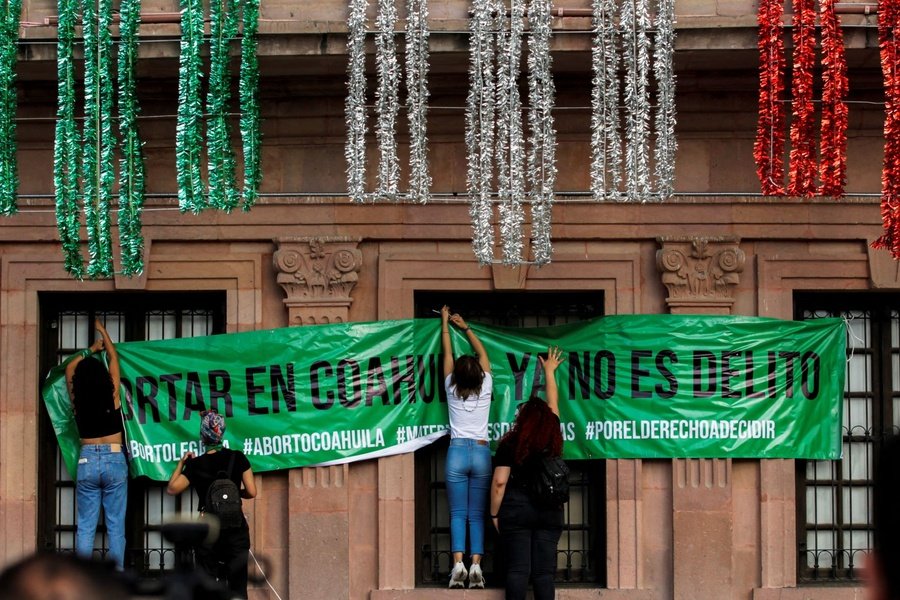
For years Mexican women crossed the border for an abortion in the U.S. Until medication was developed which can terminate a pregnancy the options in Mexico were limited in the second most Roman Catholic country in the world. Following the unanimous Mexican Supreme Court September decision ruling the border State of Coahuila’s anti-abortion law unconstitutional, Mexican activists have been offering assistance to Texas women seeking an abortion.
Co-founder of the Coahuila women’s rights organization Accompañtes Laguna, Laura Hernández, told The New Yorker they had already helped 3 U.S. women and are establishing the protocol to aid more. “It’s painful to know that not everyone can access the same rights,” Hernández said. “We feel a great responsibility toward women there.”
Two drugs enable a woman to terminate a pregnancy. While they both require a prescription in the U.S., in Mexico they are prescribed for treatment of gastric ulcers and other disorders and sold over the counter. As the Harvard law professor Jeannie Suk Gerson explains however, a new Texas law criminalizes delivering those medications to women in the seventh week of pregnancy and beyond, potentially placing at risk anyone making them available.

Another Mexican Right to Choose organization, Las Libres (“The Free Ones”) is now busy building a “confidential network to give women instructions on use of the drugs and accompanying them throughout the procedure.” They offer close oversight on the day the medication is administered and daily check-ins thereafter. A Las Libres organizer was asked if she is worried about being sued in the U.S. for aiding the women. “No, not really.” When asked if Las Libres has found a way around the TX law she responded, “We are doing it.”
In the U.S. today, the right to abortion is threatened as never before since the historic 1972 Roe v. Wade Supreme Court decision. Laws restricting access to abortion and calling for harsh penalties if violated are being considered and passed in many States with Republican majority legislatures. In Texas with the 2021 SB 8 TX law, the New York Times wrote that “effectively, nearly all abortions in the state have been banned since the law went into effect.”
Appointment during the Trump administration of a sixth conservative justice to the 9 member U.S. Supreme Court has placed on alert activists and the public majority in the country which favors a woman’s right to choose. With the Court decision to hear arguments in December against a harsh new Mississippi anti-abortion law, Mexican women’s assistance of women in Texas and other States takes on added significance.
Although a minority, the strategies of packing U.S. courts with ideological conservatives, taking control of State legislatures and further restricting access to voting have paid off for Republicans. Some of the super wealthy intent on expanding their fortunes are bank rolling right wing thinkers in universities, foundations and politics. At a time when U.S. young adults openly denounce capitalism, some conservative voices have been heard espousing authoritarian rule and the pitfalls of democracy. Utah Senator Mike Lee wrote a pair of tweets last fall arguing that “democracy isn’t the objective; liberty, peace and prosperity are.”
Throughout the “American century”, as the publisher Henry Luce named the last century, U.S. relations with other nations sought to promote capitalist economic policies as essential to a democracy. It now seems likely that this doctrine will be increasingly disputed by partisans of the right and the left. In such a time of confusion and uncertainty, with little consensus on what is truth and its most reliable source, some of us find cause for hope in the actions and voices of world citizens outside the U.S.
The solidarity of Mexican women with U.S. women choosing to have an abortion is another example of the role of international support and solidarity in the defense and progress of human rights in the world today. Christians celebrated Sunday November 28 as the first Sunday of Advent, the coming of Jesus of Nazareth. Traditionally, the theme for that Sunday is hope. As we contemplate sources of hope in our lives, on the social plane the work of the Mexican activists on behalf of us all stands out.
Decolonizing Christian Mission and Evangelism

“Today, empires are striking back in new forms, with their own dictatorial requirements of allegiance to mammon, market, consumerism, militarism, sexism, racism, fascism, and fundamentalism.” Summarizing the context for global mission in our time with these words, 1000 plus delegates from churches around the world issued the 2018 Arusha Call to Discipleship . Inspired by the theme of “Moving in the Spirit: Called to Transforming Discipleship,” the Conference adopted the Arusha Call challenging the world’s 2.4 billion Christians to live in “transforming Discipleship”. Unfortunately, most Christians, clergy and lay, in the world’s largest “Christian” nation, the United States, have never heard of the Call much less studied any part of it.
Organized by the World Council of Churches’ Commission on Mission and Evangelism the Conference represented the largest international gathering focused on Christian mission since 1910. The World Council is “a fellowship” of 350 plus churches in 110 countries representing over 500 million Christians. Nearly all formerly “mainline” U.S. Protestant denominations are active, and multi-national Orthodox and Roman Catholic leaders participate in some of the meetings as “observers”. Church bodies based in the global South, now out number the Council members from the North thus mirroring the profound change in world Christianity over the last hundred years.
The Arusha Call bears the stamp of church leaders in Africa, where the number of Christians and churches is growing fastest, and in other poor nations of the southern hemisphere. The Call departs significantly from the historic 1910 Edinburgh “World Missionary Conference” emphasis on conversion in the context of colonial rule. Chaired by U.S. Methodist John R. Mott, the Edinburgh 1910 Conference was guided by the theme “Evangelization of the World in This Generation”. The charge it made to Protestants, especially in the U.S. and Europe, led to significant increases in recruitment of missionaries and the funding of mission conceived by most as a project of conversion of people and nations to Christianity.
With a new conception of evangelism, the Arusha Call urges all Christians to see themselves as “missionaries”: “If we wish evangelism to be convincing today, the first thing we must do is to be disciples”. Its section on “Disciples Committed to Evangelism” concludes with the clear statement, “The more we are true disciples of Christ, the more effective our evangelism will be.” In the introduction to the Call, it is described as issuing a warning against the attitude of some former missionaries and mission agencies, “Humility and sacrifice are urgently needed to liberate the gospel from captivity to projects of self-aggrandizement”.
Charged with leading the way in interpreting and supporting implementation of the Arusha Call is the World Council’s Commission on Mission and Evangelism. One year after the Conference in Arusha, the Commission leadership noted that the “Call to Discipleship” has been seen as “exhilarating, transformative and challenging to the point of discomfort for some”. The Commission’s Moderator, director of the Student Christian Movement in India, Metropolitan Dr. Geevarghese Mor Coorilos commented on one of the roots of the controversy over the Call, “It is a specific exhortation to ensure the purity of faith, to make sure that the faith was not corrupted.” Rev. Dr Janet Corlett, vice moderator for the commission and a former Director of the South London Mission, also commented, “The Arusha Call was the outcome, the consensus of the meeting, and I believe it was a very prophetic call.”
One month after the Call was published by the World Council and its Commission, the chief leaders of four North American churches – the Episcopal, Evangelical Lutheran Churches in the U.S. and their counterparts in Canada commended the “richness of the Arusha Call to Discipleship and invited their members to embrace the call”. To this date, there has been little to no attention to the Arusha Call among other North American denominations. A leading source of news on religion in the U.S., the Religion News Service, has ignored the Arusha Call.
********************************************
The Arusha Call to Discipleship and accompanying commentaries by the Conference participants can be downloaded free from the World Council of Churches’ website:
https://www.oikoumene.org/resources/documents/the-arusha-call-to-discipleship


 Erasing Borders