A Bethlehem Christmas Appeal for Solidarity
Posted by erasingborders
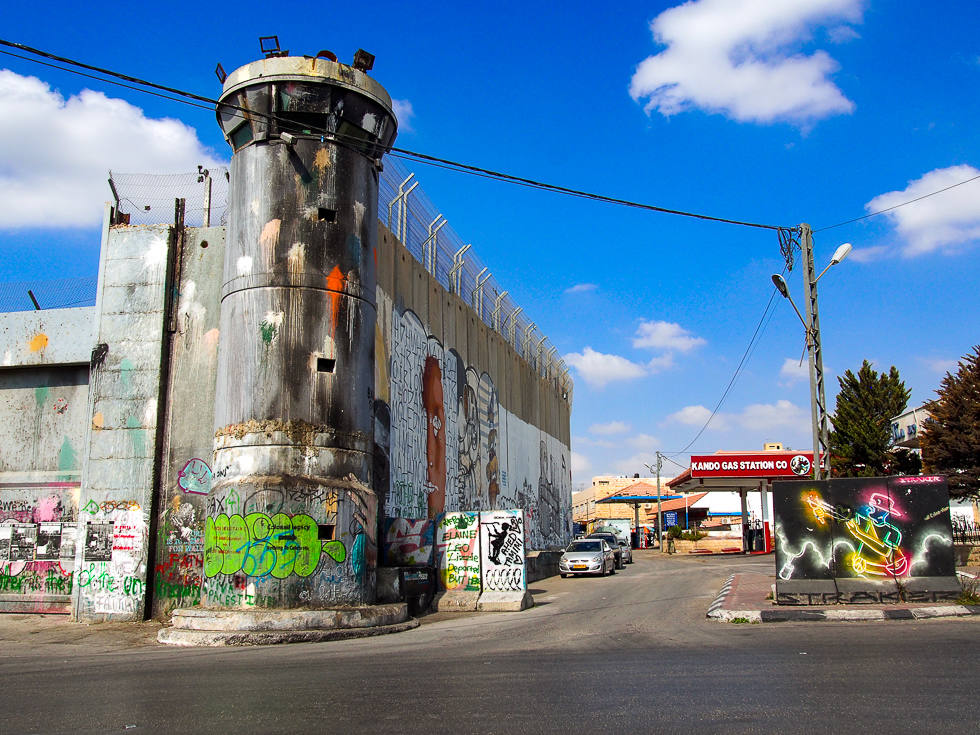
“We are angry…
We are broken…
This should have been a time of joy; instead, we are mourning. We are fearful.”
With these words Rev. Dr. Munther Isaac began his Christmas sermon “Christ in the Rubble” in the Bethlehem Christmas Lutheran Church. A cry of anguish for the dead, the maimed, the displaced along with an appeal for solidarity issued to the world’s 300 billion plus Christians to help maintain a Christian presence in the birthplace of Christianity and across the former Palestinian homeland.
A century ago 84% of Bethlehem’s residents were Palestinian Arab Christians. Today, according to Christianity Today the leading journal of U.S. evangelical Christianity, 22% of the village’s population is Christian. The decline in the number of Christians is duplicated in Israel and the occupied territories of the West Bank and Gaza. Contrary to the myth of U.S. evangelical commentators on the Middle East, there is no biblical basis for viewing the conflict as defense against Islamic conquest. Islam did not exist when the battles of ancient Israel were described in The Bible.
There are, however, multiple appeals to universal Christian solidarity and unity in The New Testament. The letters of Christianity’s founding exponent and interpreter, the Apostle Paul, makes it a leading theme of his writing and his journeys. In II CO chapters 8 and 9 he reveals that the primary goal of his second missionary journey is to preach Christian solidarity. Christian communities in the Holy Land are suffering famine due to the Roman occupation and it is the Christian mission of that day to send offerings of relief. As St. Paul writes at the conclusion of II CO 9, “the rendering of this ministry not only supplies the needs of the saints (in Israel/Judea) but also overflows with many thanksgivings to God. Through the testing of this ministry you glorify God by your obedience to the confession of the gospel of Christ.”
The Bethlehem pastor shares with his congregation that the unconditional Western alliance with the current policies of Israel stokes his anger. Following a late November visit of the U.S., Dr. Munther Isaac reveals, “I couldn’t help but think: They send us bombs, while celebrating Christmas in their land. They sing about the prince of peace in their land, while playing the drums of war in our land.”
The Pastor laments how Christians in the West have replaced Christian solidarity and the Gospel of Peace with the theology of Empire. “The theology of the Empire becomes a powerful tool to mask oppression under the cloak of divine sanction. It divides people into “us” and “them.” It dehumanizes and demonizes. …….It calls for emptying Gaza, just like it called the ethnic cleansing in 1948 ‘a divine miracle’. It calls for us Palestinians to go to Egypt, maybe Jordan, or why not just the sea?”
In contrast to Christians’ silence and complicity in response to the ongoing massacre of Gazans, he refers to Western Christians living as “accompaniers” in the Palestinian territories. “You have come to Bethlehem, and like the Magi, you brought gifts with, but gifts that are more precious than gold, frankincense, and myrrh. You brought the gift of love and solidarity.” Those words are a quote from the Christmas sermon of the Catholic Father Rami, also from Bethlehem.
Dr. Isaac assures his congregation, “We will recover. We will rise and stand up again from the midst of destruction, as we have always done as Palestinians.” He then addresses Christians who have “not even called for a ceasefire,” saying to them “I feel sorry for you. Will you ever recover from this?” But the closing words of his message becomes a Gospel message of hope for all.
“The resilience of Jesus is in his meekness; weakness, and vulnerability. The majesty of the incarnation lies in its solidarity with the marginalized. Resilience because this very same child, rose up from the midst of pain, destruction, darkness and death to challenge Empires; to speak truth to power and deliver an everlasting victory over death and darkness.” Interpreting the title of his sermon, he proclaims, “This child is our hope and inspiration. We look and see him in every child killed and pulled from under the rubble….. Jesus not only calls them his own, he is them! ”
Far from Gaza here in Kansas City, U.S.A., I pray that the horror in Gaza will result in the growing conviction among Jews and Arabs that peace is the only way to peace. As a father and Christian minister whose two beloved daughters have been raised as Jews, I have mourned the fear, the distrust, the hatred of Arabs encouraged by Israel’s reliance on overwhelming military dominance as a viable, lasting source of security and peace. Only a dramatic shift in the defense policies of Israel and the U.S. can prevent future growth of Arab opposition to the occupation of Palestine and more violent destruction and death.
************ ************* ************
See the Bethlehem “liturgy of lament” December 23 worship when Rev. Dr. Munther Isaac preached the sermon “Christ in the Rubble” at the address:
https://www.youtube.com/watch?v=ZPTrmN6Dzmw&list=FLP7qpo6R2ZdZ4sLKnDwFAng
The sermon transcript also can also be accessed at the address.

About erasingborders
This blog is dedicated to the conviction that love is stronger than hate, that trained non violent resistance is stronger than weapons of violence and that as human beings we rise and we fall as one people.Posted on January 16, 2024, in Global Church, Solidarity, Community and Citizenship, Theology and Mission, U.S. Protest Movements and tagged "Christ in the Rubble" Christmas sermon in Bethlehem, bethlehem, Christian Arab population of Bethlehem, christmas, gaza, israel, palestine, Rev. Dr. Munther Issac Christmas message, The wall separating Israel from its occupation territories. Bookmark the permalink. Leave a comment.


 Erasing Borders
Leave a comment
Comments 0